Archive for the 'stop over Ideas' Category

Page 2 of 3

Cruise ship to Arugam Bay?

The Island Newspaper

The Island Newspaper

The long anticipated Tourism boom is yet to arrive after the end of the Civil War in Sri Lanka. While we wholeheartedly want tourism to succeed and contribute to the National Economy, I would like to draw the attention of the general public and the authorities to a much neglected aspect of the tourism industry.

The locals are denied Cruise ship voyages and Theme Park entertainment right here in Sri Lanka unless they can afford to visit places like Singapore or Malaysia. Continue reading ‘Cruise ship to Arugam Bay?’

How to Go to Arugambay Pt.1

Friday, April 24, 2009

Arugambay Travel Guide 1 – How to Go


When to visit:
Arugambay is full of foreigners during the surf season (June to August) but seems empty otherwise. While surfing is good, I prefer swimming. And what makes the off season bad for surfers (no waves) makes it great for swimming. The waves break really close to the shore so if you slightly beyond, you can just float for hours. Continue reading ‘How to Go to Arugambay Pt.1′

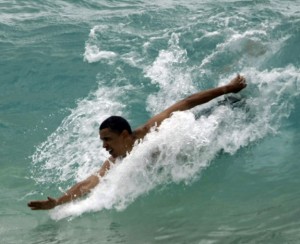
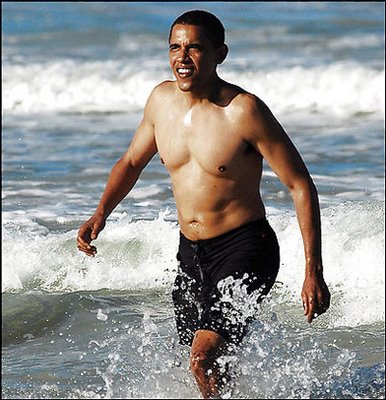
Obama feaver hits Arugam Bay

Obama Body Surf at AbaY?

Obama Body Surf at AbaY?

Sources indicate that our Facebook member  Obama Barrak is planning to unwind a few days in remote, peaceful Arugam Bay.

All is Swell in AbaY

All is Swell in AbaY

This hard working statesman will surely need rest and enjoy our true unspoiled nature.

Following the G20 success on London, the NATO summit in Stressbourg it is time to go Baden – Baden indeed.
The surf season has already  started, so beginner’s surf lessons for the two girls Sasha and Malia are also scheduled. They will be joining the first couple on their Easter school break at Colombia airport, Karamtunayukie.
Courtesy of Paddle4Relief, Taunton, UK.

Obama himself is said to be a keen Kite Surfer and close friend of expert Dillsiri.
Arugam Bay is – as well known – a true All-Year Destination.
Facebook sources confirm that this is what prompted him to be one of the first fans of the popular and growing “Arugam Surf” social networking site.  Obama actually signed up and became an insider of AbaY a long time before he became president. A forward thinking man indeed!

http://www.facebook.com/pages/Arugam-Surf/34935689893?ref=share

On hearing the news, Arugam villagers are exited.
Will he be just on holiday/vacation?
After changing the world – will he be able to bring real changes to the Bay?
Will this wise power house of a man continue to ‘listen’?  Talk just to the DS?
Or to some locals and and maybe even to the odd, side railed expat? What can we learn from past mistakes? Will he want to  know how Mercy Corpse and the Whimpy Opera have Fooled the local and US public? Ever since April, 2005?
Will he help US to “Focus” forward in his unique style?
How can we bury the past?
Security issues prevent Arugam.info to reveal more details.
But we have been informed that Obama regards  the T & S New Year as an excellent opportunity to “Make a Change” .
!!One that even Sri Lanka people could believe in!!
Therefore, rumor has it that the two Presidents will have informal discussions at Temple Trees  – or  TisteStar during his vacation.
The “Bottom Line” is:
Will the “Tide be turned”?
Will our own, Hon.  Mr. President allow his US counterpart to visit and gain impressions from this  underdeveloped, but fully ‘cleared’ Eastern area ?

Meanwhile, the villagers can only sit back and hope this historic visit not be canceled on security grounds.

Arugam Bay’s other attractions

Thursday, March 19, 2009

Arugambay

MAGUL MAHA VIHARA
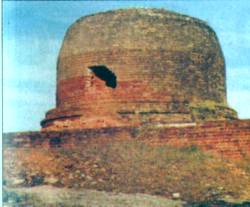
Between Buttala and Pottuvil and situated at Lahugala, famous for large herds of elephants even during the day, is the ancient Magul Maha Vihara built by King Dathusena between 516 -526 BC. Later, Vihara Maha Devi wife of the Parakrama brothers renovated the jungle covered shrine and installed one

of the most exquisite moonstone carvings in Sri Lanka. The above information was found in a rock inscription dating back to the 14th century AD. You will be amazed by the extent of the ruins and their exquisite design.
Arugam Bay is well known among the serious surfing community, but the perfect wave is only one of its attractions. Dolphin pods, beloved of the local fisherman, often play in the bay, and the surrounding country is thick with wildlife, birds and extensive monastic ruins. Sastharvila, Kudumbigala, Muhudu Maha Vihara and

Tarulengala are ancient Buddhist ruins in the vicinity dating back from the timeless past. Nearby Okanda, an important (though isolated) Hindu shrine, is on the pilgrim route from Jaffna in the north to Kataragama. Okanda is also the gateway to famous Kumana Villu, where water birds nest, and the Yala east national park with miles of unexplored golden beaches.

http://negenahiraurumaya.blogspot.com/2009/03/arugambay.html

Okanda: Just 28km South of Arugam Bay

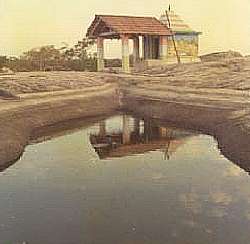
Ukanta Malai Velayudha Swami Temple, Okanda

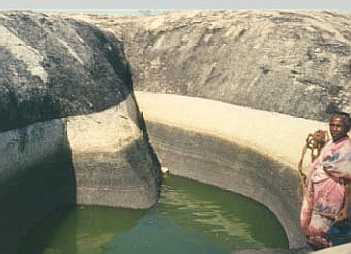
Teertham at Ukanta Malai
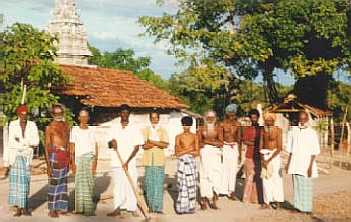
Pada Yatra pilgrims stand before Ukanta Malai Velayudha Swami Temple [16k]
Above: Pada Yatra pilgrims stand before Ukanta Malai Velayudha Swami Temple before offering service to excavate silted teerthams (below at left).

At the foothill of Okanda Malai is the Vêlâyuta Cuvâmi or Kanta Cuvâmi Temple, dedicated to God Skanda. Here, like at Valli Malai in India, Lord Murukan occupies the foot of the hill, while his sweetheart Valli occupies the peak. Symbolically, at these sakti peethams, Lord Murukan accepts His position at the feet of Valli Amma, as Her servant and devotee.

Okanda Malai, a remote rock-hill on the coast at the intersection of the Eastern and Southern Provinces, has been referred by tradition as one of the places where Emperor Ravana halted for worship on his journeys from Lankapuri to Koneswaram. The theme of taking rest is reflected in the name Ukantai, for it is said that here Lord Murukan and others ‘sat down’ (utkantâr) and rested.

Okanda Hill top has by long tradition been cited as one of the places where a divine katir from Lord Skanda struck. Veddas preserved the sanctity of the place with a simple shrine of stick and ola leaves. According to another myth, the third ray from Vâkura Hill reached here and came to rest on this hilltop, making it a favorite site for Murukan worship. There is yet a third myth according to which, Valli and Murukan arrived in separate stone boats (which still rest on the beach) to reside on top of the Ukantai Malai. The temple is located along the eastern shores of the country, along which the pilgrims walk to Katirkâmam. In places like Pânama and Kumana, which are close to Ukantai, Tamils and Sinhalese lived in harmony even down to the present day.

Temple Structure
Valli Malai gets its name after the Valli Amman temple on this hillock. An image of Pillayâr and a Vêl are also found in this temple. The temple for Murukan is small and is only about three feet high. In front of this temple instead of Murukan’s vâkanam the Mayil or peacock there is the rat or shrew, the vâkanam for Pillayâr. Close to these temples is a platform under the tree with a fixed vêl, and this may have been the original focus of worship.

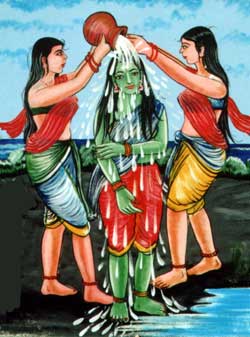
In front of Valli Amman temple on top of the Valli Malai rock hillock are eight natural waterholes in the rock. One of these is referred to as Caravana Poikai; all are said to have been sunk during the Vanniyar rule. The entire hillock is said to have 32 natural waterholes, from which pilgrims traditionally draw tîrtham water and pour it over themselves to obtain the blessings of goddess Valli who is believed to bath in the same pools, not only in ancient times but to this very day.

Worship
Regular pûjas are conducted year round by the lone resident pûcari and annual festivals are held for fifteen days; the last day falls on the new moon in July. The worship pattern is of folk tradition;t on the first day of the festival the flag is hoisted, but there is no Kotitambam.

During the procession, the Vêl is carried in a tray dressed in silk, and hence referred to as Pattu Câmi. At the end of the water-cutting ceremony, the procession goes to Valli Nâcciyar shrine. Here milk rice is cooked by a few selected people and offered to the gods. Ascetics are said to reside in the hillocks scattered along the seashore. A prominent samâdhi or final resting place is said to be the resting place of one of the famous ascetics who lived here.


It is noteworthy that at Okanda Malai, as at Valli Malai in South India, Lord Skanda’s abode is at the foot of the hill while His divine sweetheart, Goddess Valli Amman, occupies the summit. This is as though to express silently the fact that at these divine places Lord Skanda places Himself at the feet of Valli Amman, whose station, as it were, is more exalted than that of Lord Skanda Himself.Even today, Okanda remains as a remote jungle shrine, in part due to its geographical location and partly due to the long ethnic conflict, which has made access to Okanda more difficult and even dangerous than ever. However, development work has resumed as of 1999, including the restoration of the ruined 20-mile jungle road from Panama the nearest inhabited village, and the immanent completion of a new temple for Lord Vêlâyudha Swâmi.

For information about efforts to preserve the sanctity of Okanda Malai and its traditions, see this detailed article by the Living Heritage Trust or go to the home page of theKataragama Devotees Trust.


Information on this page is taken from 
“Skanda-Murukan cult in Eastern Sri Lanka: Continuity and Change” by N. Shanmugalingam.
See also: 
Sacred sites of Lanka map
Directory of Murugan Bhakti ashrams 
home

Traditions
Features
Sacred Space
Research Articles
Resources

source:
http://www.kataragama.org/centers/okanda.

okvalkovokanda-valli-250okanda_teertham3okanda_swamikovilokanda_pujariOkanda Excavate

Viceroy’s Phone dropped at Arugam Bay

Blurry Visions

The train heading back home.

Every now and then the sea demands an offering of some technology. A camera, iPod, phone, Poseidon wants something. Last time I dropped my phone in Arugam Bay. My camera has also been having recurring acid flashbacks. This time I flipped a jet ski in the Bentota River and lost my glasses. The curious thing about not being able to see far behind your nose is that it kinda makes one more kindly disposed towards people. Everyone’s a sort of warm and fuzzy blob and anyone getting within conversational distance gets a dumb smile until I can figure out who they are. I also find myself listening and thinking more. It’s an interesting altered state, for a while.

I could still take photos and then see the world in focus on that screen. That, alas, was also compromised because my camera is really screwed up and hallucinates these messy striations. But it was an interesting (office/conference) trip down south on the private Viceroy Train, then a day at Bentota. I was in the water most of the time at Bentota, but got some randomly interesting shots on the train.

The Train’s Crest, methinks

The Viceroy Special is a private train that you can charter. We chartered it for this GSMA AP Conference, and it was not charter at all. It’s A/C’d and quite comfortable, and they’re serving you food and stuff throughout. I was sleepy on the way down, but on the way up it was really a quite pleasant way to travel.

It’s certainly more comfortable than the other means of travel, that being common train. Those are packed and hot and the foods not so good. I think the Railways Corp is actually a money losing enterprise as well.

As you can see from above, my camera now has a systematic problem with light. Certain levels cause it to spaz, giving these horizontal lines and striations. In this case the picture window is messed up, whereas the frame is not.

People live along the railtracks, in technically illegal shanties. You can see their houses stacked like matchboxes as you pass. People wash at shared taps and kids run about as you casually picture window through their backyards.

You can have coffee.

Get a lovely view of the sunset.

Through the lavatory window even.

Just after we passed Mount Lavinia a bomb exploded there, a minor one I hear. We got to Fort Railway station fine, though that place is still tinted with the memories of the rush-hour bomb not long ago. Colombo feels a bit still and there are unuttered stirrings in the north. Such is life. Sometimes its better to have your glasses off.

The rest of the photos are tagged ‘viceroy’ on Flickr.

source:
http://www.indi.ca/2008/09/blurry-visions/

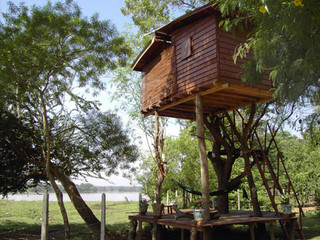
Treehouse on the Lake

For you guys who wish to break the long journey to Arugam Bay:
Arugam.info
can recommend one more stopover, in the Middle of the island.

Treehouse on the lakeTreehouse Info

…and here is the description, in the owner’s own words:

Lake View Lanka is a quiet, small and friendly srilankan homestay at Chandrika Lake. Just a short distance to the Uda Walawe National Park and the city of Embilipitiya.

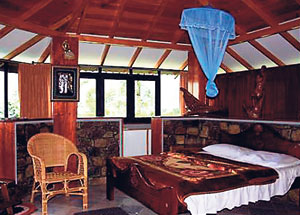
Have a great experience sleeping in a basic tree house. The tree house includes a double bed with mosquito net and a small balcony offering the opportunity to relax and read a book, observe activities at the lakeside or enjoy a drink watching the beautiful sunsets over the lake.

There is also a brand new house with a surrounding terrace available. Stay close with a local lovely family. They will offer you excellent and fresh srilankan or western food.

One night at the treehouse is about 1000 Rs. and a night in their just finished guesthouse 2000 Rs. (for a spacious room with double bed and mosquito net).

· Address: Nimal and Kumudu, New Town, Chandrika Wewa, Embilipitiya

· Phone: Kumudu & Nimal0094776973427

· Directions: Turn left at the last crossing just before Centauria Hotel. Turn right before the lake.

· Website: www.lakeviewlanka.com

· Other Contact: marco.haeusser@web.de, Mobile 0061 404647061

Watching out for the Tigers – in Ella

watch out for the tigers..

,

Ayurveda

Sri Lanka In der Heimat der Heilslehre sind Anwendungen mehr als Wellness

Blätterzählen im Ayurveda-Dickicht

Duftende Kräuter, aromatische Küche, ölige Massagen: zu Besuch im Resort einer Familie, die sich seit 200 Jahren der Lehre vom Wissen des Lebens widmet.

Von Stefan Nink

Die beiden links noch, dann bin ich mir ganz sicher, dass es 87 sind. Nicht 86 oder 88, und auch nicht 92, wie ich zwischenzeitlich mal meinte. Nein: 87. Man mag gar nicht glauben, wie kompliziert es sein kann, in einer Badewanne zu liegen und Blätter zu zählen. Das soll ich aber, damit ich nicht einnicke. Als ob diese Gefahr jemals bestehen könnte! Das Badewasser wirft gleich Bläschen, so heiß ist es, und ständig läuft mir das Öl in die Augen, mit dem mein Kopf eben noch massiert wurde. Außerdem piekst das Spinatzeugs, in das sie mich gepackt haben. Ich versuche, mit dem großen Zeh ein Loch in das Kräuterdickicht an der Wasseroberfläche zu stoßen. Kühler wird es dadurch nicht. Zur Ablenkung kontrolliere ich noch mal das Ergebnis der ayurvedischen Algebra.

Dass ich die Blätter des Bhodibaums zählen soll, dessen dürres Geäst über der Wanne kront, hat der Doc empfohlen. Lord Buddha habe das auch getan. Ich dachte, der Erleuchtete habe unter einem Baum meditiert. Dass er wie ich auf kleiner Flamme gegart worden war, wusste ich nicht. Was ich aber weiß, ist: Der erste Anwendungstag ist gleich vorbei, ich darf sein Ende nur nicht verschlafen.

Wenn Sie beim Stichwort “Ayurveda” von Massagen im Fünf-Sterne-Resort träumen, von samtenen Ölen und regenbogenfarbenen Gesundheits-Cocktails, die ihnen Kellner zusammen mit frischen Flauschhandtüchern an den Pool bringen, wenn Sie an Duftkerzen denken und an “Café del Mar”-Klänge – eben all das, was Ihnen Frauenzeitschriften penetrant als Ayurveda verkaufen -, dann erwartet Sie hier eine unsanfte Landung in der Realität. Das “Siddhalepa Ayurveda Health Resort” in Sri Lanka ist alles andere als ein Wohlfühl-Tempel, eher der Hotelgeschäftszweig des berühmtesten Ayurveda-Familienunternehmens im Land. Die Hettigodas beschäftigen sich seit mehr als 200 Jahren mit nichts anderem als mit der “Lehre vom Wissen des Lebens”. Man kann sich vorstellen, dass ihnen ayurvedische Kleidungs- und Einrichtungstipps in deutschen Lifestylemagazinen egal sind.

Zunächst bekommt jeder eine kurze Einführung in die Lehre vom Vid (Wissen) des Ayu (Leben). Der Doc sieht aus wie aus einem Sri-Lanka-Bildband: asketische Gestalt, markante Gesichtszüge, eisgraues Haar. Und ganz traurige Augen hat er, da passt es gut, dass er erst einmal seufzt: Ayurveda erklären? Unmöglich! Nach 35 Jahren Berufserfahrung könne er vielleicht die Grundzüge der Lehre beschreiben, mehr nicht: ,Jeder Mensch hat ein bestimmtes Verhältnis der drei Lebensenergien Vata, Pitta und Kapha in sich. Ist dieses Verhältnis gestört, wird er krank. Ayurveda versucht, das ursprüngliche Gleichgewicht wiederherzustellen.” Er seufzt noch einmal, als wisse er nicht genau, was er mit mir anfangen soll. Weil ich aber nun schon mal da bin, stellt er mir Fragen zu meinem Befinden.

Dann misst er für eine Minute den Puls und diagnostiziert: “Sie sind ein Kapha-Typ, davon ist am meisten in Ihnen. Vom Moment, als Sie aus dem Mutterleib kamen, bis zu jenem Tag, an dem man Sie sechs Fuß tief unter die Erde schaufelt.” Und das bedeutet? Der Arzt schaut traurig. “Sie sind ein wenig behäbig. Bleiben lieber sitzen, als zu laufen. Nehmen sehr schnell sehr viel zu. Sind maßlos beim Essen. Beim Trinken auch. Und auch beim . . .” Stopp! Es reicht! Was tun wir dagegen? Die Antwort wird von einem besonders traurigen Blick untermalt: “Man kann nichts dagegen tun. Sie sind und bleiben Kapha. Zurzeit sind Sie allerdings ziemlich aufgedreht, weil das Vata außer Kontrolle ist. Das dämpfen wir. Ansonsten lassen wir alles, wie es ist.”

In meinem Fall geht das Vata-Dämpfen wie folgt: Zuerst wird mein Kopf massiert, bis ich es tief drinnen im Hirn knacksen höre. Anschließend wird etwa ein Barrel Öl in meinen Körper geknetet. Und dann muss ich raus auf einen Steinweg, zum Umherwandeln. Ein böser Architekt hat Zehntausende Kiesel in den Boden einfügen lassen, die alle mit ihrer spitzen Seite nach oben schauen. Das Umherwandeln tut höllisch weh, was mich aufregt und eigentlich kontraindiziert sein müsste. Aber die werden schon wissen, was sie tun – oder mich tun lassen.

Wie der Fußweg ist die komplette Anlage nach ayurvedischen Gesichtspunkten gebaut. Die Pfade zwischen Blumen und Palmen beispielsweise folgen verwirrenden Kurven, damit sich die Gäste auf den Weg konzentrieren müssen und so den Stress vergessen, den sie zurückließen, als sie hierherkamen. Am rundlich geschwungenen Pool, den ich mit Geborgenheit assoziiere, liegt ein deutsches Pärchen. Er liest ihr aus dem “Herrn der Ringe” vor. Ich bin sicher, dass sie längst eingeschlafen ist.

Wie ein Fantasy-Roman hört sich auch die Geschichte des Unternehmens an, in dessen Resort unser Feintuning überholt wird. Asoka Hettigoda erzählt sie, Tochter des Chefs, eine zierliche, quirlige Frau, deren ayurvedischer Dreiklang ihr offenbar ein Charisma bis knapp unter die Haarwurzeln beschert . Asoka erzählt, wie ihr Ururgroßvater auf der Suche nach Weisheit in den Himalaja pilgerte. Wie er dort einen Yogi traf, der ihm die Rezeptur eines heilenden Balsams anvertraute. Wie der Yogi prophezeite, Ururgroßvater werde ein Vermögen mit dem Balsam verdienen. Zum Dank solle er die Hälfte des Gewinns an die Armen geben. Asoka erzählt, wie die Hettigodas seitdem 50 Prozent aus dem Verkaufserlös jenes Balsams spenden. Bis heute.

Sollte man ihre Geschichte für eine zauberhaft gewebte Firmenlegende halten und diese Überlegung versehentlich offen aussprechen, dann packt einen Anoka ins Auto und fährt über Straßen voller Menschen, hupender Autos und auf dem Mittelstreifen meditierender Kühe hinaus nach Mount Lavinia. Dort haben die Hettigodas ein Ayurveda-Krankenhaus gebaut. Die Behandlung ist für alle kostenlos. “Das hat der Yogi damals gemeint”, sagt sie und beginnt, mit jedem Patienten im Wartezimmer zu plaudern. Wie gut, dass ich behäbiger Kapha-Typ bin, der lieber gemütlich rumsitzt und zuhört als aufgeregt auf spitzen Steinen zu wandeln.

Die Sprache der Einheimischen klingt übrigens, als kämen aus dem Mund Murmeln gerollt, ganz viele und ganz schnell, ein ganzer Sack voll bei jedem Satz. Lustigerweise sieht die Schrift auch so aus: Viele knubbelige, runde Kringel purzeln neben- und übereinander Richtung Satzende. Und erst die Namen! “Belimal, Ashwaganda Arishtaya, Dasamoola Ariwaya”. Was sich für europäische Ohren wie eine Beschwörungsformel anhört, sind die Zutaten für den Cocktail des Abends, den “Herbal Dream”. Balan Pushpendran mixt ihn, der Chefkoch des Resorts. Mittags und abends taucht er am Büfett auf und kontrolliert, wer was isst, denn Kapha-Menschen wie ich brauchen natürlich andere Speisen als Pitta-Wesen. Wenn Balan merkt, dass es einem schmeckt, lädt er für den nächsten Morgen zum Ayurveda-Kochkurs in seine Küche ein. Da lernt man dann, dass Curryblätter gut gegen einen hohen Cholesterinspiegel sind, scharfe Chilis dagegen keinen positiven Effekt haben. Die ayurvedische Küche macht kein großes Geheimnis um ihre Kunst: vegetarisch, ein Curry als Basis, variiert mit Gemüsen und immer wechselnden Gewürzen. “Zimt!”, ruft Balan, sei ganz wichtig für seine Kreationen und auf Deutsch so ein schönes Wort. Er mischt den Zimt in ein Okra-Curry und reicht einen Probierlöffel weiter. Himmlisch!

Das ist das Besondere an einem Aufenthalt im “Siddhalepa Ayurveda Health Resort”: Man darf, ach was, man soll hinter die Kulissen schauen. In Balans Küche, in den Kräutergarten und in die Fabrik der Hettigodas, in der 1500 Angestellte aus 800 verschiedenen Kräutern ayurvedische Produkte herstellen, die ihnen landesweit fast 3000 Zulieferer lastwagenweise herankarren. Dr. Weerasingha ist 87 und so etwas wie der Spiritual Rector des Unternehmens. In der Hand hält er ein Curryblatt und sagt mit leiser Stimme: “Sehen Sie sich dieses Blatt genau an! Haben Sie es betrachtet?” Habe ich, es ist ein Curryblatt, eindeutig. Das stimme, sagt Dr. Weerasingha, aber natürlich sei Blatt nicht gleich Blatt. “Zu welcher Jahreszeit wurde es gepflückt? Früh morgens oder in der Mittagshitze? In welcher Klimazone stand der Strauch? Wie alt war er? Nein, sagt er, man könne nicht einfach ein beliebiges Curryblatt nehmen und es zusammen mit 54 anderen Substanzen zu einem Massageöl verarbeiten. “Es gibt sehr detaillierte, bis zu 3000 Jahre alte Vorschriften zu diesem Blatt. Und Ihr im Westen bietet Kurse an, in denen man Ayurveda übers Wochenende lernen kann.” Dr. Weerasingha keckert leise. Dann verabschiedet er sich und schlurft zurück ins Büro. Sein Lachen bleibt noch ein paar Sekunden in der Luft hängen. Es vermischt sich mit dem Geruch von Tamarinde und Nelken.

Im Resort wartet der traurig dreinblickende Ayurveda-Arzt auf mich. Er misst den Blutdruck und scheint sehr zufrieden zu sein. Offensichtlich haben wir dieses aufmüpfige Vata in seine Schranken gewiesen. Wie lange ich denn noch bleiben sollte?, möchte ich wissen. Er nickt und verschreibt weitere Massagen, Wandelgänge und Bäder. Und er ermahnt mich: “Zwischen den Behandlungen machen Sie bitte nichts. Keine Interviews. Keine Recherchen. Überhaupt nichts.” Er ahnt, was ich antworten möchte, und bevor ich ein Wort rausgebracht habe, wird er kategorisch: “Nein! Das Notebook bleibt aus. Achten Sie lieber auf die Stille. Hören Sie auf das Rascheln der Palmen, lauschen Sie dem Meer, lernen Sie, die Vogelarten auseinanderzuhalten! Und zählen Sie die Blätter des Bodhibaumes über der Badewanne!” Und wenn ich schon weiß, dass es 87 sind? Er lächelt milde. “Ich bin sicher, dass Sie sich verzählt haben.”

erschienen am 17. November 2007
Quelle:
Hamburger Abendblatt

Lahugala nr. Arugambay

On the northern edge of the Lahugala National Park are the ruins of a substantial ancient temple now called Magul Mahavihara. This temple is worth a visit not only because of its particularly attractive forest setting but also because the image shrine, the Bodhi Tree and the stupa are all in a good state of preservation. Magul Mahavihara is approached by a causeway across a beautiful lotus filled reservoir which surrounds the whole complex. As you enter the main gate through the solidly built wall that surrounds all the buildings you will see on the left the remains of a small shrine with an unusual moonstone at its entrance. The elephants on this moonstone all have riders on their backs, something unseen in all other Sri Lankan moonstones. The stupa is built on a high terrace with three staircases leading up to it. There are impressive lion guardians at the top of the stairs. These and all the other ruins at Lahugala are all surrounded by peaceful forest which makes a visit to the place a most enjoyable experience.

How To Get There

Lahugala is 2 km off the main Monoragala – Pottuvil road some 5 km from Potuvil.

Copyright© Ven. S Dhammika

source:

http://www.buddhistravel.com/index.php?id=60,512,0,0,1,0

Verugal, the new tourism site in the East

The thirty year old war waged by the LTTE had been a major obstacle to the development of the Eastern province. This is the reality that confronts anyone visiting the region.

Agriculture and fisheries are the two main livelihood activities of the people. However, the region is also rich in other resources as well, waiting to be made use of to launch industrialization to generate employment and alternative sources of income to the people.

Trincomalee with an area of 2727 square kilometers, has one of the best beaches in the world, extending over a distance of 80 kilometers. The natural harbour, hot water springs, Koneswarar Rock, Kodiyar Gulf, Arugam Bay which is world famous for wind surfing, Pasikuda, Nilaweli beach, the Kumana Bird Sanctuary – one could go on and on enumerating the attractions of this region. This region had been a tourism venue which suffered due to the war.

Despite the many tourist attractions the Trincomalee region offered, it could be seen that sustained efforts under a master plan for investment had not been launched. After the East was cleared of LTTE terrorists under the government’s on-going humanitarian operations to restore normal life to the people of the East, it is heartening to note that the authorities are now drawing up plans to exploit the inherent potential of the East.

A SCOPP team which visited Trincomalee and its environs recently to assess the humanitarian needs of the people was able to find many areas that could be turned into veritable local and foreign tourist destinations.

Of particular interest is the coastal village of Verugal. Divisional Secretary Uma Maheswaran told us that around 3,000 people had been displaced by the war from Verugal. The government has now resettled most of them and the process is due to be completed by the end of this month. He said that around 1,000 houses in the village were damaged and temporary shelters have been provided to the resettled families complete with basic amenities. Buried mines are a major problem and Mr.Maheswaran said that they hoped to complete the de-mining operations by October this year.

The Verugal beach defies description due to its breathtaking beauty. It could somewhat be compared with the famous Marina Beach in Chennia, India.

The LTTE had their Voice of Tigers clandestine radio station located at Verugal straddling a Stupa. The Security Forces eliminated the Tiger presence during their humanitarian operation. However, stone inscriptions found at the temple remain intact. There are also several caves around the stupa.

It has been said that the famous Indian Emperor Raja Raja Chola was hidden in Sri Lanka until he could claim his kingdom. According to some historical sources, Buddhist monks trained him and prepared him to ascend the throne. Tamil Buddhists are said to have lived in the Eastern province in large numbers and it could be assumed that they helped in conserving the Buddhist places of worship found in this region.

Fishing is the main livelihood activity of these people and coupled with tourism, it could be transformed into a potent force with beneficial effects on the people who had suffered the ravages of war and terrorism.

Improved transport facilities would be available to the region when the government completes the Pulmodai – Verugal highway project linked to the main Trincomalee-Batticaloa highway.

The 700-million rupee China Bay – Kinniya Bridge, the Thambalgamam main road, the 50-million rupee Yan Oya – Pudawaikattu – Pulmodai highway as well as the Polonnaruwa – Trincomalee highway would underpin major tourism development initiatives in the East.

In Batticaloa, there is a boat building yard at Ondachchi within the Kaluwanchikudy Divisional Secretarial area, operated by the Sri Lanka Solidarity Organization. 90 per cent of the employees at this facility are women, including widows – all of them found living below the poverty line. A similar facility could be set up in Verugal where once the fishing industry thrived. Educated youths, both male and female, could be found in significant numbers in Verugal. The SCOPP team found about 100 widows in this village. All of them were eager to earn a living through hard work. This desire could be tapped to advantage by setting up a boat yard and also an institution to teach them deep sea fishing. Empowering women in this area would serve as a bulwark against terrorism and any future subversive activity.

A different kind of displacement had also taken place due to the war – a large number of unclaimed cattle and buffaloes have made Verugal their home. The government is currently engaged in efforts to bring these animals together and a committee has been appointed for this task. These livestock could form the nucleus of a cottage dairy industry of women, providing nutrition and also an avenue of income.

The beaches in the East are rich in mineral sands and shells. They could be used as inputs for industries producing bulbs, insulators, glass, ceramics and also cement. Regional small industries based on the resources could be set up under the Eastern Revival programme of the Government.

The Ministry of Investment Promotion has said that the sea areas in the East would be transformed into tourist zone under the accelerated 180 day plans for Eastern Revival. There are also moves to attract large scale investment, for local and foreign, to help sustain development of the East. The Director General of the Board of Investment of Sri Lanka has announced new incentives and tax concessions to encourage investments in the Eastern province.

The people of the East have now been freed from the clutches of the LTTE, enabling them live their lives as they please without obeying the dictates of unscrupulous elements. Already, a transformation could be seen taking place in the East with several development projects being launched in the region. Some activity is short term with immediate benefits while others are long terms plans conceived and implemented with the future generations in mind. It is the Tamil speaking people of the East who will be the immediate beneficiaries of these activities.

source:

http://lrrp.wordpress.com/2007/11/10/verugal-the-new-tourism-site-in-the-east/

15 Min. from Arugam Bay

Lahugala Magul Maha Viharaya

On the northern edge of the Lahugala National Park are the ruins of a substantial ancient temple now called Magul Maha Vihara. This temple is worth a visit not only because of its particularly attractive forest setting but also because the image shrine, the Bodhi Tree and the stupa are all in a good state of preservation.

Magul Mahavihara is approached by a causeway across a beautiful lotus filled reservoir which surrounds the whole complex. As you enter the main gate through the solidly built wall that surrounds all the buildings you will see on the left the remains of a small shrine with an unusual moonstone at its entrance. The elephants on this moonstone all have riders on their backs, something unseen in all other Sri Lankan moonstones. The stupa is built on a high terrace with three staircases leading up to it. There are impressive lion guardians at the top of the stairs. These and all the other ruins at Lahugala are all surrounded by peaceful forest which makes a visit to the place a most enjoyable experience.

How To Get There

Lahugala is 2 km off the main Monoragala – Pottuvil road some 5 km from Potuvile.

Source : http://www.buddhanet.net

Relief des Hommes

After 272 bouncy km on the famous A4 passengers in transit to Arugambay are obviously happy to spot a modern restaurant on the left side.
With well advertised clean toilets. What a relief!
On closer inspection a shiny brass plaque is found on the wall.
Coastal bound travelers are confused:
“Are we near the sea then?” I thought we have half a hundred more kilometers of rough ride ahead of us, Alf shouted to the shaken driver.
img_0619-1.JPGimg_0620-1.JPG
What on terra earth has a distant Small Fishy Corporation to do with this Inland ‘project’?
“Don’t be stupid”, his wife said and ordered ‘Any style’ of a NeppTune’s meal in this clean, well build restaurant.
Terre des Hommes and the Green Cross Family want to promote the “poor” fishing industry!
img_0609.JPG
More confusion follows! There is not a single Red Herring to be had on the premises. Or any other fish. Now that is getting a bit fishy, Karin says.
Never mind! At least some of the near bankrupt hotels and restaurants in the destination Bay might get an order or two; after all they never received a hint of such good assistance from the Millions of donations. Which were supposed to help with the huge Tsu. losses in this hardest hit coastal village.
Can anyone shine a light behind the thinking of this otherwise brilliant project?

Photo: Unlike a farmer who needs to cultivate and look after his crop, extensive (over-?) harvesting the sea at Arugambay, shown below is totally FREE.

Trinco Trip

Monday, December 18, 2006

Trinco

I went to Trinco with FCE looking at religious sites we are rebuilding there. As usual nothing went as planned. We were supposed to leave ampara at 8.30 am, when I arrived at 8.15 there was no driver, when he eventually arrived he hadn’t got a travel permit, he should have gone the day before for one. After he got the travel permit, 9.45, he decided to wash the van? Next we drove like a maniac through Ampara and ended up at the driver’s house so he could pack an overnight bag. We then drove back through Ampara to the garage to get diesel. We then headed of to Akkirapatu, which is in the opposite direction to Trinco to collect Akeel, who had been expecting us at 9.00 we got there at 11.15, then to the police station to get another pass. At 12.15 we set off for Trinco. The driver is chewing on leaves and paste which has the effect of making him completely insane, he drives too fast, blaring the horn all the time and spitting out of the window every 30 seconds. He has a habit of trying to overtake in impossible places, having to brake then not changing gear and rocking back and forth in the driver’s seat willing the van to go faster. He doesn’t seem to know about changing down a gear or two.
After 4 hours we are about half way to Trinco, we have done some really bad driving. Akeel suddenly says is it ok if we call in and see an old friend, evidently this idea has just occurred to him so we head off into the remote areas. We get to his friends village and are made welcome, the next hour involves me being shown round the village and introduced to all Akeel’s friend’s relatives. It is then decided that it is too late to go to Trinco and we should stay there, get up at 3am and go! I am urged to have my bath, that’s standing next to a well in your boxers and having an all over wash, in my case with an audience. I am given a room and a bed. We are fed and I decide to go to bed about 10, then follows the worst night yet, mosquitoes or bugs I don’t know which but I was bitten to death. I get up at 3 and Akeel is moaning that he too was bitten to death, we both had nets but to no avail. Another bath at the well then off into the night. The amazing thing here is that in the middle of the night in the remotest places you find people doing all sorts of things, from building to waiting for busses.
We drive through the early hours and get to Trinco about 7.30am, stop for tea at somebody’s house then go in search of the office, which has just been moved so can’t be found!
When we do find the office nobody is there so we sit around for a while. In could go on and on with the chaos and disorganization but I will move it along. After a really bad night previously I decided enough, so went and booked into the Oceanic a 5* hotel on the beach. Turns out that’s where a lot of the INGO’s are staying in luxury beach apartments. I just booked into a standard room. Really beautiful place, swimming pool, the lot, I have to say I was a bit sickened at the INGO long-term residents. Maybe there is no alternative but it doesn’t seem right somehow.
I got to visit the religious sites we are rebuilding; as luck would have it one is on Nirvali beach, which is as beautiful as the books say. I also got to travel around the bays and cross one on a local ferry. I will be happy to go to Trinco if given the chance next year.

see the original blog:

http://resplendentisle.blogspot.com/2006/12/trinco.html

NGO’s can Cooperate!

Do we have to humbly apologize? For our earlier remarks.
Cleaned by NGOClean Ox Framed
The often reported lack of cooperation between rival organizations has been disproven..
On a trip to OKANDA, at the entrance of the Yala East National Park, our reporter could not help to be rather impressed.

Of course, normally only one of the (up to 4) opposing adverts will be seen when hard working NGO’s pose in front of one of the ancient wells at Okanda (and elsewhere) to impress their gullible donors.
Remarkable! What a brilliant piece or coordination! No fighting for dominance here. Normally just one single side of the -still very dirty!! – wells was filmed of course.
Used entirely free of charge as a studio style backdrop for each Organization’s Self Promotion!
Well, well, well! Well done, mates.

Our nasty reporter didn’t apprechiate the wider backdropping either and went even further afield than remote Uganda.
He wanted us to publish shots of choked animals and other horrors – we declined because this is supposed to be a tourist promotion site.
But: Although poor, We do have a consience and concern for our environment!
How about YOU?
Wildlife supportCombined NGO effordsSewage Lanka' successUS Genie & their fansClean Ox FramedUSA aids the environmentWell clean? Environment dirty.Big Clean Well

Our Wild Life as well as Arugam.info regret that the budget of said Organizations did not stretch as far as the employment of a few local labourers.
Two full months after the Kataragama walk PVC and rubbish still litters one of the nicest part of our island.

10 local guys could have cleaned this beauty spot in one or two days, at ease.
People here do need education; this is where Western “experts” could have made a real difference.
Total cost: 10 x 5$/day = approx. 100$
The painting of self-adverts was obviously much more cost effective.

www.Arugam.info
would certainly be ashamed if our logo would be associated with such mismanagement, anywhere.

Winter in Ceylon, S.V.P.?

Sri Lankan Airlines

Save Heating Costs! Spend Christmas in ABay!
Or elsewhere on our tropical island! A Bargain!


Unbelievable Fares on SriLankan Airlines To & From Europe!!

 
From Colombo


-
To London One Way LKR 11,900 (all inclusive)
      Return LKR 27,700 (all inclusive)
    The fares are valid on selected flights departing Colombo to London.
           
 
-
To Paris One Way LKR 11,900 (all inclusive)
      Return LKR 25,700 (all inclusive)
    These fares are valid on selected flights departing Colombo to Paris.
           
 
-
To Frankfurt One Way LKR 11,900 (all inclusive)
      Return LKR 25,100 (all inclusive)
    These fares are valid on selected flights departing Colombo to Frankfurt.


From London
           
 
-
To Colombo One Way GBP 99 + (GBP 31 Taxes)
      Return GBP 199 + (GBP 41 Taxes)
   

These fares are valid on selected flights departing London to Colombo.

           
From Paris
           
 
-
To Colombo One Way EUR 99 + (EUR 31 Taxes)
      Return EUR 199 + (EUR 46 Taxes)
   

These fares are valid on selected flights departing Paris to Colombo.

           
From Frankfurt
           
 
-
To Colombo One Way EUR 99 + (EUR 27 Taxes)
      Return EUR 199 + (EUR 39 Taxes)
   

These fares are valid on selected flights departing Frankfurt to Colombo.

           
Note:
•
Fares are only applicable on selected flights only
•
Tickets once issued are non refundable and no date changes are permitted
•
The fares given above are inclusive of all taxes and surcharges
•
The second leg of the journey has to be completed within 30 days from the original date of commencement of the travel
•
The credit card holder must be part of the travelling party and may be requested to show the credit card at the time of check in
•
These all inclusive fares are subject to currency fluctuations
•
Skywards Miles are not accruable on this special offer
•
These offers are valid until the end of December 2006
$250 return offer
Book direct, spend the winter with us and save your heating bill!

Â