Author Archive for Peter

Page 2 of 3

Arugam Bay turns on perfect waves for day 3 of the SriLankan Airlines Pro!

Arugam Bay turns on perfect waves for day 3 of the SriLankan Airlines Pro!

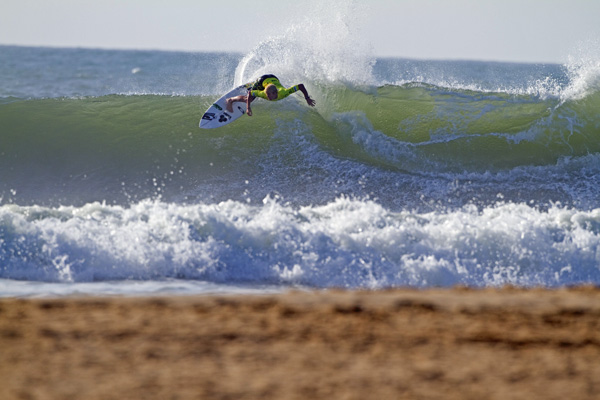
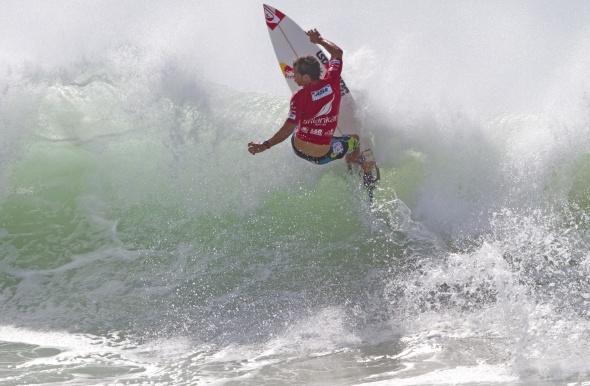
Sri Lanka, Arugam Bay: Fantastic conditions at Arugam Bay for day three of the Association of Surfing Professionals six-star rated SriLankan Airlines Pro.

A slight drop in swell with waves at 3 to 5 feet (1.5m) but perfectly angled on this incredible point break set-up saw the world’s top surfers shredding the long clean perfect waves as round two was completed and the field is now down to the final 24 surfers. Continue reading ‘Arugam Bay turns on perfect waves for day 3 of the SriLankan Airlines Pro!’

(2)

SriLankan Airlines Pro begins in excellent waves at Arugam Bay

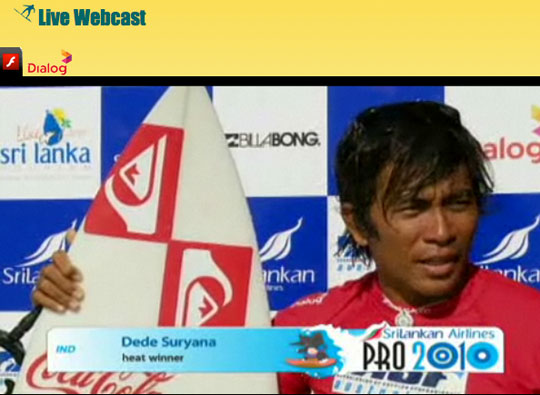
An historic day in Sri Lanka as the first ever  Association of Surfing Professionals (ASP) surfing event began in this country  with day one of the six-star rated  SriLankan Airlines Pro at the famous Arugam Bay on the tropical south east coastline of Sri Lanka.

A significant overnight swell pulse delivered excellent surf to 2m (4 to 6 feet) and the high quality line –up of world surfers revelled in the long walling and powerful waves on this unique sandy point. Continue reading ‘SriLankan Airlines Pro begins in excellent waves at Arugam Bay’

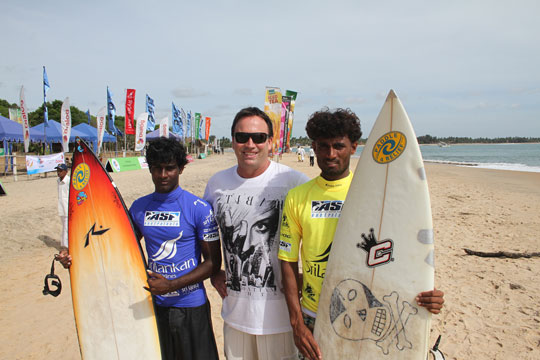
Head judge Richard Porta with Sri Lankan wildcards : photo ASP/Robertson

Live Coverage |  Results/Photos/Videos etc

SriLankan Airlines Pro at Arugam Bay set to begin tomorrow with Sri Lankan wild-cards decided

Surfersvillage Global Surf News, 18 June, 2010 : – - Day  one of the Association of Surfing Professionals (ASP) 6-star rated  SriLankan Airlines Pro at Arugam Bay was officially placed on-hold as contest organizers await an expected good pulse in swell tomorrow to begin the first ever ASP event in Sri Lanka.

The consistent 1m (3 to 4 feet) clean surf that greeted the opening day was certainly good for surfing but with bigger waves forecast in the coming days along with an extremely favourable forecast for surf in the coming week organizers are keen to run the event in the very best and biggest surf and expect to be off and running first thing tomorrow morning.

“It’s very contestable out there today but both myself and ASP Head Judge Richie Porta agree that with better waves likely tomorrow we’re keen to begin this special event on a real high” said contest director Dane Jordan.

“It’s also a great opportunity for us to run the trials final this morning and then let all the competitors really free surf the waves today and further familiarize themselves with the  point break here and be primed for an excellent start.”

An opening ceremony was enjoyed by all surfers at the famous point this morning and shortly after eight of Sri Lanka’s finest surfers competed for two prized wild-card positions into the event. The standard of the Sri Lankan boys surprised many of the media and officials at this event but not head judge Richard Porta who has visited the break on a number of occasions over the past 18 months.

Asanka : photo ASP/Robertson

“ Our international panel of ASP judges  judged their final today and there were some legitimate 6 point rides in the mix of scores so that gives you an idea that they know how to perform – tomorrows heats will be exciting for all” added Porta.

Local restaurateur Asanka along with fellow Arugam Bay surfer Milan  were the winners of the two sponsored wild-cards into the event while a number of other Sri Lankan surfers have taken positions into round one heats.

The free surfing performances have been spectacular and the wave looks to be living up to it’s reputation as a superb performance break. All is ready to begin, internet facilities are in-place and we expect to beam out a super quality webcast from this tropical paradise remote location.

The webcast site link  is located on the front page of aspworldtour.com.

The SriLankan Airlines Pro will be live webcast and will include a quality produced and globally distributed television show along with television newsfeeds distributed internationally throughout the event as well as  highest quality digital images focusing on the event, the environment, wildlife and of course the abundance of surf from the region.

The SriLankan Airlines Pro is made possible thanks to SriLankan Airlines; Sri Lanka Tourism Promotion Bureau, Lanka Sportreizen, Dialog, Arugam Bay Beach Wear,  Billabong and ASP Australasia

source:

http://www.globalsurfnews.com/news.asp?Id_news=47252

(0)

First Turkish Surfer Cihan Akça is Ready for WQS

We introduce Cihan Akça to you.

He is the first surfer in Turkey preparing for the World Qualification Series. It has been quite a widespread belief that the waves on the Turkish coastlines are not suitable for surfing and therefore the country is not a haven for surfers.

Cihan Akça in action

That belief is about to change now. Surfing is beginning to blossom in Turkey!

Cihan Akça has been surfing in ?ile (Black Sea Shore – Istanbul) and many different locations of the world for years now, improving his skills and experience, and eventually preparing for the World Qualifying Series.

About Cihan Akça…

He was born May 04, 1982 in ?stanbul. Following his graduation from Kadir Has University (Istanbul), he began working as a Research Associate at the Institute of Maritime Sciences in ?stanbul University. He acquired his doctor’s degree in Tenerife using the postgraduate fellowship he was granted with, and then headed back to Turkey. He is currently writing up his dissertation at the Institute of Maritime Sciences in ?stanbul University. Furthermore, he is hosting the “Daily Surf Report” Turkish broadcast on EUROSPORT2.

Surfing in Turkey… Continue reading ‘First Turkish Surfer Cihan Akça is Ready for WQS’

(1)

Julian Wilson accepts wildcard into SriLankan Airlines Pro at Arugam Bay

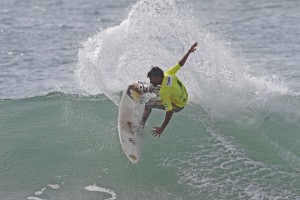
Ready for take-off – Julian Wilson will head to the Srilankan Airlines Pro set to launch into moves like this! Photo: ASP/Robertson

A fully fit and recovered Julian Wilson (Australia) is ready to launch himself onto the Association of Surfing Professionals (ASP) Star Rated World Tour at next week’s SriLankan Airlines Pro which will run at the famous Arugam Bay point break on Sri Lanka’s superb south east coast.

Wilson is one of the world’s most exciting, progressive fast emerging new-age surfers capable of outstanding performances in all conditions.

A serious ankle injury and subsequent operation severely disrupted his 2010 year-to-date but Continue reading ‘Julian Wilson accepts wildcard into SriLankan Airlines Pro at Arugam Bay’

(0)

New logo for Sri Lankan Surfing Federation

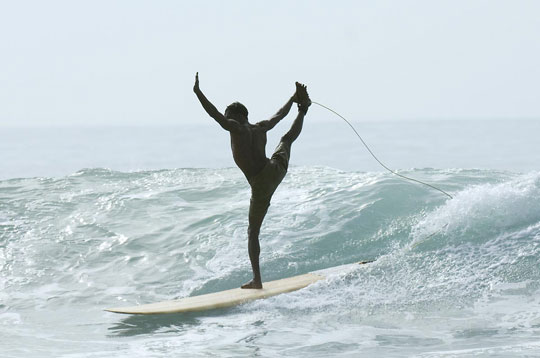
Sri Lanka local Surfer. photo by Testemale


Sri Lankan surfers choose their own path with a new identity


Surfersvillage Global Surf News, 19 March, 2010 : – - The Birth of a Surfing Nation project has always had the objective of positioning Sri Lankan surfing in a different manner to that of other existing national surfing organizations due to the unusual environment and context in which the organization was created in 2010.

In accordance with the formation recently of the Surfing Federation of Sri Lanka, the surfers have decided on a new logo for their identitiy, promotion and team look. A logo was chosen which they felt represented their new attacking attitude upon the world of surfing;

The Team colours and designs are yet to be finalised for the new national outfit. They will undoubtedly reflect this group’s intention of branding themselves apart from the others. The new national look will be decided at the upcoming Annual General Meeting in Arugam bay between 18 – 24 June during the first major international Surfing event to be staged in Sri Lanka – the Sri Lankan Airlines 6 Star Pro WQS to be run in conjunction with the local Sri Lankan Tourist Board.

The new identity will be a natural extension of the unusual manner and circumstances in which the Federation has formed this year and reflect the very broad cultural span in the Sri Lankan surfing community. The Surfing Federation’s marketing advisor Peter Rob-o added that the new federation is keen to talk to any of the Surf clothing companies and action sportswear manufacturers who may be interested in taking a chance through supporting the new team and preparing the Sri Lankan Surf Team national outfits.

“We invite the involvement of any surfing or sportwear company starting out (like us) who is interested in connecting to the worldwide industry with a surfing group such as ours who are definitely outside the surfing norm. We could be a very exciting opportunity for the next budding surf industry giant to get associated with at an early stage.

Our objectives are clear and we intend to be highly marketable and noticed. Our surfing talent is already starting to command some attention with the visiting surfers and random overseas surfing groups such as the British, European, Japanese, Israelis and Australians who come here to surf and compete on our shores each surfing season.” proclaimed Rob-o proudly. Continue reading ‘New logo for Sri Lankan Surfing Federation’

Arugam Bay Developments

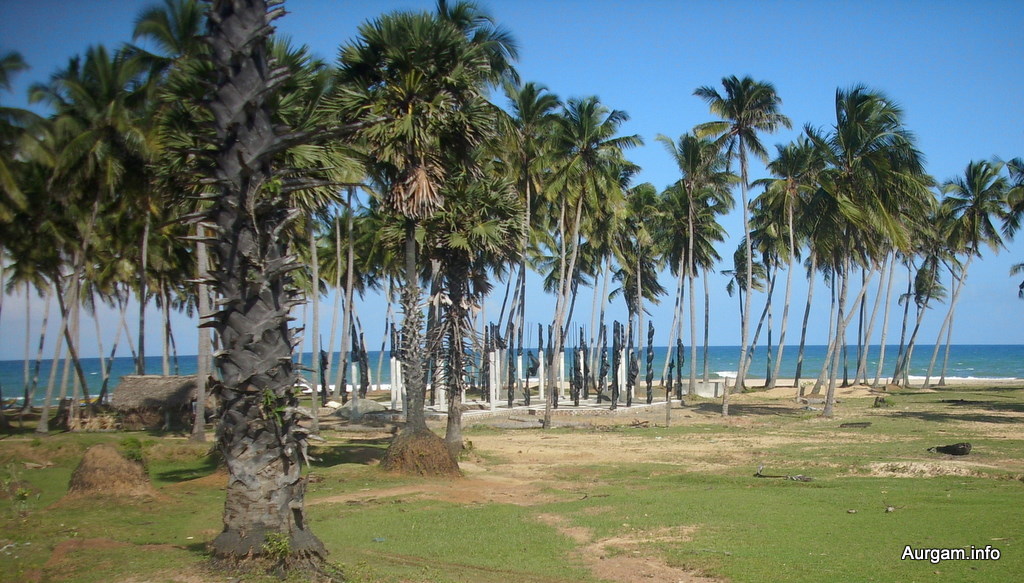
A new project is under construction near PottuVille Point.

PottuVille Point is being developed

It seems that a new hotel/restaurant is being build on this beautiful coconut estate.
Overlooking the Indian Ocean, facing the Bay of Arugam.
According to local contractors and workers, #01 Stardust owners are branching out to this new location. Other say, an English family are behind this development.

Great spot! Where else on this island could such a fine, unspoiled location be found?

Rocco’s Blog

Tsunami Warning – Arugam bay- 12th September 2007- 6pm

Tsunami warning – Arugam bay- 12th September 2007- 6pm

The last major Tsunami warning we had was the night of 28th March 2005, 3 months after the devastating Tsunami occurrence of 26th December 2004, the effects of which are still apparent in certain parts of the Island.

Last week I was in Kandy up in the hill country; around 6pm I had a phone call from the Manager at Rocco’s telling me the Army were on the beach evacuating the area as a Tsunami had been predicted to hit the coast between 8pm & 9pm!

This was unusual as we have never had official warnings before, March 2005 I was warned by friends calling me from UK & Dubai saying a Tsunami was imminent! On that occasion it was up to us to evacuate the area, which we did in 20 minutes, everyone working together. That one was 8.9mg & 35km.

Underwater earthquakes were and are the cause of the Tsunami and the evenings warning.

After March 2005 I subscribed to the US Governments Earthquake centres warning system – http://earthquake.usgs.gov – You would be amazed at the number of earthquakes that take place around the world; record so far is 72 in a day including “aftershocks”.

You can even have the warnings sent to your mobile phone as I do, you can even set parameters of what warnings you get; where in the world, strength (magnitude or ‘mg’ to be correct), depth of epicentre, a Tsunami warning if deemed possible and all for free!

Duly I checked the messages, just as I was doing so it arrived, earthquake in Southern Sumatra, initially measured at 7.9 at a depth of 15km with an accompanying Tsunami warning, I was concerned.

Manager & staff headed for the higher ground, did not have to worry about guests they had left earlier in the day, we were empty at the time.

Main reason for my concern was it’s depth 15km is very shallow but compared with the “Big One” of December 2004, 9.2mg & 5km this could not have such a devastating impact. Nether the less a warning is a warning! & I am no expert, Zulu theory or no Zulu theory!

I scoured the Internet for reports of a wave forming; nothing at first but the report was revised to 8.2mg & depth 45kms much less worrying for us. I called friends in UK & Dubai to see what was being reported.

Indonesia dropped its Tsunami warning 1 hour after the “Quake” as no wave had come ashore. A 9ft wave, equal to a lot of the waves we get every day in Arugam Bay especially in “Surf season” (although they are very different forms of waves) was reported coming ashore in Padang & a 55cm one on the Cacaos Islands. Tsunami did arrive but small & not our shores. In fact the March earthquake did produce a 30cm & 35cm Tsunami to come ashore in Sri Lanka, just we did not notice.

8.2 is 10x less than 9.2 on the “Richter Scale” I am told, also being 9x deeper means there is a lot of “earth” to soak up the energy created before displacing the Ocean, forming a Tsunami wave.

In my surfing of the net I did discover the “Indian Ocean Tsunami Detection System” should be operational this month.
.

Downside – all the mobile lines went dead after the warning was given, then landlines went, Internet & text messages were still getting through? I enquired with my supplier “Dialog” the first 3 times I posed the question the person or persons I asked put the phone own on me, when I eventually got through asking for a supervisor before posing the question, I was told “Network Issue” when I asked “what was the issue” phone went down on me again!?

The up side of all this is the fact we were given warning, 2 hours warning, enough time to be well out of any danger posed if a major event ever happened again, takes the panic out of it, meaning we can organise procedures and rest more securely in our hammocks. A great step forward in my opinion, well done to the authorities.

Steve (A little Knowledge is a dangerous thing) Jones

Warning notice as sent to e-mail or phone.

Magnitude 8.4
Date-Time

* Wednesday, September 12, 2007 at 11:10:26 UTC
* Wednesday, September 12, 2007 at 06:10:26 PM at epicenter

Time of Earthquake in other Time Zones
Location 4.520°S, 101.374°E
Depth 34 km (21.1 miles) set by location program
Region SOUTHERN SUMATRA, INDONESIA
Distances 130 km (80 miles) SW of Bengkulu, Sumatra, Indonesia
410 km (255 miles) SSE of Padang, Sumatra, Indonesia
620 km (385 miles) WNW of JAKARTA, Java, Indonesia
695 km (435 miles) SSW of SINGAPORE
Location Uncertainty horizontal +/- 6.1 km (3.8 miles); depth fixed by location program
Parameters Nst=286, Nph=286, Dmin=809.9 km, Rmss=1.11 sec, Gp= 29°,
M-type=moment magnitude (Mw), Version=V
Source

USGS NEIC (WDCS-D)

Event ID us2007hear

source:

http://www.roccoshotel.com/blog/archives/16

High Season?

It is no secret. Arugam Bay has never, ever been as quiet as this before.
The usual High Season is as good as over – and  nobody to speak of came.
Even so-called die-hard surfers stayed away this year.
No wonder, given (incorrect!) travel warnings by many foreign Governments!
The mini-tourist industry, consisting of a few guest houses and a handful of slightly larger ‘hotels’ has been hit hard – and they received NO HELP or assistance from any official source whatsoever.
First, we had the 30 year ‘war, then we were wiped off by the waves, then we have fresh and more violent hostilities.
It will be a miracle if the small establishments can survive this winter – financially that it.
The hardest hit community in the whole of Sri Lanka has received NOTHING at all, but adverse publicity and tough Government action, such as constant Excise Department raids.
All this makes it impossible for most to continue the little business they manage to attract in such difficult times.

Red Cross Experience

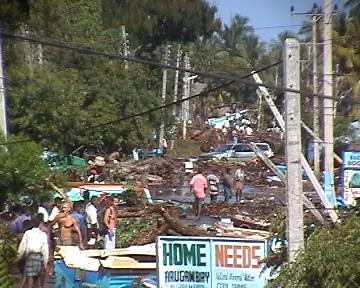
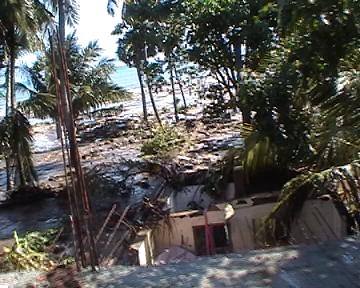
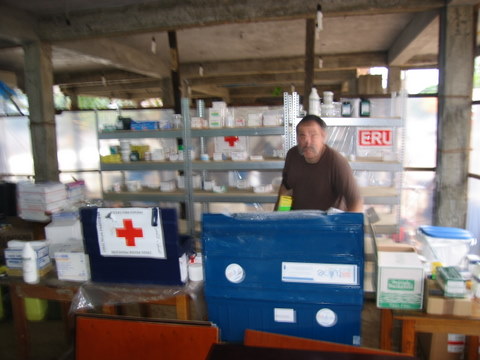
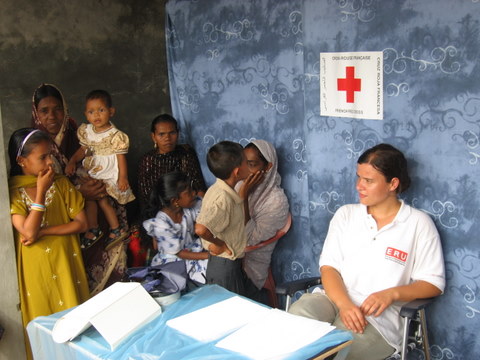
red-cross-in-colombo.JPGhigh-street-after-high-tide.JPGsvh-room-1-6-destroyed.JPG
This is a true account our own experience with the “Great” Red Cross.
Sadly it is a story of failure, wasted resources and misused donor’s cash as well as a report about broken promises and total incompetence.
Arugam.info was originally set up locally to promote just tourism.
Assisted by resident expats with a Sri Lankan connection of more than 30 years.
However, a well known event at the end of 2004 and global reaction since have changed some priorities of AbHa.
Foreign organizations (in Tamil language known as: ENJOY’s) came and pretended to help us all – but many feel that they are only here to help themselves.
For future reference and as entry into East Coast History books, here is an extract of a recent press interview with a well known local professional resident of Arugambay:

Question:
Some say that you are prejudiced towards organizations. Why is that?

Answer:
Indeed, we are, and we perhaps always have been.
The Red Cross, for example used to be the non-plus ultra in all of our minds.
I personally always had a good opinion and very high regard for this global organization. Shocking events since 2005 totally reversed that, however.

Question:
It sounds like something has happened? What has changed your mind?

Answer:
We never knew that there are so many, totally uncoordinated Red Cross and Red Half Moon organizations – many of which seem to be able to do whatever they want, where and when and regardless of costs.
The Swiss leadership seems totally incompetent or unaware of facts. The staff they where sending into a disaster area turned out to be totally unqualified and unfit for the task.
One day alone, in a popular AbaY restaurant there were 4 Red Cross teams from 4 different, but very much underdeveloped Countries, such as Kenya, Somalia and the former Yugoslavian region. In discussions it emerged that the African ladies, sporting their flash Red Cross Jackets, all had similar tasks, such as ‘teaching hygiene to the natives’.
They were in Sri Lanka for just 2 weeks, could speak no Tamil or Singhala and knew nothing of each other’s group doing the very same thing it seemed.
2 days in Colombo, 2 days local transfers, just 10 days on the East Coast, and again two days to recover from the grueling tasks in a plush hotel in the capital city.
Privately they agreed that there was a lot more to do at home, in poor Africa, where help is actually needed. It was simply an expensive vacation for them and nothing was achieved in Sri Lanka to speak of.

The wasted airfares alone came to more than our self-help budget for the past 2 years.

Q.:
That sound terrible; please tell us more of your own experiences, step-by-step. Do not add any hearsay or rumors please.
A.:
On New years day, 2005 the French Military Formations completed their impressive two day task in the Bay. Highly trained experts in their chosen field, very competent guys indeed. They achieved more in a couple of days of duty than the French Red Cross did in two full years.
Q:
Slow down now, what happened exactly?
A:
The Formations Militaires Francaise were the first foreign team to arrive in our, beyond doubt hardest hit area of Sri Lanka on New Year’s eve 2004. They indicated that the (now: in-)famous Red Cross would soon follow (once they completed their 4 Star hotel stunt in Colombo).
Q:
This is hearsay! How do you know the Red Cross spent time in a top hotel?
A:
Please look at this photo album, all shots are dated and the camera belonged to Red Cross Members.
Q:
OK, Accepted! It looks like they had a jolly good time – when the rest of the island was waiting for this so-called ERU (Emergency Response Unit). Continue to recall events in your own words.
A:
Please accept that we can only speak of events in OUR area. We do not know how brilliant ERU, EMU or the Reds performed elsewhere. The first team to reach our remote, but accessible area was from France. They were actually quite nice, pleasant people. We formed a good relationship with them and as they came to help us, we decided to give them (the Red Cross) all of our remaining facilities and offered our full support.
Q:
Was a contact signed? How much did you charge them for the use of your hotel, rooms, food & drink?
A:
Money never entered our thoughts! All our facilities and remaining resources where given away free to EVERYONE. It was a matter of pure survival and we had after all about 2 weeks of real hardship behind us – left entirely, but very successfully to our own devices and resources.
Q:
Where did the teams come from?
A:
The so called ERU team came from France, it was the French Red Cross.
Q:
What was their task at Arugam Bay?

A:
A medical clinic was set up in the former SVH business centre, as well as a very well equipped pharmacy and a huge water purifying plant operated by Red Cross Water Force – or was it the “Water Farce”? I can’t recall the correct title ;-)
Also all remaining rooms, mainly our luxury apartments were donated free of charge to the staff.

The Red Cross also benefited from our well stocked bars, remaining wine cellar and stock, our famous draft beers and our Thai catering facilities. Power was also supplied by us, hard hit Tsunami victims for the Red Cross installations until their own 15kVa Dutch generators arrived somewhat later.
Q:
Did it work out well? How did they perform?
A:
As mentioned, the first team was nowhere near as perfect as the French Military, but overall OK. They entered certain contracts with translators, drivers and so on. Sadly they were soon replaced by a second, terrible team, also from Paris.
emu.jpg
Q:
Why terrible?
A:
Because just about everything agreed upon a few days earlier was canceled, ignored or turned around. Hired new local staff was fired without reason, agreed wages reduced to totally unrealistic levels. They even fell out with a local Judge, a Mr. Amarasinghe who was employed by the earlier team as driver, coordinator and translator. He was fired.
Q:
Why did they fell out with him?
A:
I don’t know for sure, but there has been an issue about some highly pregnant ladies which were refused help, some theft matters and so on. I have seen a police complaint against the Red Cross filed by Mr. Amarasinghe. Please ask him for details.
Q:
It seems there was no real hand-over or documentation, OK, so what?
A:
The real problems emerged within hours, or days. The new team was totally incompetent. Many members had personal problems and could not really sustain themselves in a tropical Country. They were unfriendly. They had a strict lunch break of about 3 hours and refused to attend to any emergency at that time.
There were at least two serious cases where the team leader denied help to seriously ill patients. Requests to allow one of their luxury Jeeps to be used to ferry patients to a proper hospital were denied on the grounds that they are ‘No ambulances’ and the new seats might get blood stained.
In our ignorant little world a Red Cross symbol used to mean ‘First Aid ‘or so – it no longer has such meaning.
Q:
Was the clinic popular with the locals?
A:
At first, yes. But when DEMIRA (German Mine Clearers) set up a tiny field hospital nearby on a mini budget (100,000$/year) at the end of January, 2005 just about every patient voted with their feet. Hardly anyone wanted to see the Red Cross again.
One monitored day, DEMIRA treated just under 100 patients; the Red Cross had not even 10; less than their own staff numbered at the time.
Sadly DEMIRA run out of funds and received none of the huge donations given by kind people to a situation such as this.
Q:
I heard some mention “Red Vomit or Rote Kotze”. What is that?
A:
It stems from a word pun following one of many wrongly diagnosed medical conditions at the time.
A patient complained of blood in his spit or vomit.
The Red Cross ‘experts’ from Paris sent him away unaware of a very serious condition advising him to chew less beetle nuts. The case is well documented, (the Red Cross diagnosis file was left behind by ERU when they hastily departed). The patient barely survived, after he found a real doctor. Some did not.
The Red Cross lost a good name in a matter of days due to such ignorance and total incompetence. Such and many other stories can’t be kept quiet in a small community.
Q:
Whom did they treat then, thereafter?
A:
Hardly anyone wanted to see the Red Cross. Just to prove a point, a brilliant water engineer, a Herr Matthias Bock injured his Hand operating a water pump. Although he worked for the German Red Cross – did he seek treatment with his French counterparts?
No! He trusted DEMIRA and qualified people with his condition.
I am informed that Herr Bock also left the Red Cross in disgust – most good people seem to do just that. Why I wonder?
Q:
Did the ERU water plant work well?
A:
No, not at all. It was a brilliant huge, brand new plant together with a swimming pool size reservoir.
The team however was unable to operate it properly, the water was saline and nobody ever drunk any of it.
The whole thing took a week to erect and was taken away without ever having been useful.
Apart from the usual public relation stunts of course to show gullible French donors how good the Rouge Crusaders are performing in the tropics.
Q:
How long did they stay at Arugam Bay?
A:
It seems that the maximum a French EMU team was expected ‘operate’ under such ‘duress’ was about 2 weeks before being repatriated for recovery or treatment.
Q:
What is the story behind ERU’s moving out of your premises?
A:
The French Red Cross gave us a very bad name. Not only did they treat us as their catering offshoot or a Red Canteen, but they abused our hospitality. We operated a donations only policy, provided all services for FREE to anyone in NEED. This was also abused by these highly paid “experts”. When I mentioned our discomfort to the team leader, he snapped, got angry and he was incapable of any improvements or compromise.
He (wrongfully) told his team we evicted them and they packed their bags and tried to find alternative locations nearby.
Nobody really wanted them, and they eventually, in desperation set up camp in the old mortuary on famous “Heroes Hill” – the worst place to chose for a hospital in our kind of society and our beliefs.
Q:
There is a report filed with the local police station against the French Red Cross?
A:
Yes, there are a number of legal complaints filed locally as well as elsewhere. Our own case centres around willful damage, sabotage so to speak, caused by irritated Red Cross members when they vacated our own premises
Q:
The Red Cross SABOTAGED premises of Tsunami victims and survivors?
A:
Indeed, they did! They stole a local electrician’s tool box, broke all of our low energy lamps, cut off all cables so short they they could not be reconnected, willfully blocked our sewage systems with our new towels, vandalized the apartments. They even caused a fist fight between the police and our contract staff and so on.
Q:
Has there been a Court case?
A:
The Red Cross in Genevra sent us messages threatening legal action against us if we don’t withdraw comments on this web site (www.arugam.info). We simply reported our observation at the time. They called it slander and defamation of their famous institution.
We replied and we were looking forward to such legal action, because everything was well documented and we have ample proof of our statements.
Q:
What happened next?
A:
A long time nothing, then a Mr. Robert Mayhem (or similar, sorry I lost his card; he came from Darwin and said he is 2nd in command) contacted us, arranged a meeting, came on time, was jolly and friendly. We sat down in the very same ERU building, had a cup of tea and agreed to withdraw our comments in exchange for $5,500 in cash.
Q:
The Red Cross paid you off to shut up?
A:
We had other priorities at the time. The Community was short of funds, we had no support at all. The money was immediately distributed to the most needy and this mini program actually helped a lot of affected residents to recover quickly. Everyone signed a receipt and at the time this seemed a better option than a long drawn out legal case.
Q:
Why do you feel free to reveal this issue now?
A:
Because the Red Cross broke a main condition of our settlement. The pleasant Australian Mr. Robert agreed to help & assist the Community; we discussed many options. Needless to say, we never heard from him or the Red Cross again and NOTHING useful was done by them locally to my knowledge.
Q:
Did you remind them?
A:
Of course! Many letters and mails followed, also to Genevra.
In short, they say: Do what you want, we don’t care.
“What does the oak tree care about the worm crawling on its bark”.
Well, at the very least we feel that we have to leave a slimy, dirty mark on this formerly great tree.
Q:
Are you angry with the Red Cross?
A:
Angry is not the word, more disappointed. They urgently need some reform, they seem out of touch and out of date in present situations. They even refused to carry out their traditional role of locating relatives and mortality’s. We asked them to give us a few men at the time to respond to hundreds or requests of concerned loved ones – Arugam.info, with it’s mini resources was left alone to carry out traditional Red Cross tasks.
Q:
You feel they did not support you or the Community then?
A:
I feel the Red Cross done more damage to us than good.
Because the Red Cross (still) has such a good name, they influenced other organizations against us, just because were dared to voice a hint of criticism. Ever since we were boycotted, obstructed and even threatened.
I have confidential email copies and we are happy to produce all of our material if requested.
Q:
You are looking for revenge?
A:
Our only aim is to improve matters; the next disaster will sure come and the Red Cross certainly will make the same mistakes again. Unless someone looks into internal problems they seem to have.
Q:
Any other events you recall?
A:
There are loads of strange events; we should write a book about it!
Like the American Red Cross action to send truck loads of US toilet paper to AbaY. Enough to fill the entire HangLoose Hotel. All at a time when there was not one functioning toilet in the Bay. And: the locals don’t use paper, but wash. But: The kids loved them as streamers! Sadly the airfreight and logistics may have cost more than Rs./ 36 per roll. A USA roll of shit paper may have cost 10$ or so by the time it landed here, not 36 cents….
This was the price of BETTER quality paper in nearby PottuVille, available at any time. If we had the money to buy one that is.
Q:
We read about neck ties and ball room dresses?
A:
Indeed, we almost forgot. The first consignment dropped off by a chopper contained such useful items, donated by I think, the Italian Red Cross as first assistance to us.
Q:
What about food items?
A:
There never was a shortage of any food at all. Nothing needed to be imported. Remember, only a tiny coastal strip was affected. Life and shopping went on everywhere else as usual. All we needed was the some funds – and we could have purchased our own, traditional food (and other) items in any nearby town.
Q:
Someone mentioned tins of meat?
A:
Again, typical. The Polish (Red Cross?) dropped off loads of unmarked tins of very good pork. Of course we never received one single can, at war with the Reds at the time already. But the local Muslims came to us for translation of the Polish print and wondered how Halal the stuff might be.
Made good dog food though.
Q:
What is your main recommendation?
A:
I personally feel that the larger the organization, the less efficient they seem to be.
Home grown, local, private self-help groups were seen as competition.
They should have been supported rather than ignored or- in our case- obstructed, because we had the local knowledge and experience and managed to work highly efficiently.
Q:
Get away now! How much did you, as Tsunami victims and self-help group receive and who from?
A:
We received, to this very day not one single rupee or goods of any kind from any official sources, organization or government.
AbHa (Arugam Bay Hotel Association) never got anything at all; indeed we were obstructed in every way.
The SVH managed to collect about 20,000Euro from friends, relatives and former guests, who followed earlier versions of this web site. Personal savings of about 40,000Euro were added to this and the total of approx. 60,000Euro was distributed; a quick self help and rebuilding program which worked out well. The signed receipts are here to be inspected (again).
Q:
Would you do it again?
A:
Maybe not. Because we expected to be compensated a little for our efforts. After all, the first and only help locally was done by locals, not any NGO or the Governments. Everyone we know is disappointed in the way most organizations still behave and waste precious donor’s funds.
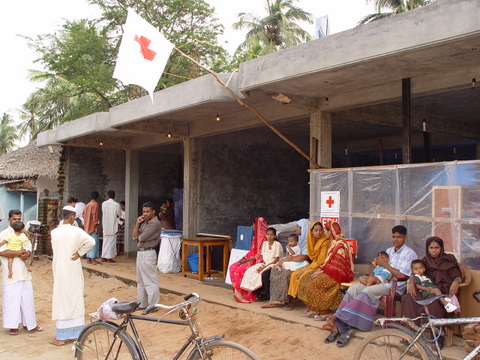
red-cross-at-svh.JPGsvh-pharmacy.JPG

first-and-good-team.JPGsvh-red-cross-station.JPGwater-plant-erected-at-svh.JPG

Thank you for this interview.
Q:
I hear you have just returned from an inspection tour of the entire East Coast.
You took a Swiss Journalist around Swiss Red Cross installations and projects I understand. Can you tell us more?
A:
Sorry, I cannot.
It is a matter of our client to report his findings.
I however understand that a Max Seelhofer is also waiting to see the photos, study the progress and read the full report.
Q:
Who is Max Seelhofer?
A:
I understand he used to be the Country Chief of the Swiss Red Cross in Sri Lanka.
I am informed that he has resigned his lucrative post, being disillusioned and disappointed in his own organization.

Again, Thanks.
We hope to read more.
The “Rote Kotze” Report

Arugam.info has finally decided to publish an EXTRACT of a recent interview with a leading press representative.
It was a difficult choice to reveal such matters, made only after careful consideration and long legal consultations.
On August 10th, sharp, a brief account of Red Cross behaviour and their total incompetence, as experienced by actual survivors of the worst hit area of Sri Lanka will appear here, on this very site.

red-cross-in-colombo.JPG
This mini report may well differ ‘slightly’ from stage managed public relations exercises the Red Crusaders feed the world with….Wait for it!
Your comments and feed back will be most welcome, as always!

Thoppigala: A land of many wonders

By Upali Salgado

The fall of Thoppigala, the citadel of the Tamil “Tigers” is imminent. A raging battle by land supported by effective air strikes ferreted out the terrorist group which stood firm in pockets for several months.

Where is Thoppigala? The huge rock, 1753 feet tall, clothed with virgin jungle and rough stony terrain close to Manampitiya has had the military spotlight for sometime now. In times of yore, this “Tiger” fortress with several natural caves (recently used to house food and artillery) was Veddah country. The plains below extending upto the well-known Dimbulagala Hills, better known as “Gunner’s Quoin” about 10 miles south east of Polonnaruwa and about 8 miles from Manampitiya were irrigated and developed under the Mahaweli scheme.

The huge rock, 1753 feet tall, clothed with virgin jungle and rough stony terrain.

Dimbulagala has an ancient Buddhist monastery which was the home of a well-known pious monk, the Ven. Kitalagama Seelaratana Maha Thera until he was killed by the Tigers. This monk was the godfather to the poor villagers and established 23 other Buddhist temples in the Eastern Province.

Dimbulagala has ruins from 300 BC to 1200 AD. It is known for its Brahmi rock inscriptions seen over drip ledges of caves in the vicinity of the temple. This forest hermitage is perched up on the hill from where one gets a beautiful bird’s eye view of the irrigated plains and water spots below. The entire region was once Veddah territory where leopard, deer and elephants roamed.
The whole of the Eastern Province is rich in archaeological ruins and rock inscriptions of Buddhist interest. Besides these, there is the historic Mahiyangana stupa which legend says was a place visited by Gautama Buddha. There is the Digavapi stupa, south-east of Amparai, Magul Maha Vihara near Pottuvil and the Kudimbigala forest hermitage on the west bordering the Yala sanctuary. There are several lakes and ponds and small tanks that supported agriculture – the Divulana lake, Rukam tank, Maduru Oya reservoir, the Irrakkamam lake and Sorabora Wewa that attract beautiful migratory birds – the teal and heron who come there to nest during the season, from May to September each year.

Moving further south in the picturesque Eastern Province is yet another geographically interesting rock outcrop, south of Inginiyagala and not far from the largest tank of Sri Lanka, the Senanayake Samudra. This majestic-looking rock had been indicated in the Survey Department topographical sheet of Pottuvil as Westminster Abbey (Native: “Govindahella”) rising 1831 ft. over a flat plain.

During the time of the Sinhala Kings it had been a fortress – an outpost for the Rohana Province. Over 100 years ago, it was the home of the Veddah community who lived hunting and gathering bees’ honey. Prof. Seligman and later Dr. Richard L. Spittel, surgeon and anthropologist visited the Veddahs quite often to care for their needs.

Dr. Spittel in his first book on Ceylon and the Veddahs, “Wild Ceylon” says interestingly – “I have had a small share – into a narrative (in the Preface) primarily designed to describe the homely aspects of jungle life, especially as it concerns the Veddahs – the last remnant of Ceylon’s aboriginal race.

“In the dim waste lands of the Orient stands the wreck of a race, so old and vast that the greyest legend cannot lay hands on the single fact of its tongueless past.”

Dr. Spittel was a crusader of the backward communities – the Veddahs who lived at Sorabora Wewa, at Pallebedde, at Gunner’s Quoin and close to Westminster Abbey. He was always there to see to the needs of the Baiyas who lived near Chenakaladi; the Rodiyas and the Kinnarayas who engaged themselves in mat weaving. They all led a sad meagre existence and were a rare indigenous cultural entity, who braved living with the Malaria mosquito. Their folklore was interesting, their witchcraft age-old, and their unity was an example to those who loved and lived in the jungle.

A note on the picturesque and rich East will not be complete without a brief reference to a few better known personalities, who in diverse ways took an abiding interest to introduce to us, over the years, the beauty and richness of the province. Prof. Seligman and Dr. Spittel were anthropologists who were friends of the Veddahs and the backward community there. Ven. Kitalagama Seelaratana Maha Thera was besides being a religious leader, a great social worker.

Dudley Senanayake as a Minister of Agriculture set up the Gal Oya Valley scheme and saw that the Senanayake Samudra was constructed and named after his father who for decades did much to improve agriculture. S.V.O. Somanader, an educationist and journalist of Batticaloa and Nihal Fernando of “Studio Times” are great travellers and writers who introduced the area to the outside world.

Then there was D.B. Ellepola who handled work of the “Backward Communities Board” set up by D.S. Senanayake, and Dr. R.L. Brohier, a geographer, historian and cartographer of the Survey Department, who with his devoted band of surveyors travelled to all parts of the province to unearth and record for posterity the treasures there to be seen. Ven Ellawala Medhananda Thera, (MP) an epigraphist too has travelled widely in the Eastern Province to read for us, under difficult conditions, a large number of rock inscriptions discovered by him over cave drip ledges. This galaxy of people with diverse interests were a perfect mix of educated sons who did much for Lanka.

source:

PottuVille – Arugam – Panama Matters

June 29th, 2007

15 Comments Add your own

  • 1. Susith Ruwanpura | June 29th, 2007 at 9:21 am

    Muslims live all over Sri Lanka. Sinha Flag is the national flag. If they want to live under one of their flgs, they need consider migrating to a Muslim country and and live there happily. Sri Lanka is the country of Sinhalese, and Sinhalese welcome all ethnic and religios people to live peacefully sharing the country. These curious muslims want another problem created. The government has the right to create colonies, and no one has a right to object, because no body owns any provice of the country

  • 2. Jeronimo Azavedo | June 29th, 2007 at 9:54 am

    Absolute claptrap. The muslims are in the East because of state aided colonisation. The Portuguese persecution of arab traders resulted in the Muslims appealing to Senerat, Emporer of Ceylon and King of Kandy and he allocated land for the Muslims in the east to save them from Portuguese persecution.

    So if state aided colonisation is an issue, the very existence of muslims in the East should be questioned.

    The greatest beneficiaries of state aided colonisation are the Tamils, with millions settled by colonial powers to work the cinnamon, rubber, tea, coffee and tobacco plantations in Jaffna.

    Those who benefitted from state aided colonisation are today opposing it to serve their prejudices.

  • 3. A peace loving citzen in Ampare | June 29th, 2007 at 1:47 pm

    As had been explained by the Eastern Provincial Council Sri Lanka, the flag of the Eastern Province had been designed by the Cultural Department of the Eastern Provincial Council and it contains three symbols which were embodied in the district flags used since independence where Trincomalee had an Eagle, Batticaloa a Fish and Ampare and animal similar to a lion found in ancient Sri Lankan flags. These symbols have existed with out any protest for over 60 years and why is the sudden alarm. Muslim encroachment was quite visible in the Pothuvil area since of late, creating fears among Tamils and Sinhalese.

  • 4. Mathy | June 29th, 2007 at 3:20 pm

    The Governments planned colonisation was started a long time ago with a motive of changing the demographic pattern of the society. When I look at the comments made by two un-civilised people (Susith and Jeromino), I think the country has no alternative other than dividing in to two.
    If muslims face discrimination in the second state, then their struggle for freedom will start. It all depends on how we get civilised and learn to live in harmony,

  • 5. Thamilan | June 29th, 2007 at 3:25 pm

    Susith Ruwanpura,

    Sri Lanka is not the country of the Sinhalese, the rightful claimer to the Islands are Veddhas (also Tamil), second claimers are Chola, Pandiya, Chera and Pallava Tamils (who originally inhabits and inhabited North and East long before Vijaya’s arrival due to the rich pearl fishery controlled by the Tamil Empires) and then third are the Sinhalese (mixture of Bengal and Tamil Blood).

    If you want a place to call Sinhala homeland then I suggest you go back to where Vijaya and his 700 followers were born because Tamils of Tamil Nadu and Tamils on this Island will never accept your pathetic claim. Just because you hold the majority does not give you sole ownership of the Island.

    You are forgetting that if the Tamils at that time weren’t welcoming to foreigners like Vijaya, you wouldn’t be here talking trash. For the last 60 years the Sinhalese have done what the white men did to the Natives of the Americas. If the LTTE fails to remind the estimated 16 million who have the right to claim the Island then for sure the 70 million Tamils will remind you (if you still choose not to listen then annihilation of the Sinhalese are inevitable).

    Jeronimo Azavedo,

    Get your fact straight. The British brought poor Tamils from the mainland to work in the Tea plantation in the Hill areas, not in Jaffna. Tamils in the East, North and North West were on the Island long before the arrival of Vijaya. The Sinhalese never had a state and never aided any of the minorties.

    By the way, because of the Sinhalese and the rivalry between the two Sinhalese kingdoms the Portugese got a foothold in Sri Lanka. They invited the white men whom at the ended suppresed Tamils (after defeating the Jaffna Kingdom), Muslim and they specially suppressed their inviters (the Sinhalese) in a brutal manner unimaginable.

    This whole island is in ruin because of the hospitable culture of the Tamils, if we were more like the Japanese then we wouldn’t have had this problem in the first place.

  • 6. wassa | June 29th, 2007 at 3:34 pm

    The singahlese king gave the muslims land when they were persecuted by Indians and others under one condition.They came to the Singhala king and asked about staying in Sri Lanka and the king granted permission and said “as long as you take Singhalese names and speak singahalese that is ok”.But they did not want to integrate into the Singhalese society.This is very difefrent from Irish,Scottish and Welsh who live in Engaland.They all integrated in England like Chinese in Thailand.There are 16%Chinese in Thailand but speak Thai and take all Thai names and at school study in Thai only and there are no Chinese holidaysvalid in Thailand.Muslims never integrated in England too and all these separate talks destroy countries whoever the Ethnic group is.In Sri Lnakan flag green color represents Muslims.
    There are many Mosques in Anuradhapura as well as in Rome, Italy.Can we make a temple or church in Saudi Arabia?I dont think so.

  • 7. Suresh M | June 29th, 2007 at 3:37 pm

    What were you thinking when you wrote this page? Do you know the climatic condition of Jaffna? Coffee, Tea, Rubber, Cinnamon. Pity you.

  • 8. wassa | June 29th, 2007 at 3:40 pm

    Muslims are living happily among Singahalese but where there are only Muslims they want there own flags.This is utter rubbish and a road to separatism.15% Tamils want one third of the Sri Lanka.This is the only place for singhales people and everybody is welcome to stay here without making problems.During the liberation struggle against Portugese,Dutch,English and Cholas Singahlese were the ones who fought to secure Sri Dalada and the Sinhalaese kingdom.These separatists have to think about it,In East there are many lands that were belong to temples during the Singhalese kings were occupied by Muslims and Tamils at the moment.

  • 9. Baptist, UAE | June 29th, 2007 at 4:02 pm

    Sucessive sinhala governments have been sinhalaising the traditional tamil and muslim dominated east through re-drawing of borders, annexing sinhala villages from other districts, colonisation force and forceful eviction of people. In the 1930s Sinhalese constituitted only 8% of the popluation of the east; now they are near 30% if not more. Such a change has not brought about by natural demographic changes. The creation of ‘digamadulla’ of what should have been the muslim dominated Amparai district into a sinhala dominated area is a major point in case. Recent eviction of Tamils from Muthur and Sampoor is another. The disunity amongst Tamils and Muslims is assiting such atrocities. If we Tamils are fighting for our rights and liberation of our land, we cannot deny the Muslim brothers who share the same language and homeland, their rights. We must support them in their fight for justice., not suppress them. I think it is about time the tamil leadership openly recognise the muslims as a distinct ethnic group, their traditional lands, and equal status. If a separate Tamil nation is to be established, it should guarantee devolution of powers and fair representation to the muslims, and guarantees to the traditional sinhala villages falling withinh north & east of equality and protection. Otherwise we can not claim to be fighting for a just cause, rather we will be a mirror image of the oppressive sinhala governments we are fighting against.

  • 10. dias | June 29th, 2007 at 5:55 pm

    It is ironic that the self procalimed peace group, “Coalition of Muslims and Tamils for Peace and Coexistence”, in its prologue says, “Specifically, we are committed to the peaceful coexistence of Muslims and Tamils in the country, particularly in the north and east, and to a just and equitable solution to the ethnic conflict.”

    Aren’t you interested in peaceful co-existence with the Singhalese? May be the Singhalese would have felt comfort had it been worded ” …. Muslims and Ramils and Singhalese …”.

  • 11. naguleshan | June 29th, 2007 at 8:23 pm

    Tamils speaking SrI Lankans, including Muslims, enjoy the privilege to live every corner of the country, making their homeland everywhere.

    But a Sinhala man / woman cannot do the same. They become a minority in the NE, whereas in the South and the West no one cares for percentages of ethnicity.

    Why?

  • 12. ernest macintyre | June 29th, 2007 at 10:48 pm

    Your photograph here of young boys in Sainthamaruthu, like so many other photos of young children within terribly stricken communities, is the only encouraging light within ” the encircling gloom”. They “know not,” in the Darwinian sense of the survival of the species, what we older people have done.

  • 13. Jeronimo Azavedo | June 30th, 2007 at 3:02 am

    The plantations and state aided colonisation, follow european conquest of Sri Lanka. The first kingdom to fall to the portuguese was the Kingdom of Jaffnapattnum and it was here where the first plantations were established, Tobacco. I refer you to the accounts of the kingdom of Jaffna pattnum of Captain Major Mascarenas which show tobacco as the largest revenue of Jaffna for the Portuguese at the time.

    This period also shows large scale Tamil plantation workers brought into Jaffna from South India and the introduction of some 5000 deep wells in Jaffna- which are in effect South Indian wells.

    Before this the wells of Jaffna were like the wells in the rest of the country, where you walk down to the water and the water is at your foot level.

    The population composition of Jaffna also changed during this period, with the Sinhalese of Jaffna also completely becoming extinct.

    But there are still todate, over 1000 Sinhala place names in Jaffna which remain in a Tamilised form. Sanga thana has become Sanga Thanai, Aliya Wala has become Aliya walai, Maracci rata has become Wadamarachchi and Thenamarachchi, Weligama has become Welikamam.

    This pattern was repeated for Cinnamon, rubber, coffee and tea plantations of Sri lanka with over one million state aided colonisation of Sri Lanka, displacing significant numbers of the Sri Lankan population and rendering them landless.

    The Muslims were settled in the East by Emporer Senerat, because the Portuguese were battling the arabs for the sea trade and they were persecuting the muslims in the West. They approached Senerat and seeked refuge and was granted refuge in the East, which was a part of the Kandyan Kingdom of Senerat, the father of Maha Astana, later Raja Singha II of Kandy.

  • 14. Anand. G. | June 30th, 2007 at 3:09 am

    Why create more complicated issues out of a symbol in a flag when you have your plate of problems already overflowing. If you are looking for peace (in any form) the first thing to avoid is nit picking.

  • 15. Thamilan | June 30th, 2007 at 11:11 am

    Jeronimo Azavedo,

    Jaffna Kingdown was the first to fall but who invited the Europeans? It was the Sinhalese. Jaffna was the land of pure Tamils, maybe they had some Sinhalese traders, but it was never dominated or never will be dominated by the Sinhalese. Over 1000 Sinhalese place name? Yeah they also borrowed all the Tamil words to make the Sinhalese language, in that case of course you can claim that there are more then 1000 names in Jaffna that are Sinhalese. The courts of the Sinhalese Kingdoms used Tamil as the official language not Sinhalese (because the language was not developed enough). People like you are the ones who believe that Buddha flew on a cloud and that he offered Lanka to the Sinhalese. Wake up to the reality.

  • source:

    http://federalidea.com/focus/archives/36

ALIYA Wildlife Project

ALIYA ECO PROJECT Sri Lanka…..
Elephant ….is active Nature & Wildlife preservation projects connected with a ecological type of tourism. ALIYA Eco Tourism is mainly focused on nature watching as well as good and thrilling photo safaris. We offer simple day trips as well as overnight arrangements and whole Sri Lanka Tour Packages. The main focus however always remains the importance of nature itself. ALIYA ECO PROJECT continues to be critical. And even self critical.
We will not be temped to suggest a perfect illusion but wish to continue our mission. That is  to draw attention to all associated problems. Although the tourist part of our project is kind of commercial, but the ultimate aim is to support all other aspects of our program.
This includes promotion of the entire area, creation of employment and awareness of the importance of nature preservation both in visitors as well as residents. Visitors can help with education locally.
A well run nature project is seen as an investment into the future and will bring long term benefits to the area. The project is also of importance to the local people with ongoing employment opportunities and environmental awareness. Tourist come to enjoy unspoiled nature; if destroyed they will go elsewhere. Everyone should realise the merit of our Eco Tourist activities.
It is important to get the right balance between Nature and tourism.

Why ALIYA ?

Because we, the ALIYA Team love the nature. We like to do something. Preserve wildlife environment.

openland
You can help ! Support ALIYA Ecoproject.
A wild animal orphanage, just for example, is essential. There are Bimbo and Charlie the two monkeys already and they did not come on order. Now there are four. Coco and Baby. They all appear as a surprise. We would already be a mini zoo if we could accept more ‘inmates’, but the location in Ella is not good to keep wild animals.

As things stand there is no facility which has sufficient professional knowledge to care for the individual needs of most species. However, we are connected to good data bases, experts and media as well as other organizations where we can educate ourselves as well as teach local staff.
Already we have an interested pool of eager students who are happy ts learn and assist us. We wish we had the funds to reward them, to employ them and to construct and maintain facilities together with them.

Education, teaching and awareness are in any event the key elements. Our plan is to acquire a multi purpose vehicle, a kind of multi media exhibition bus to tour the wider area. We would love to present an interesting, gripping show how much we all stand to loose and how much we have to gain if we all understand the problems we are facing. This bus would be welcome in schools, farming areas and public gatherings because it is totally neutral and concentrates of the improvement of rural life as a whole. In addition we are confident that we can save many  lives of endangered species.
Village
We would like to incorporate a coordinating centre for environmental offenses where serious crimes can be recorded and maybe acted upon. For example, no common data base for dead elephants exists; we would like to change that to start with.
Projektbausteine Education, teaching and awareness are in any event the key elements. Our plan is to acquire a multi purpose vehicle, a kind of multi media exhibition bus to tour the wider area. We would love to present an interesting, gripping show how much we all stand to loose and how much we have to gain if we all understand the problems we are facing. This bus would be welcome in schools, farming areas and public gatherings because it is totally neutral and concentrates of the improvement of rural life as a whole.
In addition we are confident that we can save many  lives of endangered species.
We would like to incorporate a coordinating centre for environmental offenses where serious crimes can be recorded and maybe acted upon. For example, no common data base for dead elephants exists; we would like to change that to start with.

If we could offer substantial rewards to anyone who reports the shooting of an elephant we could press for proper and legal prosecution in a Court of Law.

orphanage
We are confident that as soon as one or two ivory hunters and dealers are caught and perhaps jailed the spin off effect will be a deterrent to others. If we have means, the existence of our office will soon be common knowledge and perhaps seen as a source of legitimate income by some who are also interested in helping nature to fight back and cowards with a gun.
Our plan:
ALIYA ECO PROJECT can only succeed with some basic finance. We are actively looking for a Sponsor. Without some support the project is doomed to fail. Ever since my arrival in Sri Lanka I only received support from the SVH at Arugam Bay, friends in Ella, friends in Colombo and from the Planet Internet Cafe. I live there, work from there, communicate from there and operate the modest orphanage from its premises. But in order to expend and work effectively and independend it is essential to form a separate legal entity, such as a Company or Organization.
localhouse
The most difficult and perhaps most expensive part is to obtain all relevant legal documents and permissions. But also we need to work more closely with other organizations as well, that much is realised. But I am unsure who can and will cooperate with us, as we have set very high standards.
Suitable premises somewhere on the edge of the village or even close to the Nationalpark should be found, rented or better still purchased. Some good locations are offered already. A small building may later be erected to house not only an essential shelter and an office, but also accommodation for staff and the odd visitors and guests. The little office needs Internet and telephone connections. We need to construct secure enclosures for wild animals. Further a suitable 4X4 vehicle is essential. A schooling and teaching bus to educate pupils and farmers would also help tremendously. After a relative moderate initial investment we are confident that ALIYA ECO PROJECT will be totally self supporting and act as successful employer in this remote area. Administration and accounting shall remain transparent and open for inspection to all interested parties.
From a sponsor point of view this is a very worthwhile, popular Project and offers excellent advertising possibilities. Should a sponsor be a Company, we suggest staff rewards in the shape of subsidised travel and wild life experience holidays. In the case of Universities or Organizations an exchange or partnership is envisaged. Both with the view to evaluate and help each other’s projects and to assist in local education.
Whatever, any investment will pay for itself in a very short period of time.
Not many other projects can offer such valuable tasks and rewards.

Kill-Not-She…! Who? Our Island?

Sri Lanka seen heading back to civil war — on an even larger scale

"All we hear is war," says Tavakumar, a 43-year-old rebel who only uses one name, patrolling a road a few miles (several kilometers) from the front. "I'm ready to fight."

Five years after a cease-fire brought a measure of relief to Sri Lanka, a ferocious ethnic war is again raging between the government dominated by the country's predominantly Buddhist Sinhalese majority and the Tamil Tigers, separatists seeking a homeland for the largely Hindu Tamil minority.

The signs of a deepening conflict are everywhere: soldiers in full battle gear patrolling Colombo, the increasingly fortified capital; sandbagged bunkers and trenches going up all over the rebel-held north.

Both sides claim to be observing the truce, which remains officially in place. But clearly it has left neither side satisfied, and now it has completely collapsed. The rebels are mounting renewed attacks, including a bus bombing last June that killed 64 people, and Sri Lankan forces are pushing farther into rebel territory, with officials openly saying they aim to militarily crush their enemy.

"We want to destroy them, the Tiger bases, all these things," Defense Secretary Gotabhaya Rajapakse told The Associated Press in an interview. Rajapakse, brother of President Mahinda Rajapakse, survived a Tamil suicide bombing of his motorcade in December.

Amid the spiraling violence, the AP secured permission to cross the front lines and make the first visit by foreign journalists to insurgent territory since the war reignited in August.

In Kilinochchi, the main rebel-held city, the cease-fire seemed a distant notion as a pair of warplanes dropped flares to light up a rebel mortar position in the jungles beyond town. Farmers and insurgents scrambled into dank, makeshift bomb shelters as the jets dropped their bombs, obliterating a rebel mortar position.

Nineteen years of suicide bombings, jungle clashes, torture and village massacres, from 1983 until the truce was signed in 2002, took an estimated 65,000 lives on this West Virginia-sized island of 20 million people off India's southern tip.

Since August, about 3,000 more have been killed and 160,000 displaced, most in eastern Sri Lanka where the government has plowed through relatively lightly defended rebel territory.

Next up, officials say, is the rebels' heavily fortified northern heartland, a would-be Tamil state of about 500,000 people with courts, traffic cops, a forestry department and a legal code that bans adultery and pornography.

It's territory the rebels say they'll defend with everything they've got.

"The fighting in the north is going to be more intense and the (rebels) probably won't withdraw," as they did in the east, said Jehan Perera of Sri Lanka's National Peace Council, a think tank. "Battlefield losses will be heavier."

There's also growing concern about the rise in human rights violations. The rebels and government allied militias are both alleged to have abducted — and in some cases killed — hundreds of civilians, and there are well-documented cases of top government officials threatening critics of the war, especially journalists.

The roots of the conflict stretch back to the years after independence from Britain in 1948, when the government gave Buddhism a prominent role and declared Sinhala the sole official language.

The result was widespread discrimination against Tamils, until war broke out in 1983.

The 2002 cease-fire negotiated by Norwegian diplomats raised hopes which were reinforced two years later by a belief that the Indian Ocean tsunami would force the warring sides to work together for national recovery. But by late 2005, sporadic shootings and bombings were back. Most — such as a bus bombing that killed 64 people in June — were blamed on the Tigers, who many believed were trying to force the government to make concessions at the negotiating table.

If that was their strategy, it backfired spectacularly.

Mahinda Rajapakse had been elected president in late 2005 in part by Sinhalese hard-liners who viewed the cease-fire as a betrayal. In August, he opted for all-out war, while claiming to be honoring the cease-fire and only responding to rebel provocations.

He is being cheered on by hard-line Buddhist monks who see themselves as guardians of the island's Sinhalese culture, and, increasingly, by many ordinary Sinhalese. A recent poll by Colombo's respected Center for Policy alternatives found nearly 60 percent of the Sinhalese supported a military solution.

source:

http://www.iht.com/articles/ap/2007/05/06/asia/AS-FEA-GEN-Sri-Lanka-At-War-Again.php

Arugam Bay

Pottuvil: Simmering pot of ethnic tension

By Wilson Gnanadass in Pottuvil
At a time when media attention and peace keeping efforts are understandably focused on Sri Lanka to bring an end to the ongoing ethnic conflict, a dangerous mix of developments is taking place in Pottuvil, in the south eastern part of the island.
Armed conflicts plague the northern part of Sri Lanka while a disintegrating economy along with human rights violations and even threats to freedom of expression are driving the south deeper into mayhem.
However, in Pottuvil, although life has returned to normal after the clash between the Karuna group and the Pradeshiya Sabha took place last month, beneath the surface tension lingers between different communities.
A deeper assessment into the life of all three communities shows that although there is a thirst for ethnic co-existence, there is a barrier separating them.
Still, Pottuville no doubt is a bustling town and Arugam Bay is certainly safer than Colombo, stated one hotel manager.
Division between Tamils and Muslims
From time immemorial, Tamils and Muslims have been living as members of one family in Pottuvil, a predominantly Muslim region. A record number of intermarriages have been reported from these areas. The dialects of the communities are mixed.
In between two major Muslim towns there are several Tamil villages, and Tamils and Muslims have mingled with each other for business, education and various other reasons.
However, today that relationship is strained. For the first time in the history, the Tamils celebrated their New Year festival without inviting the Muslims. Tamils working in Muslim shops were told to leave their jobs or else face the consequences.
The forced separation has disturbed and hurt both Tamils and Muslims. Muslims blamed the Karuna faction for the latest development, while Karuna’s men blamed the Muslim politicians.
Both communities traded charges at each other without realising they were bringing about the separation of the century-old cherished bond.
PS issue
Wittingly or unwittingly, the April 9 incident over a Pradeshiya Sabha (PS) building has dampened the relationship between the communities.
While the Karuna faction attempted to acquire the building by force, the Muslim dominated PS managed to retain the ownership of the building legally. The PS is dominated by Muslims. Tamils in the region are represented by only one member. To Karuna’s men, this is a big hitch.
According to them, the Tamils are underrepresented and they claimed to be the sole representatives of the Tamils, a claim rejected by the Tamils.
However, Karuna’s men pointed out that the Tamils were given step-motherly treatment by the majority Muslims, and added they were present to give the Tamils leadership. They also expressed anger at the Muslim politicians.
Karuna’s men stated that all leading jobs in the town were given to the Muslims and the Tamils were being trampled, and vowed to correct this error.
TMVP repression
Since the defection of Karuna from the LTTE in 2004, the correlation of the Tamils and Muslims has become estranged.
The Karuna faction established political quarters almost in every town in the east and in Pottuvil too an office was set up. The office according to eye witnesses has served as a ‘Kangaroo Court’ to deal with issues pertaining to the day to day life of Tamils and Muslims.
‘Kangaroo Court’
In one instance, a 24-year-old man was beaten for three hours by three men of Karuna’s group over a personal problem he had had with his wife.
On another occasion, a female who was employed in a Muslim shop under a Muslim for the past 10 years was asked to immediately step down with no reasons given.
Besides, the Muslims have also been issued summons by Karuna’s men and have been questioned for hours. This has annoyed a majority of the Muslims since the Karuna group has even got involved in personal affairs of the people.
Senior Muslim citizens and even members of the clergy perceive these events initiated by Karuna group as a deliberate attempt to bring about a division between these two ethnic groups.
Shadow member of Pottuvil PS, A.M. Mohamed Thajudeen is of the view that the actions of Karuna’s men are provocative and might at some point provoke the Muslim youth also to take up arms.
He said after the April 9 incident, the relationship between the two groups has been strained but added efforts were being made to rebuild the relationship.
He is of the view that this is a byproduct of government strategy since Karuna’s group is allegedly supported by the state. “The government should not ignore our appeals. We have lodged entries with the police against these men, but to no avail,” he said.
He said Karuna’s men were not only getting involved in the PS matters but also into the personal affairs of the Muslims. “Why are they getting involved in this fashion?” he questioned.
Muslims fear that they could be driven out of the east in a manner similar to how the Muslims in the north were chased out of their traditional habitat by the LTTE in 1990.
Burning issues
The Muslims have been confronted with an array of issues which they view as calculated efforts by the government to suppress them.
In Palayadivettai, Kirankovai, Muslims have been cultivating in nearly 502 acres of land for several years.
As cultivation began and business grew, the war broke out, forcing them out of this area. Several attempts to obtain permits from the divisional secretary to continue cultivation also failed due to the ongoing conflict.
During the period when Opposition Leader Ranil Wickremesinghe became prime minister and the Ceasefire Agreement was signed with the LTTE, the Muslim cultivators had returned to Palayadivettai to continue cultivation.
The District Coordinating Committee (DCC) that met in Ampara during this time has also decided to grant permits to the cultivators.
While the Muslims have been involved in cultivation since the, the present government decided to bring a halt to it.
The Wildlife Department that met on April 27 in Lahugala has decided to convert this piece of land that has been used for human cultivation into a land to grow vegetation for elephants.
This would bring an end to the cultivation being done by over 250 Muslim farmers who have been cultivating on this particular land and earning a living for the past 25 years.
In another instance, the Lahugala Pradeshiya Sabha chairman in a recent letter to the government has expressed his desire to incorporate three grama sevaka divisions of Pottuvil into the Lahugala Divisional Secretariat Division.
Muslims claim that the land coming under the three grama sevaka divisions have been used for cultivation by them for the past several years on an annual permit basis. They believe this is part of a programme by the government to expand the Shastrawela Temple in Panama.
Harassment
Their woes do not end at that. In another instance, the Muslims have also faced harassment in Pasaradichenai.
Pasaradichenai is a 10-acre Muslim burial ground. However, settlers from the south have encroached on this land over the years. A survey has revealed that the Muslims have lost nearly three acres of land.
When a complaint was lodged with the police and relevant government authority, the cemetery had been divided among the communities proportionately. In this instance too the Muslims had to lose a couple of acres from their original burial ground.
Munai in Arugambay is a cultivation plot, where around 20 Muslim farmers owned lands and engaged in farming.
According to Yasimbawa Adam Bawa (51), he owned two acres of land in Munai but during the time when the LTTE drove Muslims out of the north in 1990, the Muslims in this area had also been chased out by the LTTE.
However after 1994, when the situation calmed down, he along with other Muslim cultivators had returned to their land. But to their dismay they had not been allowed to carry out cultivation by the Tamil and Sinhala settlers.
Bawa was also in possession of the government permit given to him by the district secretary but he said today he and other farmers were not allowed to engage in any farming in their own land.
Lack of confidence
If the 1990 mass exodus of Muslims from the north forced them to lose confidence in the LTTE, the massacre of 10 Muslims at Irathalvettu, Pottuvil on September 17, 2006 led to their losing confidence in the government too. The presence of Karuna group compounds this.
The Muslims in Pottuvil do not wish to accept that the massacre of the 10 Muslims was carried out by the LTTE.
According to Pottuvil Pradeshiya Sabha Vice Chairman M.B. Abdul Majeed, it is almost one year since this incident took place but the government is yet to complete its investigation. He added the manner in which one of the survivors, Meera Mohideen was being protected by the state casts suspicion on the government.
“In between two predominant Muslim towns – Pottuvil and Akkaraipattu – there are several small Tamil villages. The Muslims keep shuttling between these two towns daily. If the LTTE wanted to kills us, they could have planted a claymore mine or set up a bomb in one of the busses plying in between these two towns,” he said.
“The location where these 10 Muslims were brutally assassinated was surrounded by the Lahugala STF Camp, Sengamam STF Camp, Third Mile Police Post, Pottuvil Police Station, Arugam Bay STF Camp and Shastrawela STF Camp. How can one expect the LTTE to penetrate into this highly fortified area and commit such a heinous crime in broad daylight? This is questionable,” he added.
Discrimination
Be that as it may, the Sinhalese who have been deeply rooted in these areas for several decades also lead a life of poverty and distress.
For the grief-stricken fisher folk, life there is a constant battle. Some of them have gone there from the deep south to continue the legacy left behind by their fathers and forefathers, while for others it is a fresh start.
For a few others, their presence was not due to own choice but since they followed false promises by southern politicians. “Only now we know we have been cheated,” they said.
D.V. Padmasiri arrived in Pottuvil 25 years ago. He is a father of three. He was forced to follow his parents from the south. His parents were engaged in fishing.
Life for Padmasiri is difficult. He talks of discrimination and not being able to gain what the Muslims gain. “This is a worry for all of us,” he said.
He said life there, however, was free of tension. According to him there are no police, no government officials, no checks and no barriers. “We do everything according to our wants. Nobody checks us,” he said.
Suranga Janakantha, father of one, has been living in Ulla, Pottuvil from childhood. He had come with his parents and enrolled himself at the only Sinhala school found in Pottuvil. The Sinhala Maha Vidyalaya caters to 120 Sinhalese students.
He is of the view the Sinhalese peasants were discriminated against by the majority Muslims.
“We could not even get our due share after the tsunami. The government promised to construct houses for us. But all the government institutions here are dominated by the Muslims, and therefore we lost the chance of getting houses. For each house, the authority here dominated by the Muslims demanded Rs. 50,000 as commission. Where can we go for this money? Therefore, we decided to live in cadjan huts,” he said.
He said the Sinhala community is on good terms with the Tamil community but not with the Muslims since “they are dangerous.”

source:http://www.nation.lk/2007/05/06/newsfe2.htm