Dr. Dietmar Doering
The latest arrival figures released by the Sri Lanka Tourism Development Authority (SLTDA) paint an encouraging picture on the surface: arrivals are rising steadily, confirming that the island has regained visibility and confidence among international travellers.
Yet behind these positive headlines lies a worrying contradiction. Tourist arrivals are increasing, but tourism revenues are not rising proportionately. In simple terms, Sri Lanka is welcoming more visitors — but earning less per visitor. This widening gap is not accidental; it reflects a structural weakness in tourism policy that has persisted for over a decade.
The uncomfortable truth is that volume tourism alone will not rescue Sri Lanka’s economy. What the country urgently needs is a decisive shift toward high-spending, long-staying, value-driven tourism segments. Two such segments — nautical tourism and permanent tourism — have been repeatedly proposed, studied, endorsed by experts, and yet consistently ignored.
Across Asia, destinations that chase sheer arrival numbers inevitably face margin erosion. Budget airlines, discounted room rates, short stays, and price wars benefit neither governments nor local communities. Sri Lanka has fallen into this trap.
A comparison is instructive. A typical mass-market tourist spends between USD 120–150 per day, stays 8–10 nights, and contributes modestly to tax revenue. In contrast, high-end nautical tourists and long-stay senior residents generate exponentially higher and more stable income — often without placing pressure on public infrastructure. Sri Lanka’s problem is, therefore, not demand. It is direction.
Nautical tourism is not a lifestyle concept; it is a high-yield economic sector. Countries such as Croatia, Greece, Turkey, Thailand, and Malaysia have demonstrated that marinas are revenue engines, not aesthetic luxuries.
A single 40–60 ft yacht typically spends between USD 800–1,500 per day on marina fees, fuel, maintenance, provisioning, dining, and crew expenses. Super yachts (30–60 meters) spend USD 5,000–15,000 per day while docked. Importantly, yacht owners and crews spend locally, repeatedly, and predictably.
Sri Lanka is geographically ideal for this market. Feasibility studies — including those supported by KPMG — have already confirmed the commercial viability of marina developments along the Western and Southern coastlines. Investors have remained on standby for years. Detailed proposals were submitted to successive governments. And yet, as of today, not a single internationally competitive marina has materialised.
The opportunity cost is enormous. Even a network of three to four mid-sized marinas could conservatively generate:
• USD 250–400 million annually in direct and indirect revenue
• Thousands of skilled jobs (marine engineering, logistics, hospitality)
• Strong demand for luxury real estate, refits, and maritime services
Despite this, responses from policymakers have ranged from silence to hesitation. Nautical tourism remains discussed — but never implemented.
If nautical tourism is the first revenue engine, Permanent Tourism is the stabiliser.
Sri Lanka already attracts a significant number of long-staying visitors, particularly retirees from Germany, Austria, Switzerland, and other European countries. These seniors are not seasonal tourists; they are permanent consumers. They rent or buy property, employ staff, use private healthcare, dine locally, and inject foreign pensions directly into the Sri Lankan economy.
Previous analyses published in this newspaper have shown that:
• 80,000 permanent senior residents generate the equivalent economic impact of 2.5 million short-stay tourists
• Their average stay exceeds 300 days per year
• Their monthly inflow is predictable, inflation-resistant, and foreign-currency based
Unlike mass tourism, permanent tourism does not strain airports, roads, or beaches during peak seasons. It creates year-round economic activity and fosters community integration rather than seasonal dependency.
Yet policy clarity is missing. Visa regimes remain inconsistent. Dedicated retirement residency frameworks remain absent. Incentives are discussed — but not delivered. The tragedy is not a lack of ideas. Sri Lanka has had no shortage of concepts, white papers, feasibility studies, or investor interest. What it lacks is decisive execution.
Permanent tourism is treated as a fringe concept rather than a national strategy.
In the global tourism economy, hesitation is costly. Capital moves quickly. Competing destinations act faster. Every year of inaction pushes Sri Lanka further behind countries that once looked to it as a benchmark.
Sri Lanka Tourism today is defined less by what it does — and more by what it fails to do. The country stands at a moment where strategic pivoting could transform tourism from a fragile volume-driven sector into a high-value economic pillar.
Nautical tourism and permanent tourism are proven models. They are funded. They are feasible. And they are waiting.
The real question is no longer whether Sri Lanka should act — but how many more opportunities it is willing to miss before it does.
The writer is a tourism investor and policy analyst focusing on high-value tourism models, including nautical and permanent tourism development in Sri Lanka.
https://www.sundayobserver.lk/2026/02/22/business/72703/nautical-and-permanent-tourism-the-way-forward

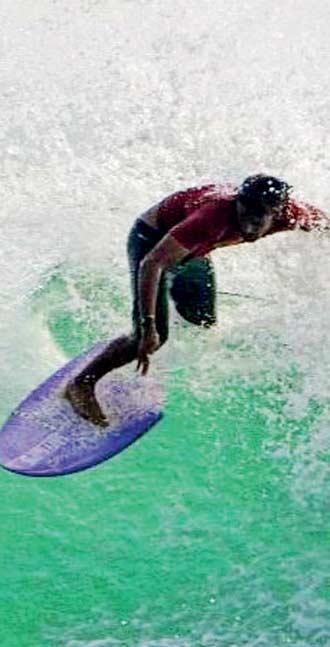 Lakshitha Madushan of the Weligama Sports Club and Anantharasa Ammu Jansee of the Arugam Bay Sports Club became the men’s and women’s champions respectively at the National Surfing Championship at the Hikkaduwa Main Point.