Want to share a ride?

ArugamTaxi Share Initiative

Keflex no prescription needed

To share costs, save fuel, protect the environment
Share an East Coast Taxi!
Arugam.info does NOT make money on Taxi Bookings!

Arugam.info advises to avoid buses, trains & public services, for now.
To take you to and from the secure, peaceful Bay to the Airport and to the West/South
Investing in a secure, knowledgeable Taxi could be your best advice
In this, troubled time better be SAFE – Not sorry!
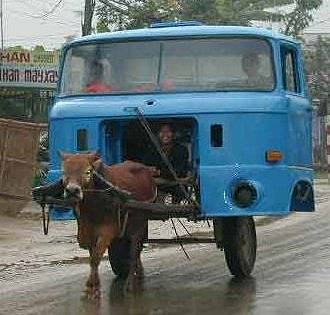
(Operated by a somewhat more modern version of the above ‘Mini Bus’ of course!)
We can collect you at ANY time, from anywhere in Sri Lanka – but to share costs, due to high fuel prices, please give us some notice to find fellow passengers!
(An-up-to date schedule is always published on the “AbaY Taxi” Link above)
Contact: Actonel order ArugamTaxi@Gmail.com
Hotline: 0773 200 201 (Country code: 0094 ….)

Eastern Elections

Ballot Box (Archive photo, USA)
The ballot boxes are closed; Everyone awaits the results of today’s local election.
Our own correspondent reports of no serious trouble or problems in and around Arugam Bay, Panama & PottuVille.
Incidents in Ampara (2hrs.) and Trincomallee (10hrs.) caused no concern locally. (arugam.info reported)

Lasix price in lebanon

Please send us YOUR observations!
Are You in the Eastern Province?
Have the elections been fair & properly conducted?

Sinequanone clothing online

Ballot Box (Archive photo, USA)

Arugam Bay Water Tower

One more Tower – One more Land Mark!
At picturesque Arugam Bay.
Micardis plus generic substitute
Arugam Bay Water Tower under Construction

Between #61 Fishing Net and #62 Palmgrove Holiday Inn a new, large project is being constructed at present. Where can i buy levothroid
Just South of our “City Centre”, landside, USAID and their sub contractors are well under way to build a new Water Tower and supply system.
This project seems swift and professional in its approach – we’ll keep you posted of its progress.

Panama, Kumana

SRI LANKA: War-affected forest community gets new lease of life

Purchase citalopram hydrobromide


Photo: Christine Jayasinghe/IRIN
War-displaced Rammalappu Dhanapala in his shrine in Panama, eastern Sri Lanka. His Padu community was evicted from the Kumana forest by government authorities who feared the area had been infiltrated by Tamil Tiger separatist rebels

PANAMA, 17 February 2008 (IRIN) – Every Friday people crowd into Rammalappu DhanapalaA?a??a??s yard, eager to hear the fortune tellerA?a??a??s prophecies and seek his advice on how to avert imminent disasters. A?a??A?I have supernatural powers given to me by my grandparents and my parents,A?a??A? he said, showing vials of potions that he dispenses to cure various ailments.

Carrying on a long family tradition, Dhanapala who lives in Panama village in Ampara District in eastern Sri Lanka, now offers his counsel in a newly-constructed shrine room filled with the scent of incense. Its brick walls are decorated with colourful pictures of the many gods he invokes.

What is unique about the fortune-tellerA?a??a??s operation is that a local community-based organisation, the Movement of Young Social Workers (MOYS), spent Rs. 60,000 (about US$530) – in funding given it by international non-governmental organisation ActionAid – to build him a bigger shrine room that would accommodate more clients. Since then, his clientele has doubled, bringing him Rs. 5,000-6,000 (about $50-$60) on a busy day.

MOYSA?a??a??s support for Dhanapala is only a small part of its support to the Padu community, traditionally considered as occupying one of the lower rungs of the caste hierarchy of the Sinhalese.

Uprooted

Interactive Sri Lanka map
highlighting Panama village

View larger version at Google Maps

The community was forcibly uprooted from the nearby Kumana forest 18 years ago by the police, when the government feared that rebels of the separatist Liberation Tigers of Tamil Eelam (LTTE) had infiltrated the area.

Brought to Panama under duress and left to fend for themselves, the once self-sufficient members of the Padu community found it difficult to adjust to a new way of life, particularly given their low caste. Thirteen families now live in Panama while others have made their home in nearby villages. Besides being displaced victims of the war, they also suffered human and material losses from the December 2004 tsunami.

The Padu community traces its history back to the islandA?a??a??s central Kandyan kingdom when their ancestors served high-caste aristocrats who rebelled against the British colonial rulers in the 19th century. When the noblemen fled a crackdown, they took their domestics with them to eastern Sri Lanka. The servants ended up living as a tightly knit, self-sufficient clan in the Kumana forest.

Supporting traditional livelihoods

In DhanapalaA?a??a??s case, said Nirosion Perera, chairman of MOYS, A?a??A?He has an unusual occupation and one of our aims is to encourage and support the traditional livelihoods of the Padu community. He is also quite successful at what he does, so we felt he deserved help to improve his standing in Panama.A?a??A?

MOYS is supporting others in the Padu community to improve their economic status so that the ensuing recognition will assist in their long-term integration with the largely upper caste Sinhala Buddhists who live in Panama.

Honey

DhanapalaA?a??a??s brother, R. Sugathapala, scours the forest to bring honey made by wild bees. The honey is highly prized in the village and beyond for being wholesome and nutritious and his A?a??E?KumanaA?a??a?? brand has now made a name for itself.

A?a??A?This is the first time we have got any help from any organisation,A?a??A? said Sugathapala, who used to barter the honey in exchange for goods his family needed. MOYS is helping Sugathapala acquire skills, including how to manage his business, as well as funding costs to start a small poultry farm that his wife will manage to give the family an additional income source.

MOYS also helps other members of the community by providing funding and technical expertise for livelihood projects such as growing seasonal crops of chillies, aubergines and millet, and for the `chenaA?a??a?? (post-slash and burn) cultivation.

But MOYS does not just assist the community in developing livelihoods and increasing incomes. A relationship has grown up between the agency and the community that enables it to advise residents on issues affecting their lives, including how to save sufficient money for emergencies and ways to ensure their kids get an education. A?a??A?We want to look into their health, improve their living standards, ensure their children go to school and assist their psycho-social development through giving them economic support,A?a??A? said Perera.

Perera pointed out that members of the community knew little of some aspects of modern life such as banking extra income for future investment, and banding together to promote their interests as a group. MOYS has helped them set up a rural bank and is organising them into a group so as to better defend its interests.

Few in school

Few children attend school because they cannot afford to buy books and other necessities, but also because of the social ostracism they face from their peers. A?a??A?People here donA?a??a??t want to have anything to do with the people from Kumana because of the problem of their caste,A?a??A? said Perera. A?a??A?By giving them a voice within the larger community, we want to help them gain acceptance.A?a??A?

While some of those who have been displaced by Sri LankaA?a??a??s protracted conflict may not want to return to their former homes, the Padu community longs to head back, not only to their open air abodes, but also to a simpler lifestyle.

cj/bj/cb
Theme(s): Buy himplasia dosage (IRIN) Conflict, (IRIN) Governance

source:
http://www.irinnews.org/report.aspx?ReportID=76768

Prayer times

Polluted Lagoon

Arugam.info has been informed that the beauty spot known as Metformin how much dosage Arugam Bay Lagoon has been polluted by Thousands ofA?A? nasty Nylon, non-degradable bags.

Pollution of Arugam Bay Lagoon

The well published ‘Environmental Impact Study’ by USAID Buy motrin platinum muscle and body totally ignored the fact that Hundreds of Thousands of these damaging bags would be introduced into the water as sand bags by defense contractors CH2MHILL.
The cheap bags were used in construction of the new bridge, as shown above.
Hessian or coconut (degradable) bags were suggested by our Arugam.info representative at the time, but the request was totally ignored.
Following recent floods, many bags were dislodged and some have been found washed up on the beaches as far away as Crocodile rock.

Fishing people fear that the unraveled bag strands could be mistaken to glass type worms and swallowed by fish or prawns. This would cause a further environmental disaster.

It is certain that Thousands of bags will never be recovered!
They will pollute the area for many years to come.

Also, one wonders, if such environmental damaging practices would have been allowed to take place in the USA.

USAID and their PVC waste disposal system

Dislodged bags hastily covered up, as shown above.
Photos Copy right: www.sri-lanka-board.de

Arugam Bay Master Plan

Rebuilding Sri Lanka for Tourists:
A Report on the Latest Situation
Movement for National Land and Agricultural Reform (MONLAR), Sri Lanka

After the December 2004 tsunami struck, devastating the countries of South and Southeast Asia, the Sri Lankan government moved quickly to announce the launch of a grand plan not just to rehabilitate the affected areas but to rebuild the whole country. They have since gathered commitments of over $3 billion from the international financial institutions and foreign governments to carry this out.

Within days of the disaster, the government had announced that people should not rebuild their houses on the coast. Within weeks, an exclusion zone of up to 200 metres inland from the coast had been announced, displacing fisherfolk and other coastal communities from their land and effectively severing them from their livelihoods. Shortly afterwards, exceptions were announced for tourist businesses, and the government has been talking about the need to promote tourism. In the meantime, non-governmental agencies have been carrying out almost all of the work in cleaning up the destroyed areas, building temporary shelters, regenerating livelihoods and so on.

The Sri Lanka Tourist Board website says, A?a??A?In a cruel twist of fate, nature has presented Sri Lanka with a unique opportunity, and out of this great tragedy will come a world class tourism destination.A?a??A? However, this A?a??A?unique opportunityA?a??A? seems to be reserved solely for developers and those who can afford a A?a??A?world-class tourist destination,A?a??A? but for the majority of tsunami survivors, the opportunity for rebuilding their lives with dignity and sustainability will be lost. For them, the A?a??A?cruel twist of fateA?a??A? was not in the tsunami, but lies in the governmentA?a??a??s tourist- and business-oriented rebuilding plan.

The Master Plans: Arugam Bay, a Blueprint for Sri Lanka

Plans are now being developed to transform 15 coastal towns all around the island into tourist resorts as part of the post- tsunami rebuilding process. The 15 towns under discussion, Wadduwa, Beruwala, Bentota, Hikkaduwa, Galle, Unawatuna, Koggala, Matara, Hambantota, Tangalla, Yala, Arugam Bay, Passikuddah, Nilaweli and Kalpitiya, have been singled out for redevelopment according to different themes.

The first plan to emerge was that for the redevelopment of Arugam Bay, a small town nestled on the edge of a 300 hectare lagoon on the east coast of Sri Lanka, which just happens to be one of the best surfing spots in the world with beautiful beaches. There are indications that this will serve as a model for all the other areas.

Redevelopment Plans A?a??A? Grandiose and InappropriateA?a??A?

The Arugam Bay Resource Development Plan covers a stretch of land 17km by 5km between Komari and Panama, including Pottuvil Town. It envisages the total reorientation of the area away from the current fishing and agricultural communities, supplemented by seasonal guesthouses, into a large development of hotels (A?a??A?low cost budget windsurfer to 5-star touristA?a??A?), a commercial centre (A?a??A?shoppersA?a??a?? paradiseA?a??A?), a yachting marina, floating plane pier and helipad. According to the plan, while only 9 out of 25,000 hectares are currently being used for tourism, this figure is set to increase exponentially through the redevelopment.

Consultants contracted to work on the redevelopment admit that they, A?a??A?have drawn heavily upon past plans (esp. the Tourism Master Plan)A?a??A?which was widely recognised as being A?a??E? grandioseA?a??a?? and A?a??E?inappropriateA?a??a??,A?a??A? referring to a report of the Asian Development Bank. The disconnect between the planned development and the interests of the people is illustrated in the following quote, A?a??E?the location of the helicopter pad near the new pedestrianised road will bring a new vibrant life in to Arugam Bay town centreA?a??a??.

Government Coercion Forces Out Coastal Communities

In the name of A?a??A? redevelopment,A?a??A? the Sri Lanka Tourist Board is ready to acquire not only all the land within the buffer zone declared by the Taskforce for Rebuilding the Nation (TAFREN) of 200 metres from the high tide line, but also a stretch up to a kilometre wide running along 3 kilometres of the coast beyond the buffer zone, as well as a belt of land over 600 metres wide in places around the edge of the lagoon. In addition, an area of sea next to the lagoon entrance will be appropriated for the yachting marina and a strip across the middle of the lagoon for the floating plane landing pier.

Order geriforte side

This proprietary sentiment was reflected in statements made by the Sri Lanka Tourist Board Chairman at a meeting organised by Sewalanka Foundation between the community and the Sri Lanka Tourist Board. Saying, A?a??A?The land belongs to the government. Maybe your forefathers lived in that area, but the 860 acres belongs to the government. It will be developed as a tourist zone. We will put up buildings and develop the area and we will ask you to come and work thereA?a??A? After I became the Chairman I captured 5,000 acres of land for the Tourist Board. My target is 15,000 acres,A?a??A? the Chairman left no room for doubt about the true nature of the plans for reconstruction.

There are plans for new housing for the estimated 5,000 displaced families in 5 separate inland locations, in all cases behind areas zoned off for tourism. These resettlements are located well over 1km from both the sea and the lagoon, which are rendered practically inaccessible by the new tourist infrastructure. The plan proposes to allocate houses in the resettlement districts by drawing lots, and there is blatant coercion to move from the government, saying through the Tourist Board that A?a??A?these houses will be given to people who support our program.A?a??A? Further threats from the Tourist Board hint at state oppression of non- compliants, threatening communities that A?a??A?if you built any illegal structures in Arugam Bay, the army and the police will have to come and remove them.A?a??A?
The document also says that the over 70 existing guesthouses and numerous other small enterprises that will have to be relocated would, if they were already registered businesses, be given the option of leasing land within the zones for a period of up to 30 years, while unregistered businesses would have no such rights. None of the businesses will receive compensation.

$80 Million of Tsunami Funds Spent on Creating a A?a??A?Tourist ParadiseA?a??A?

Where can i buy xeloda

The initial investment in the planned development is estimated at $80 million. Of that, $50 million is earmarked for a bridge over Arugam Lagoon, which according to the plan A?a??A?will stand as an inspirational symbol that shows progress towards the achievement of prosperity for Arugam BayA?a??A? as A?a??A?the gateway to a tourist paradise.A?a??A?

Another $5 million is allocated for a new road around Arugam Lagoon, and $20 million is proposed for the construction of the new inland townships of 2,500 houses each. The remaining $5 million is slated for water supply and sanitation systems in the new townships and the tourist zone. The cost of the other proposed infrastructure, such as the floating plane pier and helipad, is not yet included in the overall plan, although it is stated in the document that such amenities will have to be funded either by investment by the government or from NGOs.

================================

What else could $80 million do?

The government has decided to stop the weekly food grant of 200 rupees in cash and 175 rupees in rations for the 881,000 people affected by the disaster. $80 million would be sufficient to extend this relief for all for another 6 months.

The government has only started to build 1,659 permanent houses to replace the 41,393 that were completely destroyed, a mere fraction of the housing desperately needed by tsunami victims. $80 million would be enough for 32,000 families to build houses.

================================

Redevelopment Plan Conceived in Isolation

The plan was apparently initiated independently by the Rebuild Sri Lanka Trust, which was set up in the aftermath of the tsunami by 4 individuals and started working in the Arugam Bay area as a A?a??A?non- political private sector initiative.A?a??A? The Trustees include the managing director of Maxim Ltd., a garment manufacturing company; a senior partner in a Colombo law firm, specialising in foreign investment, infrastructure development advisory services and real estate; the Managing Director of Expolanka Freight Ltd, a transport services company; and a retired doctor.

The Rebuild Sri Lanka Trust had within a month of the tsunami contracted a series of consultants to work on the plan. These are Dutch engineering consultants Arcadis; ECOPLAN-Z Limited from New Zealand; and EML Consultants from Sri Lanka. All of these consultants are involved in or are directly linked to work on large Asian Development Bank or World Bank infrastructure projects. The local company, EML Consultants, according to their website, normally works in facilitating US investment in water and environmental services, in carbon trading and in the promotion of plantation agriculture and floriculture.

The plan was finalised in late April of this year, and states that at the time of writing the President had already given approval, and was A?a??A?keen to see the action projects proposed in the report are implemented without delay.A?a??A? In fact, USAID had already published a presolicitation notice for a contract to construct the bridge, road, water supply scheme and wastewater system in Arugam Bay by 8th April 2005, and hosted a pre-bid conference for potential contractors in Colombo on 10th May 2005.

The first the residents of Arugam Bay heard of the plan was at a meeting organised by the Sri Lanka Tourist Board and Sewalanka Foundation in Colombo on 17th May 2005, nearly a month after the plan had been approved and finalized by the government, and more than a month after the USAID presoliciation notice was issued.

An assessment of the plan carried out by Arcadis said A?a??A?the most important shortcoming is that it has largely been produced in isolation in Colombo, with little or no stakeholder involvement. It is evident that the team spent only two days in Pottuvil – Arugam Bay, and apart from the GA officer in Ampara and the DS in Pottuvil, they met only with INGO staff.A?a??A?

================================

Business Interests at the Top

The plan falls under the remit of the Taskforce for Rebuilding the Nation (TAFREN), an extra-governmental body functioning under the authority of the President. TAFREN is headed by 10 business leaders, at least 5 of whom own or manage companies that operate beach hotels.

================================

For Tsunami Victims, Another A?a??A?Cruel Twist of FateA?a??A? In Store

The picture that is becoming clearer by the day shows that the direction being taken in the post-tsunami rebuilding is completely counter to the interests of those people who have suffered in the disaster. They are being driven off their land and out of their livelihoods in the name of a grand plan for the A?a??E?modernisationA?a??a?? of the country.

This process started long before tsunami, but it is now being pushed with the weight of the $3 billion the government has gathered in the name of the tsunami victims. If all of the 15 tourist townships require an investment of $80 million, the cost will be $1.2 billion, or a massive 40% of the total amount committed. If all of the 15 tourist township plans follow the model of Arugam Bay, the number of families pushed out to make way for hotels, yachting marinas, helipads and floating plane landing strips could be well over 75,000.

source:
http://www.50years.org/cms/ejn/story/274
published September, 2005 – but only found on the net now, January, 2008

Sport sans Frontieres Blog

Salut,

Le petit billet du jour aura pour thA?A?me mon boulot au Sri Lanka.

JA?a??a??ai A?A?tA?A? recrutA?A? comme responsable de programme par Sport Sans FrontiA?A?res (SSF) (www.sportsansfrontieres.org) pour une durA?A?e dA?a??a??un an. La mission existe depuis maintenant 3 ans (mission post tsunami).

A?A?

Pendant un an je vais habiter avec Valentine (enfin dA?A?jA?A? surnommA?A?e violette pour des raisons dont je suis innocent), chef de mission, et Guillaume, responsable de programme (il sA?a??a??occupe de 22 A?A?coles de la ville de Pottuvil, et coordonne et forme les animateurs de lA?a??a??A?A?quipe et des instituteurs locaux). La premiA?A?re est de Aix en Provence, le second palois.

A?A?

Mes missions sont multiples car je suis responsable de 3 programmes diffA?A?rents.

A?E?A?A?A?A?A?A?A?A?A?A? Le premier, appelA?A? A?A?A?A?Youth ClubA?A?A?A?. Ce sont en fait des centres sportifs crA?A?A?A?s par SSF, et encadrA?A?s par des animateurs locaux que nous encadrons et formons. Ils sont au nombre de 6. Ces centres sportifs sont ouverts 4 jours par semaine. Mon rA?A?le est donc dA?a??a??en faire le tour, dA?a??a??A?A?valuer les sA?A?ances des animateurs, et de faire une rA?A?union une fois par semaine afin de continuer leur formation et de rebondir sur ce qui a A?A?tA?A? fait (en bien ou en mal). Notre but sur ce projet est la pA?A?rennitA?A? des youth club pour 2009, mais A?A?galement leur autonomie, tout comme celle des animateurs.

A?E?A?A?A?A?A?A?A?A?A?A? Le second, appelA?A? formation A?A?A?A?AkkarapatuA?A?A?A? (du nom de la ville oA?A? se passe la formation, A?A? 1h30 de route dA?a??a??ici). Il sA?a??a??agit pour moi de former des instituteurs dA?A?jA?A? en poste, et cela une aprA?A?s-midi par semaine pendant toute lA?a??a??annA?A?e. Mon but est de leur faire intA?A?grer le sport comme outil A?A?ducatif. La tache nA?a??a??est pas aisA?A?e dans un pays oA?A? le sport nA?a??a??existe que par le cricket et la compA?A?tition de haut niveau. Point de sport A?A? lA?a??a??A?A?cole ici.

Ce programme concerne 40 personnes que je dois en plus suivre sur le terrain une fois par semaine (ils sont rA?A?partis par groupes de 2). Au final, il y a un examen thA?A?orique ainsi quA?a??a??une note concernant la pratique.

A?E?A?A?A?A?A?A?A?A?A?A? Le troisiA?A?me, appelA?A? formation A?A?A?A?AddelachchenaiA?A?A?A? (du nom de la ville oA?A? se passe la formation, A?A? 2h de route dA?a??a??ici). Elle est plus ou moins la mA?A?me que la prA?A?cA?A?dente, mais lA?A? ce sont es professeurs et instituteurs en formations. Je lA?a??a??ai aurais une aprA?A?s-midi par semaine (3h) en thA?A?orie, et 1h30 en pratique par semaine, et cela pendant 6 mois. Puis les 6 derniers mois, ils seront en stage dans des A?A?coles, avec obligations de faire pratiquer le sport une fois par semaine A?A? leurs A?A?lA?A?ves.

Ils sont au nombre de 20 et sont rA?A?partis sur une surface qui va mA?a??a??amener A?A? faire beaucoup de route (vraiment beaucoup car 4h de route pour A?A?valuer des A?A?lA?A?ves, cA?a??a??a fait vraiment beaucoup). Buy astelin online

La encore je dois crA?A?er lA?a??a??ensemble des contenus de cours, et les A?A?valuer.

A?A?

Voila un petit peu de quoi va A?A?tre composA?A? mon quotidien. Pas de tout repos. Mais ne vous en faites pas, il y a plein de choses que je vais faire en dehors du boulot. A commencer par surfer. Mais aussi visiter ce beau pays quA?a??a??A?A? lA?a??a??air dA?a??a??A?A?tre le Sri Lanka (malgrA?A? le fait quA?a??a??en ce moment, pour raisons de sA?A?curitA?A?, nos dA?A?placements dans le pays soient trA?A?s limitA?A?s).

Sport Sans Frontieres (Nicolas DASSIE)
Central Road

Cheap bestina reviews

Pottuvil 08 (Sri Lanka)

tel portable:

source:
http://nicosrilanka.spaces.live.com/default.aspx

Why Aid Doesn’t Work


Viewpoint
By Fredrik Erixon
Chief economist, Timbro


Trading on Singapore's stock exchange - the way forward for Africa?  AP/Ed Wray
Sound economic policies, not aid, have lifted millions of Asians out of poverty
Fredrik Erixon

The aid sector is booming. In the last three years, foreign aid has risen by one third and today stands at US$78.6 bn. In 2010, government spending on aid is projected to be above US$125 bn a year.

What are we to expect from this new wave of aid spending? Will it, once and for all, lift people out of poverty or will it most likely achieve very little – perhaps even be counterproductive?

These are the core issues. Hardly anyone opposes the idea that first-world countries should assist developing countries, if that assistance helps countries to develop. The question is: does it?

I am afraid it does not.

Failure of the big push

The new ‘big push’ of development aid has been tried many times before but always with dismal results. The call for redoubling aid to eradicate poverty has been responded to many times over, but it has never delivered what it promised.

In spite of more than US$1 trillion in aid to Africa over the last 50 years, the big push in development has yet to occur.

Between 1970 and 1995 aid to Africa increased rapidly and aid dependency (measured as the aid-to-GDP ratio) stood at nearly 20% in the early 1990s. Measured differently, the mean value of aid as a share of government expenditures in African countries was well above 50% between 1975 and 1995.

Graph showing inverse relationship between aid and growth in Africa over three decades.

As African aid rose, growth slowed. World Development Indicators Online

During the same period, GDP per capita growth in Africa decreased and was for many years even measured in negative figures. The unfortunate fact is that most African countries are poorer today then they were at the time of their independence from colonial powers.

If the idea of aid had been true – in particular the alleged link between aid, investment, and growth – many of those countries would today have eradicated extreme poverty and have a GDP per capita similar to that of New Zealand, Spain or Portugal.

If nothing else, aid to Africa seems to have lowered rather than increased economic growth.

Corruption and bad decisions

Why has aid failed to deliver higher economic growth for developing countries?

Order aceon

AID AND DEVELOPMENT
Who are the biggest donors and who are the biggest recipients?

Partly because aid has not been spent in the way it was intended. Instead of gearing up investments, money was spent on current spending and public consumption – which, in turn, led to a rapidly growing public sector in the economy.

Needless to say, this strengthened other socialist tendencies in the economy and investment became, in many developing countries, mainly a government activity.

In addition, aid boosted fiscal budgets and led to a rapidly growing number of parastatals and state-owned enterprises. Largely supported by the donor community at the time, these soon became arenas of corruption and this corruption spread like wildfire to other parts of the society.

Soldier guards the tomb of ex-President Samora Machel and other liberation-era heroes.  AFP/Getty/Alexander Joe

Mozambique and other African countries adopted Socialist policies

The tragedy of aid, as been shown in numerous evaluations and by World Bank research, is that donors are part of the problem of corruption; aid often underpins corruption, and higher aid levels tend to erode the governance structure of poor countries.

In other words, donors have failed to follow the chief principle of the Hippocratic oath: do no harm!

However, the major reason for the low effect of aid has been policies detrimental to economic growth in the recipient countries.

Closed African doors

It is sound economic policies, not aid, that in the last decades have lifted millions – even billions – of Asians out of extreme poverty, and provided the resources to limit the extent of (or in some countries, eradicate) starvation, diseases, and other visible signs of poverty.

Inversely, it is bad economic policies that still keep millions of Africans in deadly poverty.

When several Asian countries started to open up for trade and foreign direct investment, the policies that created the ‘Asian Tigers’ and the ‘Asian Miracles’, many African countries headed for a model of economic autarky, closed the borders, and regulated the domestic economy to absurd degrees.

It is hardly surprising that this strategy of development has failed bitterly.

What is more, donors supported these policies. And many donors are still pouring money into countries with policies detrimental to growth.

Instead of focusing on the quality of aid and how to raise the output through a more productive use of aid, donor countries and others are solely occupied by increasing the quantity of aid.

Regrettably, caution is therefore warranted. Aid to countries that are not performing well tends to strengthen the factors of under-development, and increased aid to countries that have entered the economic reform route runs the risk of derailing the reform process.

Trade in the aid

Bono and Sir Bob Geldof at July's G8 summit.  Kirsty Wigglesworth PA

Do Bono and Sir Bob know how the extra aid should be spent?

The question then is not if rich countries can afford to give more aid to developing countries. It is obvious that they can.

The question is whether this aid can reduce poverty by promoting economic growth.

Sadly, the history of aid does not show that it can. Nor does it seem that world leaders, not to mention Bob Geldof and other campaigners, have any real idea how the aid given can be made more effective.

So, here is what donor countries should do.

  • do not spend any more money on development aid
  • withdraw all aid to countries that are not pursing sound economic policies and that fail seriously to build institutions for democracy and transparency
  • countries that meet these high standards should, within a limited period of time, be assisted with ‘locking-in’ already accomplished reforms and, in particular, with pursuing additional reforms
  • rich countries should immediately open up their markets for exports from poor countries

Price of clarina anti acne kit Trade has proven to be instrumental to poor countries development. Aid has not.

Fredrik Erixon is the chief economist of Timbro, a Swedish think-tank, and author of Aid and Development: Will it Work this Time? (International Policy Network, 2005)

source:
http://news.bbc.co.uk/2/hi/science/nature/4209956.stm

School Lunch at Arugam Bay

UL without EK

Bad News also for Arugam Bay.
Emirates Airlines used to send some pilots on a R & R surf stay to the Bay to recover from work stress situations. Bad international vibes about heavy handed attitudes, too.
Read the full article:

Emirates to end Lanka partnership

Epivir-hbv price

By Sanjay Dasgupta
BBC News


Emirates aircraft

Together the two airlines are major carriers to Sri Lanka

Emirates Airlines has announced that it will not renew its management contract with Sri Lanka’s national carrier after March this year. Emirates owns a 43% stake in Sri Lankan Airlines and runs it under an agreement with the Sri Lankan government.

The pull-out announcement follows a row over ticketing between the chief executive of Sri Lankan Airlines and the Sri Lankan government in December.

Relations between the two soured significantly following the incident.

Withdrawn

In December Peter Hill was appointed chief executive of Sri Lankan Airlines by Emirates to run to run Sri Lanka’s national carrier.

Soon after his appointment, he refused a request from the Sri Lankan President, Mahinda Rajapaksa, for 35 tickets on a flight from London to Colombo.

Sri Lankan President  Mahinda Rajapaksa

The president needed to travel at short notice with 35 other passengers

The president, who was in London for a private visit, was rushing home in order to be able to attend a crucial session of Parliament.

But Mr Hill refused the request as the flight was over-booked. Shortly afterwards, Mr Hill’s working visa and residence permit were withdrawn by the Sri Lankan authorities.

Talking to the BBC, Mr Hill said the incident “had some bearing” on Emirates’ decision not to renew its contract.

“Basically the flights had been full for several months and we weren’t able to accommodate that number of people – we were talking about 35 seats here.

“And so we asked them if there was a possibility that only the president and his close relatives could travel, and we probably would have been able to accommodate them with three or four seats.

Personally I feel that after 10 years of putting the airline on the right road to success and profitability, it was a disappointing end
Sri Lankan Airlines Chief Executive Peter Hill

“But obviously we weren’t able or prepared to offload 35 previously booked customers, basically taking the whole of our premium cabin and 17 seats in economy, at that short notice.

“That’s not the way that commercial airlines run their businesses, and we’re a commercial airline.”

Mr Hill said soon afterwards his work permit and the residents permit were withdrawn.

The original contract between Emirates and Sri Lankan Airlines had been in operation for 10 years, and would have come up for renewal in April.

Price of brand name wellbutrin Mr Hill said Emirates had made a set of proposals for renewing the contract more than 18 months ago, but had heard nothing from the Sri Lankan authorities.

While Emirates and Sri Lankan Airlines insist their parting has been amicable, Mr Hill said that it would nevertheless send the wrong signal to international investors.

“Personally I feel that after 10 years of putting the airline on the right road to success and profitability, it was a disappointing end,” he said.

“But the message it sends out to the international community, I think, is not a good one.”

For its part Sri Lankan Airlines says it will have to put together a plan to continue running its operations from April, which it says it is capable of doing.

source:
http://news.bbc.co.uk/2/hi/south_asia/7175527.stm

Sri Lanka TeleCON

Don’t Surf too much when you visit Silly Lanka!
!!! Be Warned !!!
!!! Be Warned !!!
Sri Lanka TeleCoN’s “Prepaid” Services hide Huge Hidden Charges!
The above adverts, also printed on the prepaid cards themselves, create the impression of good, manageable, consumer controllable Internet connections. Island wide.
The actual TELEPHONE (modem access to the server) charges, however are NOT included!! Only when bills arrive, the customer might realize that the whole thing actually will cost you 10x more than mentioned.
This is because calls to access numbers such as 1289 and 1250 are charged at 3Rs./ Minute.
Correctly stated, it should read:

12hrs.: = 2,360Rs./ (not Rs.200Rs./-)
30hrs.: = 5,900Rs./ (not Rs.500Rs./-)
60hrs.: = 11,800Rs./
(not Rs.1,000./-)


In other, civilized Countries this would be seen to be a Consumer FRAUD and nasty deception of the poor, uneducated public.
Worse still, Sri Lanka Telecom (SLT) service is terribly slow, unreliable and the lines drop frequently:
Resulting in extra costs.
And more HUGE profits to SLT.

None of arugam.info‘s letters to SLT on this subject have ever been answered by super ‘efficient’ Sri Lanka Tele-CON.
Since June, 2007 we dispute about 70,000Rs./!

(This is because we had to give up our broadband connection and Community Internet Centre in April, 2007. Since then we are reduced to ancient, slow and as we only found out now: Ultra expensive modem operations. A step back into last Century’s technology: Back to AbaY in 1999 to be precise)

Buy diakof sirop

Early Warning

Radio messages to warn of natural disasters

Delivery keftab
by Nilma Dole

Three years after the tsunami, a natural disaster satellite alert system is now ready to help warn last-mile rural villages on natural disaster emergencies. The Addressable Radio for Emergency Alert (AREA) is a digital satellite device that uses simple radio technology, delivering messages to save lives.

LIRNEasia (Learning Initiatives on Reforms for Network Economics) is a research-based organization that has collaborated with World-Space USA. They have field-tested the AREA device in Brahamawatte – Balapitiya (Galle District) and villages, like Panama in Ampara. “We have concluded eight different configurations that we can communicate to the rural villages and communities” said, Executive Director, LIRNEasia Professor Rohan Samarajiva.

The device is a palm-top radio which can be used to listen to news and music under normal circumstances.

However in the state of an emergency, the normal channel is automatically diverted to another channel which gives updates about an emergency. For different rural villages and communities, different messages can be broadcast on different channels.

From 2006, Sarvodaya has been working with LIRNEasia to help train communities to be more informed about disasters and to think about proper evacuation methods. “For example, flash floods cannot be pre-determined but if the Kelaniya river overflows, villages downstream can be warned that in x number of hours, y inches of the water level will rise”, said Professor Samarajiva.

Sarvodaya stations are located at their regional centres in 32 villages, broadcasting emergency messages managed by their team of experts. Even though LIRNEasia has given many AREA devices to rural villages, there are still more communities who are in need of them. “The government’s assistance is needed to fund the AREA radios for all rural communities with an authoritative person in charge to transfer the emergency message”. said Professor Samarajiva.
source:
http://www.sundayobserver.lk/2007/12/30/new17.asp Rumalaya online shoes

Tsunami billions still at sea

Thousands of Victims still stranded 3 years after catastrophe
By Madhushala Senaratne

As Sri Lanka marks the third anniversary of the catastrophic 2004 tsunami, it has come to light that only US$ 1.7 billion of the US$ 3.1 billion pledged by foreign donors has been received. As a result of the shortage of funds and other reasons, thousands are still living in makeshift camps while rehabilitation work has been delayed.

According to Nation Building Ministry figures, there was a shortfall of US dollars 1.4 billion as against the money pledged for tsunami rehabilitation and related projects. Some of the agencies and governments had disbursed almost all the funds they pledged or were on the verge of keeping to their commitments, but others were lagging far behind. The money was pledged from more than 480 organisations.

Torsemide cost uk

An abandoned house at a tsunami housing scheme in the south.

Of its total commitment of US$ 150 million, the World Bank had disbursed US$ 142 million while the UNICEF had dispersed its full commitment of US$ 42. 3 million. The USAID which had committed $ 115 million had disbursed $ 68 million. NORAD which pledged $ 1.2 million had disbursed $ 607,992.

At least 19,791 housing units still remain to be completed for those hit by the tsunami while in some cases there were people who received more than two houses due to uncoordinated distribution. A?a??A?Of the estimated 117,483 houses required, 85% of the work has been completed while the remaining would be completed by end of June next year,A?a??A? the ministryA?a??a??s tsunami housing projects director, Ramesh Selliah said.

Although 100% of the work has been completed in the Southern province, about 88% has been completed in the East, Mr. Selliah said. He said thousands were still living in temporary camps and were reluctant to move. He said the construction of houses in the northern and eastern areas was slower mainly due to the fighting in the areas.

BatticaloaA?a??a??s Additional District Secretary K. Mahesan, said reconstruction work in areas such as Vakarai was put on hold due to heavy fighting in the region and the subsequent displacement of thousands of civilians worsened the situation. A?a??A?However, over 90% of the required houses in the Batticaloa district have been completedA?a??A?, he said. In addition, much of the work in Ampara has also been completed.

However, maintaining an estimate cost for a house is becoming increasingly difficult with the rise in prices of materials such as cement, according to Sritharan Sylvester, Director of Caritas which handles human and economic development issues in the East. Limited funds, donors moving out of the East and the rainy season were adding to their woes, he said. In President Mahinda RajapaksaA?a??a??s homebase of Hambantota a total of 6,391 houses have been rebuilt and families resettled. This is in excess of the 3193 houses that were directly affected or damaged. A?a??A?The houses built in excess are now occupied by the indirectly affected people such as renters, sub families and extended families,A?a??A? Hambantota District Secretariat tsunami work chief Mahinda Manawadu, said.

But, some of the housing projects have been completed halfway and abandoned. The construction of 200 houses in Ichallampattu in Trincomalee undertaken by World Vision Lanka was stopped due to the conflict in the area. However, its National Director Yu Hwa Li said that they would resume work once stability is restored in the area.Meanwhile, a senior official of the Tsunami Education Rehabilitation Monitor (TERM) said that of the 183 schools identified as directly damaged, 100 have been rebuild so far. Work on the rebuilding of some 40 schools in the Jaffna, Mullaitivu, Kilinochchi, Trincomalee and Batticaloa has been put on hold due to security reasons while the work on the remaining 40 schools is to be finished next year, he said.

Phentermine hoodia buy

Certain projects implemented by the Japanese government in the East had also been delayed due to the prevailing security conditions. A?a??A?Although much of the work has been completed, including the reconstruction of Japan-Sri Lanka friendship villages in Trincomalee and Ampara, we faced many difficulties especially with regard to transportation of goods and equipment,A?a??A?, the Japanese embassyA?a??a??s second secretary Yasuhiro Watanabe said.
source:
http://www.sundaytimes.lk/071223/News/news0001.html