Why Aid Doesn’t Work


Viewpoint
By Fredrik Erixon
Chief economist, Timbro


Trading on Singapore's stock exchange - the way forward for Africa?  AP/Ed Wray
Sound economic policies, not aid, have lifted millions of Asians out of poverty
Fredrik Erixon

The aid sector is booming. In the last three years, foreign aid has risen by one third and today stands at US$78.6 bn. In 2010, government spending on aid is projected to be above US$125 bn a year.

What are we to expect from this new wave of aid spending? Will it, once and for all, lift people out of poverty or will it most likely achieve very little – perhaps even be counterproductive?

These are the core issues. Hardly anyone opposes the idea that first-world countries should assist developing countries, if that assistance helps countries to develop. The question is: does it?

I am afraid it does not.

Failure of the big push

The new ‘big push’ of development aid has been tried many times before but always with dismal results. The call for redoubling aid to eradicate poverty has been responded to many times over, but it has never delivered what it promised.

In spite of more than US$1 trillion in aid to Africa over the last 50 years, the big push in development has yet to occur.

Between 1970 and 1995 aid to Africa increased rapidly and aid dependency (measured as the aid-to-GDP ratio) stood at nearly 20% in the early 1990s. Measured differently, the mean value of aid as a share of government expenditures in African countries was well above 50% between 1975 and 1995.

Graph showing inverse relationship between aid and growth in Africa over three decades.

As African aid rose, growth slowed. World Development Indicators Online

During the same period, GDP per capita growth in Africa decreased and was for many years even measured in negative figures. The unfortunate fact is that most African countries are poorer today then they were at the time of their independence from colonial powers.

If the idea of aid had been true – in particular the alleged link between aid, investment, and growth – many of those countries would today have eradicated extreme poverty and have a GDP per capita similar to that of New Zealand, Spain or Portugal.

If nothing else, aid to Africa seems to have lowered rather than increased economic growth.

Corruption and bad decisions

Why has aid failed to deliver higher economic growth for developing countries?

Order aceon

AID AND DEVELOPMENT
Who are the biggest donors and who are the biggest recipients?

Partly because aid has not been spent in the way it was intended. Instead of gearing up investments, money was spent on current spending and public consumption – which, in turn, led to a rapidly growing public sector in the economy.

Needless to say, this strengthened other socialist tendencies in the economy and investment became, in many developing countries, mainly a government activity.

In addition, aid boosted fiscal budgets and led to a rapidly growing number of parastatals and state-owned enterprises. Largely supported by the donor community at the time, these soon became arenas of corruption and this corruption spread like wildfire to other parts of the society.

Soldier guards the tomb of ex-President Samora Machel and other liberation-era heroes.  AFP/Getty/Alexander Joe

Mozambique and other African countries adopted Socialist policies

The tragedy of aid, as been shown in numerous evaluations and by World Bank research, is that donors are part of the problem of corruption; aid often underpins corruption, and higher aid levels tend to erode the governance structure of poor countries.

In other words, donors have failed to follow the chief principle of the Hippocratic oath: do no harm!

However, the major reason for the low effect of aid has been policies detrimental to economic growth in the recipient countries.

Closed African doors

It is sound economic policies, not aid, that in the last decades have lifted millions – even billions – of Asians out of extreme poverty, and provided the resources to limit the extent of (or in some countries, eradicate) starvation, diseases, and other visible signs of poverty.

Inversely, it is bad economic policies that still keep millions of Africans in deadly poverty.

When several Asian countries started to open up for trade and foreign direct investment, the policies that created the ‘Asian Tigers’ and the ‘Asian Miracles’, many African countries headed for a model of economic autarky, closed the borders, and regulated the domestic economy to absurd degrees.

It is hardly surprising that this strategy of development has failed bitterly.

What is more, donors supported these policies. And many donors are still pouring money into countries with policies detrimental to growth.

Instead of focusing on the quality of aid and how to raise the output through a more productive use of aid, donor countries and others are solely occupied by increasing the quantity of aid.

Regrettably, caution is therefore warranted. Aid to countries that are not performing well tends to strengthen the factors of under-development, and increased aid to countries that have entered the economic reform route runs the risk of derailing the reform process.

Trade in the aid

Bono and Sir Bob Geldof at July's G8 summit.  Kirsty Wigglesworth PA

Do Bono and Sir Bob know how the extra aid should be spent?

The question then is not if rich countries can afford to give more aid to developing countries. It is obvious that they can.

The question is whether this aid can reduce poverty by promoting economic growth.

Sadly, the history of aid does not show that it can. Nor does it seem that world leaders, not to mention Bob Geldof and other campaigners, have any real idea how the aid given can be made more effective.

So, here is what donor countries should do.

  • do not spend any more money on development aid
  • withdraw all aid to countries that are not pursing sound economic policies and that fail seriously to build institutions for democracy and transparency
  • countries that meet these high standards should, within a limited period of time, be assisted with ‘locking-in’ already accomplished reforms and, in particular, with pursuing additional reforms
  • rich countries should immediately open up their markets for exports from poor countries

Price of clarina anti acne kit Trade has proven to be instrumental to poor countries development. Aid has not.

Fredrik Erixon is the chief economist of Timbro, a Swedish think-tank, and author of Aid and Development: Will it Work this Time? (International Policy Network, 2005)

source:
http://news.bbc.co.uk/2/hi/science/nature/4209956.stm

School Lunch at Arugam Bay

UL without EK

Bad News also for Arugam Bay.
Emirates Airlines used to send some pilots on a R & R surf stay to the Bay to recover from work stress situations. Bad international vibes about heavy handed attitudes, too.
Read the full article:

Emirates to end Lanka partnership

Epivir-hbv price

By Sanjay Dasgupta
BBC News


Emirates aircraft

Together the two airlines are major carriers to Sri Lanka

Emirates Airlines has announced that it will not renew its management contract with Sri Lanka’s national carrier after March this year. Emirates owns a 43% stake in Sri Lankan Airlines and runs it under an agreement with the Sri Lankan government.

The pull-out announcement follows a row over ticketing between the chief executive of Sri Lankan Airlines and the Sri Lankan government in December.

Relations between the two soured significantly following the incident.

Withdrawn

In December Peter Hill was appointed chief executive of Sri Lankan Airlines by Emirates to run to run Sri Lanka’s national carrier.

Soon after his appointment, he refused a request from the Sri Lankan President, Mahinda Rajapaksa, for 35 tickets on a flight from London to Colombo.

Sri Lankan President  Mahinda Rajapaksa

The president needed to travel at short notice with 35 other passengers

The president, who was in London for a private visit, was rushing home in order to be able to attend a crucial session of Parliament.

But Mr Hill refused the request as the flight was over-booked. Shortly afterwards, Mr Hill’s working visa and residence permit were withdrawn by the Sri Lankan authorities.

Talking to the BBC, Mr Hill said the incident “had some bearing” on Emirates’ decision not to renew its contract.

“Basically the flights had been full for several months and we weren’t able to accommodate that number of people – we were talking about 35 seats here.

“And so we asked them if there was a possibility that only the president and his close relatives could travel, and we probably would have been able to accommodate them with three or four seats.

Personally I feel that after 10 years of putting the airline on the right road to success and profitability, it was a disappointing end
Sri Lankan Airlines Chief Executive Peter Hill

“But obviously we weren’t able or prepared to offload 35 previously booked customers, basically taking the whole of our premium cabin and 17 seats in economy, at that short notice.

“That’s not the way that commercial airlines run their businesses, and we’re a commercial airline.”

Mr Hill said soon afterwards his work permit and the residents permit were withdrawn.

The original contract between Emirates and Sri Lankan Airlines had been in operation for 10 years, and would have come up for renewal in April.

Price of brand name wellbutrin Mr Hill said Emirates had made a set of proposals for renewing the contract more than 18 months ago, but had heard nothing from the Sri Lankan authorities.

While Emirates and Sri Lankan Airlines insist their parting has been amicable, Mr Hill said that it would nevertheless send the wrong signal to international investors.

“Personally I feel that after 10 years of putting the airline on the right road to success and profitability, it was a disappointing end,” he said.

“But the message it sends out to the international community, I think, is not a good one.”

For its part Sri Lankan Airlines says it will have to put together a plan to continue running its operations from April, which it says it is capable of doing.

source:
http://news.bbc.co.uk/2/hi/south_asia/7175527.stm

Sri Lanka TeleCON

Don’t Surf too much when you visit Silly Lanka!
!!! Be Warned !!!
!!! Be Warned !!!
Sri Lanka TeleCoN’s “Prepaid” Services hide Huge Hidden Charges!
The above adverts, also printed on the prepaid cards themselves, create the impression of good, manageable, consumer controllable Internet connections. Island wide.
The actual TELEPHONE (modem access to the server) charges, however are NOT included!! Only when bills arrive, the customer might realize that the whole thing actually will cost you 10x more than mentioned.
This is because calls to access numbers such as 1289 and 1250 are charged at 3Rs./ Minute.
Correctly stated, it should read:

12hrs.: = 2,360Rs./ (not Rs.200Rs./-)
30hrs.: = 5,900Rs./ (not Rs.500Rs./-)
60hrs.: = 11,800Rs./
(not Rs.1,000./-)


In other, civilized Countries this would be seen to be a Consumer FRAUD and nasty deception of the poor, uneducated public.
Worse still, Sri Lanka Telecom (SLT) service is terribly slow, unreliable and the lines drop frequently:
Resulting in extra costs.
And more HUGE profits to SLT.

None of arugam.info‘s letters to SLT on this subject have ever been answered by super ‘efficient’ Sri Lanka Tele-CON.
Since June, 2007 we dispute about 70,000Rs./!

(This is because we had to give up our broadband connection and Community Internet Centre in April, 2007. Since then we are reduced to ancient, slow and as we only found out now: Ultra expensive modem operations. A step back into last Century’s technology: Back to AbaY in 1999 to be precise)

Buy diakof sirop

Early Warning

Radio messages to warn of natural disasters

Delivery keftab
by Nilma Dole

Three years after the tsunami, a natural disaster satellite alert system is now ready to help warn last-mile rural villages on natural disaster emergencies. The Addressable Radio for Emergency Alert (AREA) is a digital satellite device that uses simple radio technology, delivering messages to save lives.

LIRNEasia (Learning Initiatives on Reforms for Network Economics) is a research-based organization that has collaborated with World-Space USA. They have field-tested the AREA device in Brahamawatte – Balapitiya (Galle District) and villages, like Panama in Ampara. “We have concluded eight different configurations that we can communicate to the rural villages and communities” said, Executive Director, LIRNEasia Professor Rohan Samarajiva.

The device is a palm-top radio which can be used to listen to news and music under normal circumstances.

However in the state of an emergency, the normal channel is automatically diverted to another channel which gives updates about an emergency. For different rural villages and communities, different messages can be broadcast on different channels.

From 2006, Sarvodaya has been working with LIRNEasia to help train communities to be more informed about disasters and to think about proper evacuation methods. “For example, flash floods cannot be pre-determined but if the Kelaniya river overflows, villages downstream can be warned that in x number of hours, y inches of the water level will rise”, said Professor Samarajiva.

Sarvodaya stations are located at their regional centres in 32 villages, broadcasting emergency messages managed by their team of experts. Even though LIRNEasia has given many AREA devices to rural villages, there are still more communities who are in need of them. “The government’s assistance is needed to fund the AREA radios for all rural communities with an authoritative person in charge to transfer the emergency message”. said Professor Samarajiva.
source:
http://www.sundayobserver.lk/2007/12/30/new17.asp Rumalaya online shoes

Tsunami billions still at sea

Thousands of Victims still stranded 3 years after catastrophe
By Madhushala Senaratne

As Sri Lanka marks the third anniversary of the catastrophic 2004 tsunami, it has come to light that only US$ 1.7 billion of the US$ 3.1 billion pledged by foreign donors has been received. As a result of the shortage of funds and other reasons, thousands are still living in makeshift camps while rehabilitation work has been delayed.

According to Nation Building Ministry figures, there was a shortfall of US dollars 1.4 billion as against the money pledged for tsunami rehabilitation and related projects. Some of the agencies and governments had disbursed almost all the funds they pledged or were on the verge of keeping to their commitments, but others were lagging far behind. The money was pledged from more than 480 organisations.

Torsemide cost uk

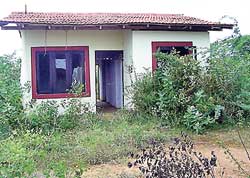
An abandoned house at a tsunami housing scheme in the south.

Of its total commitment of US$ 150 million, the World Bank had disbursed US$ 142 million while the UNICEF had dispersed its full commitment of US$ 42. 3 million. The USAID which had committed $ 115 million had disbursed $ 68 million. NORAD which pledged $ 1.2 million had disbursed $ 607,992.

At least 19,791 housing units still remain to be completed for those hit by the tsunami while in some cases there were people who received more than two houses due to uncoordinated distribution. A?a??A?Of the estimated 117,483 houses required, 85% of the work has been completed while the remaining would be completed by end of June next year,A?a??A? the ministryA?a??a??s tsunami housing projects director, Ramesh Selliah said.

Although 100% of the work has been completed in the Southern province, about 88% has been completed in the East, Mr. Selliah said. He said thousands were still living in temporary camps and were reluctant to move. He said the construction of houses in the northern and eastern areas was slower mainly due to the fighting in the areas.

BatticaloaA?a??a??s Additional District Secretary K. Mahesan, said reconstruction work in areas such as Vakarai was put on hold due to heavy fighting in the region and the subsequent displacement of thousands of civilians worsened the situation. A?a??A?However, over 90% of the required houses in the Batticaloa district have been completedA?a??A?, he said. In addition, much of the work in Ampara has also been completed.

However, maintaining an estimate cost for a house is becoming increasingly difficult with the rise in prices of materials such as cement, according to Sritharan Sylvester, Director of Caritas which handles human and economic development issues in the East. Limited funds, donors moving out of the East and the rainy season were adding to their woes, he said. In President Mahinda RajapaksaA?a??a??s homebase of Hambantota a total of 6,391 houses have been rebuilt and families resettled. This is in excess of the 3193 houses that were directly affected or damaged. A?a??A?The houses built in excess are now occupied by the indirectly affected people such as renters, sub families and extended families,A?a??A? Hambantota District Secretariat tsunami work chief Mahinda Manawadu, said.

But, some of the housing projects have been completed halfway and abandoned. The construction of 200 houses in Ichallampattu in Trincomalee undertaken by World Vision Lanka was stopped due to the conflict in the area. However, its National Director Yu Hwa Li said that they would resume work once stability is restored in the area.Meanwhile, a senior official of the Tsunami Education Rehabilitation Monitor (TERM) said that of the 183 schools identified as directly damaged, 100 have been rebuild so far. Work on the rebuilding of some 40 schools in the Jaffna, Mullaitivu, Kilinochchi, Trincomalee and Batticaloa has been put on hold due to security reasons while the work on the remaining 40 schools is to be finished next year, he said.

Phentermine hoodia buy

Certain projects implemented by the Japanese government in the East had also been delayed due to the prevailing security conditions. A?a??A?Although much of the work has been completed, including the reconstruction of Japan-Sri Lanka friendship villages in Trincomalee and Ampara, we faced many difficulties especially with regard to transportation of goods and equipment,A?a??A?, the Japanese embassyA?a??a??s second secretary Yasuhiro Watanabe said.
source:
http://www.sundaytimes.lk/071223/News/news0001.html

Return to Arugambay

By Dr Kavan RatnatungaThe consequences of Great Tsunami of 26th December still influence events in Lanka. I had visited the east coast of Lanka 5 days after the Tsunami and it was just over 5 months, when I got the opportunity to return to Arugambay to see how the population directly affected by the Tsunami have recovered. They have little time to ponder the larger issues of sovereignty which is currently dominating the media and tearing apart the government and it’s politicians bickering on how to safeguard Lanka and divide the billion$ of Foreign Aid promised for Tsunami relief.

As on the previous trip I joined Lt. Col. Anil Amerasekara. Wing Cmdr. Ranjit Ratnapala was also traveling with us to continue his quest to help the region in the name of his son Chinthaka, who had in June 1997 made the ultimate sacrifice in the defense of Lanka. We were joined in Kandy by Nisanka and Ira Madiwaka who had collected funds in UK to rebuild Tsunami affected houses in the east coast.

On Friday we visited three small computer centers near Ampara organized by the Thawalama organization and housed in Buddhist Temples. A computer technician Manjula came with us to fix problems and maintain the 5 computers in each center. A local teacher is hired to educate 5 batches of about 10 students each in English and Computer literacy. After the 6 months course they sit for an exam. We held such an exam on Sunday in one of the centers before returning to Colombo. The exam is set and marked in collaboration with Where to buy tamoxifen online IDM who awards certificates to those that pass (about 30%) and scholarships to those that do very well (about 1%). This program had been active now for about 2 years in eight centers in the North-East provinces of Lanka.

The Potuvil to Arugambay bridge, part of which had washed away in the Tsunami had reopened with the aid of the Engineering regiments of the Indian Army Task Force. An Indian Flag was hung on the side in gratitude, I wonder how long this temporary repair which allowed a single vehicle to be on the bridge at one time, will need to serve the community.


The entrance to temporarily reconstructed Arugambay Bridge
It was about 10 O’clock when we drove into Arugambay on our way to stay overnight at the Guest House in Kudakalli 2 km further south. A ghost town after the Tsunami just five months previously, Arugambay was alive at this late hour. Many Tourists had returned to this surfing paradise and were on the streets walking from their hotels to patronize the Cybercafe and many Bars and restaurants which had reopened. A street performance was entertaining a large audience near a newly constructed Buddhist shrine in the town center.


The infamous Tsunami Hotel sign, repainted with URL
The Tsunami Beach hotel sign had been revised and put back up proudly stating that they had open since 1999. The owners cashing in on on all the media publicity after the Tsunami had even registered in March 2005 an Internet domain tsunamihotel.com. It like the Hotel had still not activated.

Arriving at Daya Fernando’s guest house we surprised the caretakers since they had not got the message of our arrival. However dinner was soon ready and the mosquito nets put up for us to retire to sleep from a long drive. Since I had not slept overnight near the east coast for almost 30 years, I got up an hour before sunrise and walked out with disturbing the others. Daya’s 3 dogs were ready to protect me and show me the way. The surf was up but fairly calm. Starlight and a crescent moon illuminated the many shells that had washed ashore on to the beach. A couple were beach combing a rich bounty. I too picked up some beautiful large shells and coral. I was amazed to see the many striations of black sand on the beach. Considering that region of the beach needs to have been rebuilt after the Tsunami, black sand probably settles only at particular tide characteristics. I was disappointed by the clouds which covered the horizon at sunrise. The others were up and ready for breakfast by the time I walked back to the guest house.

Our next visit was to Panama. A small Sinhala community 10 km south of Arugambay. We went to the residence of Chandrasena who was the secretary to the local Pradesh Saba (community council). He is I was told a (s)pot-less politician. It was he who had compiled the list of 17 houses which had been badly damaged in Panama by the Tsunami and had sent out the appeal with photographs for funding. He told us that all off them had already been rebuilt by Thawalama using funding from Sri Lanka Tsunami Appeal Committee of Western Australia. I also witnessed the handing over of ten carts with pneumatic tires to cultivators affected by the Tsunami from this same committee.

The cultivators of Panama also lost over 350 acres of paddy land, when areas such as Halawa, close to the sea was flooded by Tsunami water. These Paddy fields will remain barren for many years till the salt washes away. Though they have been promised alternate land under the Meeyangoda tank, which is to be restored with funding from the Rotary Club of Kandy, the cultivators now fear that this too is another promise that will never materialize. Most NGO’s who have visited the village of Panama have requested the villagers to fill application forms, but have failed to provide the promised assistance.

In the reality that some promises of help for reasons beyond the control of the well-wishers get delayed or unfulfilled, construction starts when the first group comes with the hard cash. There have been some reported cases when more than one group have known to have paid for the same reconstruction.

That was clearly not going to happen here. The UK funding would need to be used for other housing project in Panama or elsewhere on the East coast. We visited some homes which although had only been slightly damaged by tsunami, the residents who had lost their livelihood to the Tsunami and their ability to complete a partial house construction. The decisions were hard to make with so many valid requests for help.

Nearly all of the help to reconstruct and revitalize the community has come from private organizations which have raised the required funds in Lanka and abroad. The government represented by the Task Force for Rebuilding the Nation (TAFREN) had still not made any positive impact on reconstruction the community. All that the residents have seen are the numerous reports and advertisements in the media of what is being planned, Those affected were wondering where all the claimed foreign aid had got tied up.

Just south of Arugambay, the village of Ulla, within the 200 meter buffer zone was totally destroyed by the tsunami. TAFREN has thus far failed to provide the affected families with alternate property outside the buffer zone, for them to commence rebuilding their houses. The NGO’s who want to help these unfortunate people to rebuild their houses are being discouraged as a result.

TAFREN unlike most NGOs allocates the task signs a MoU and waits. For example the Sinhapura Sinhala Vidyalaya in Ulla near Arugambay was totally destroyed by the tsunami, even though it is beyond the 200 meter buffer zone. The Italian Civil Protection Mission has signed a MoU to complete construction work in six months. It is now six months since the tsunami and they have yet to commence work on reconstruction. The Thawalama Development Foundation that wrote to the President in this connection, requesting her to reallocate this school to them, as they are in a position to find the necessary funds for the purpose, have been informed by TAFREN that this is not possible.

Unlike state aid, private aid has in many cases been made on racial and religious divisions. A Tamil resident from Jaffna I spoke to said that although many who didn’t have any fishing boats have received a one, but he who had lost seven boats in the Tsunami has still to get any replacement.

That evening we visited the “Mudu Maha Vihara”. We were surprised to find that the archaeological dept. sign that pointed the way for pilgrims and tourists had been removed and replaced with a large Mosque sign which at bottom mentioned an unnamed archaeological site. An interesting report that circulated soon after the Tsunami was that a reclining Buddha statue had been seen few hundred meters from the coast when the sea receded near the Vihara. The Monk who was in residence on the fateful day, said that no such statue had been seen. The story had been made up to say that the 34 acres of land allocated in the 1960’s to the Vihara as an archaeological reserve is from the sea, and not the 30 acres of archaeological land illegally encroached by the local Muslim community.


Buddhist Monk explains the history of MuduMahaVihara next to statue identified as that of King KavanTissa.
This great Buddhist temple near the sea dates back to the 2nd century B.C. and has ruins and many sculpture from that era. It is stated in the ancient chronicle the “Rajavaliya” that in the second century BC after Kelaniya was submerged by the sea (Tsunami), Devi daughter of King was cast to sea in a Golden Vessel to appease the gods, and washed ashore near a Vihara to became queen to king KavanTissa under the name Viharamahadevi. Kirinda which is a lot further south and this site each claim to be the “true” landing site. Local folklore relate place names Komari to “Ko Kumari” (where is Princess) and Arugambay to reply “Ara gamme” (In that village)

Early next morning observing that the sky was still too cloudy to see sunrise, I went on a bicycle to photograph Arugambay and the reconstructed Bridge at dawn. The village was as empty as when we had walked that way five months previously. All of the rubble had been cleared. However various Political forces with wildly different agendas were preventing the start of the urgent Reconstruction.

After breakfast, packed and on our way out of Arugambay, we distributed baby T-shirts sent by the Senahasa Trust of UK. Although we had sent a message the day before through a local contact that we would be distributing free T-shirts to Tsunami affected families, no one had come when we arrived a bit early. I guess they had probably been disappointed before. A reasonable crowed of mothers with babies gathered after we arrived when word spread in village. We were glad we realized before trying to distribute them that the sealed T-shirts marked 6-12 was months not years as we had first assumed. Although all of the T-shirts were for babies under 2 years, we found some small built 9-years olds who fitted into them comfortably. To ensure that the T-shirts went to kids and not the local store, we insisted that the babies be present despite some legitimate comments from some mothers who didn’t want to bring their babies in the hot sun just to get a T-shirt.


Has the charm Arugambay Hillton to be demolished for the 5* Original
Talking with the villages at that time I was told that TAFREN with the Ceylon Tourist Board is trying to acquire a 17-mile long strip of the best sea coast on the pretext of a Tsunami 200 meter buffer zone, for development of a upscale resort of with five-star hotels, displacing the residents and small business who have occupied this land for generations. This amazing outrage is in detail by John Lancaster in a Washington post Proventil inhaler over the counter article of 6th June. The people of Arugambay must surely be feeling like they say in Sinhala “Like a man fallen from a tree, getting butted by a bull”


An edited version of this article Slow relief but surfers are back By Kavan Ratnatunga appeared in the SundayTimes of Sri Lanka on 2005 June 26th. The printed copy of Newspaper included Photographs shown above and not included in online edition. Access to the Online edition of the SundayTimes of Sri Lanka requires a paid annual subscription.source:
http://lakdiva.org/tsunami/arugambay/

2007 Capture Competition

The grand Arugam Bay Order zenegra photo Competition price of 2007 remains unclaimed!
Even a regular visitor to the Bay, having won 2 weeks Free B&B for two in an a/c suite, did not visit the Bay this year. It has never been as quiet as this before!
Order lisinopril hydrochlorothiazide AbHa has decided to extent the offer to redeem for one further year, hoping to welcome brilliant photographer Mr. Philip sometime in 2008.

How about a capture contest?
Below are a few amateur shots, all taken around the same location.
During the past 3 years.

AbHa, trying hard to attract tourists thinks the few photos sum up the “progress” of the past three years rather well, without many words. And show the conflict of interests in the Bay these days.
The winner of the most apt, funny or fitting capture will win a chance to run up and down Arugam Bay beach (just 2km) and try to match the amount of vessels with the slogans painted upon them.
At our expense.
Simply click “Comments” and let us hear your suggestion.

2004 View to Beach

December 2004; a Natural Event

Clean Arugam Bay April 2005

April, 2005. A fine balance is still in place

Outlook 2005

2005: Is this what tourists come to the Bay for?

Outlook Dec. 2007: After NGO

YOUR Suggestions Please!

Arugam on Wikipedia

Purchase midamor meat Pamelor order

Eastern Water

Where to buy amaryllis bulbs in toronto Buy nizagara 100

Green Lung of Asia

The responsible world begins to take global warming serious.
And Sri Lanka is planning to point out its unique ecological position.
The island Nation, it is said, has NO Co2 emission at all.
Indeed, our green Island produces more Oxygen than its own emission of harmful gasses.
Arugam.info is informed that if this claim is proven to be correct, it will form the back bone of the entire future strategy of the Tourist Board.

In Arugam Bay we are blessed with no sea pollution at all.
That’s obvious, as we clearly have no industry or sewage which could ever spoil the quality of our blue waters.

Due to foreseeable energy shortages a few fossil fuel power stations are under construction in places like Trincomalee. The government might be forgiven to seek quick fix solutions; Ministers are busy with more pressing tasks.

Arugam.info however feels that wise and western NGO’s should have played a better role in using their huge financial muscle to influence policy and educate our small developing Nation.
Starting by giving a good example, for example?
In the case of Arugam Bay the exact opposite has happened!
Still, there is not a single solar panel around, there still are no windmills on any of our windswept beaches or hills, no renewable energy sources qualified for funding, there hasn’t even been a single low energy bulb donated (or used in NGO’s offices!!).
Instead, guys like Mercy Corps donated:
1.) Two stroke Mopeds (instead of electric ones, available for the same price)
2.) Compressor fridges and freezers (instead of LPG or inverter or heat pump systems)
3.) Two stoke 3-wheelers (outlawed in most Nations, the 4 Stroke BajajA?A? was available)
4.) Electric water heaters are said to be donated and installed in small restaurants
5.) Noise & beach polluting boats and Suzuki Kerosine engines
6.) Obscure Las Vegas Style light chains for visiting TV stunts like O.W. “Lights of Hope”
…….and many more energy consuming gimmicks were dished out in true US style, just to obtain a good photo for the distant donors and for the flash M/C newsletter.
Buy tadacip from india Arugam.info at the time tried to help organizations such as Mercy Corps and The Angel Network to see the light of the future and use chances a remote enclave like the Bay offered to them and their long-term plans.
Our help was refused – and our own bed sheet poster, at the time: “No light – No hope” was of course totally ignored. Although much more appropriate, as NONE of the great Mercy Corpse funded ‘projects’ survived the first year of ‘operation.
Indeed, some dismissed and jobless staff had to be drafted in for the follow-on Oprah show to state “how much the US guys have changed our lives” and so on.
Five minutes after the TV guys left – the local girls of the tailor shopA?A? were without any job again, until this very day…A great deception some would call it.

It is with regret and great sadness that with all the huge sums collected, and the wisdom the rest of the world possesses regarding the future of our GREEN planet that we seem unable to begin to make realistic changes in a greenfield micro location such as Arugam Bay.
We (the NGO’s) had the cash, we had the knowledge and wisdom – and still the end effect has been totally negative.
We even damaged our own environment more than before 2004.
We had a great chance to build a better place, but it was totally missed.
At least ever since the arrival of ‘expert’ men and women from overseas.
Online prescription for cymbalta And thanks to Mercy Corps to change lives in Arugam Bay!
(Closing words of Ms. Whinfrey in her show on Arugam Bay)

Arugam Bay hits the top as a A?a??E?Best DestinationA?a??a??

Arugam Bay

At a packed hall of enthusiastic tourism crowds, the World Travel Market Responsible Tourism Awards Ceremony took place at Excel in Docklands London on the 14th November 2007 and Arugam Bay in Sri Lanka was awarded the A?a??E?Highly Commended Best DestinationA?a??a?? award. This recognition no doubt is a tremendous boost and an instrument for the revival and development of tourism in Arugam Bay and also adds a high profile for Sri LankaA?a??a??s tourism. There will no doubt be immeasurable publicity generated reaching the tourism industry and consumer media worldwide and this will certainly contribute towards image building of Sri Lanka as a responsible and sustainable tourism destination.

The World Travel Market (WTM) is the premier trade fair in the travel and tourism industry and draws a huge number of top executives, service providers, buyers and government tourism officials every year in November to London. Approximately 5,500 buyers and suppliers representing 202 countries and territories attend the WTM. The World Travel MarketA?a??a??s World Responsible Tourism Day was sponsored by the Virgin Holidays and held in association with the United Nations World Tourism Organization (UNWTO).

Fiona Jeffrey, Chairperson of the World Travel Market at the opening ceremony said A?a??A?WTM World Responsible Tourism Day on 14th November is the day that the aimless talking had to stop and the action began. For the first time ever we will bring the entire planet and the travel and tourism industry together in a way that has never been previously done.A?a??A?

Responsible Tourism Partnership, also a WTM World Responsible Tourism Day accredited logo user for the work its doing in the Responsible Tourism sector, says that it is delighted to have been able to assist Arugam Bay to receive this very important international tourism accolade and also recognize the work of several NGOs and organizations such as Sewalanka Foundation , Arugam Bay Tourism Association and ICEI in Arugam Bay who have been actively working rebuilding livelihoods promoting community tourism efforts. There is tremendous international interest currently in green and responsible tourism, this is strongly seen not only from the consumer side but also from the travel and tourism industry side and this international award for Arugam Bay will open the eyes of the tourism policy makers and the tourism industry to advance in sustainable tourism development.

Arugam Bay is classed among the top ten surf destinations in the world and there is so much more. The village itself is a delightful experience, there are no big hotel chains there and the community has developed tourism with their own hard work and imagination. Three star establishments rub shoulders with low-key stilt cabins and coconut palm leaf cabanas, and tourists share the beach with local fishermen. The wild and rugged scenery, elephants browsing at the edge of the village, abundant birdlife, and mysterious archaeological sites have made this a long time favourite destination for travellers.

The three ethnic groups ( Buy tadacip from india Sinhalese, Tamils and Muslims) work and live in harmony. The population is 3,000 families and tourism establishments consist mostly of small family managed hotels/guesthouses and restaurants.

The community wants community-based tourism and feel that what makes Arugam Bay attractive is the community involvement and it should not be made a mass tourism destination. In Arugam Bay, tourism not only brings money, but it also creates a vehicle for peace for three ethnic groups to work and live in harmony. Community wants to link with government and protect the lifeline to the community and create a different model for Sri Lanka Tourism. The community is not against development but demands that it should benefit the community and not keep them away and only involve outsiders. The success will be when the experiences achieved by the community are used for future development.

http://lankapage.wordpress.com/2007/11/21/sri-lanka%E2%80%99s-arugam-bay-hits-the
-top-as-a-%E2%80%98best-destination%E2%80%99/

How much differin

Walker Construction

By Feizal Sameth

Colombo, Nov 20 (Bernama) — A top Malaysian conglomerate involved in construction and infrastructure development which has taken a majority stake in a Sri Lankan company is stepping up work on road development and housing projects here.

MTD Capital Bhd recently bought out Kapila Heavy Equipment Plc and last week renamed the Colombo firm as MTD Walkers Plc.

It is the company’s third subsidiary in Sri Lanka, after MTD CML Construction Ltd and MTD Construction Ceylon Pvt Ltd which handle housing and road development. MTD Walkers will tackle engineering tasks.

MTD group managing director Datuk Azmil Khalid told shareholders of MTD Walkers at an extraordinary general meeting here last week that it has submitted bids under the guidance of the Malaysian government to undertake construction of the Colombo-Kandy Alternate Highway and the Colombo-Katunayake Expressway.

Both are proposed major arteries running out of Colombo to key cities as well as the international airport complex.

He said construction of 25,000 housing units is being carried out by MTD CML at an investment cost of over 2.7 billion rupees (RM81.6 million).

In addition, MTD Walkers is marketing automated tea rollers locally and abroad in India, Africa and elsewhere. These are technically advanced machines optimising efficiency and enhancing greater profitability with minimum labour costs, he said.

MTD Capital acquired 90 percent of Kapila Heavy and also took over its management in June this year and is restructuring it.

Plans are underway to rebuild the group’s new head office in Colombo while improving the working environment of its workshops and branches at Ratnapura, Bandarawela and Galle, all outside Colombo, Azmil said.

The former Kapila Heavy has prime property in Colombo worth millions of rupees, the biggest asset of the company.

H. Channa Caldera, director of the renamed company, said it is actively pursuing infrastructure projects such as the petroleum oil storage tank for the Ceylon Petroleum Corporation as well as projects for the Sri Jayawardanepura-Kotte Municipal Council, Sri Lanka Telecom and the Dialog Telekom head office expansion.

He added that the group is also involved in local infrastructure and other development work for the Ministry of Irrigation and the Mahaweli Authority of Sri Lanka as well as the construction of a steel bridge at Arugam Bay in the Eastern Province Femcare shipping .

Walkers was one of the well-known British companies in Sri Lanka. It was sold to an Indian company, Bolts, and Hapila Heavy bought it 15 years ago.

Azmil told the meeting that the company had incurred heavy losses and the new management is in the process of cleaning the balance sheet and generating business.

— BERNAMA

source:
http://www.bernama.com.my/bernama/v3/news_business.php?id=297317

AbaY Eco – Guides at WTM

A three member delegation from the ‘Community Based Eco-Guide Association’ (CEGA) of Arugam Bay, Sri Lanka will be in London to participate at this year’s World Travel Market to be held at ExCel from November 12 to 17. They will be joining the Sri Lanka delegation under the theme of ‘sustainable tourism in Sri Lanka’, which is a part of the current theme of WTM. ‘Green Globe’ is the main theme of WTM this year.

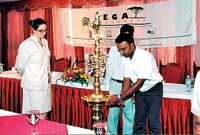
The launch of ‘Community Based Eco-Guide Association’ (CEGA) ,CEGA website and their marketing programmes was held in Colombo recently under the giudence of Sri Lanka Tourism Authority and Chairman Renton de Alwis. The launching ceremony was held at the Sri Lanka Tourist Board, Hotel School.

Purchase betapace manufacturer

The launching of CEGA, its web site and marketing programmes are a turning point of Arugam Bay Tourism history, as CEGA is the pioneer model Community Based Tourism Project to be developed and launch in Arugam Bay in the Eastern Province of Sri Lanka. The CEGA has been formed in to 13 Eco-Guide Members and 15 other community based organizations and cooperatives based in Pottuvil, during a Community-Based Ecotourism Project implemented by the Institute for International Economic Cooperation (ICEI) in partnership with Sewa Lanka Foundation and funded by Italian Cooperation and Regione Lombardia. Sri Lanka Ecotourism Foundation is responsible in training of CEGA guides and promoting marketing in CEGA tourism projects based in Arugam Bay, Sri Lanka.

Welcoming the Special Guests to the occasion, Giuseppe Busalacchi, Project Leader, ICEI, stated that the Vision of ICEI is to promote income-generating activities related to community-based tourism for the sustainable development of local communities through environmental conservation and the enhancement of cultural heritage. He further said, the specific Objectives of ICEI of the Arugam Bay Community Based Ecotourism Project is to promote a community based eco-tourism, in a participatory approach, able to value community local culture, to ensure environmental sustainability and to generate and distribute benefit fairly among the community members, in Arugam Bay-Pottuvil Division-of Ampara District.

Addressing the event, the Chief Guest, Renton de Alwis, Chairman, Sri Lanka Tourist Board, remarked, ‘I must thank SLEF, Sewalanka Foundation and ICEI for developing a model Community Based Ecotourism Project in Arugam Bay, the eastern province of Sri Lanka, which some of us failed to do that on our own. It is important to note that not the community can benefit from tourism but how tourism could benefit from community. It’s really a philosophy. In any sense, good tourism must be sustainable, what ever we do in tourism, it should be sustainable. He noted the promoters of the CEGA Project have given the nets for the community but not the fish. He noted the programme for the tourism promotion in the east is two fold. Apart from the hotel property promotions in the east the Sri Lanka Tourist Board is very much interested in promoting ‘home stays’ that perfectly fit with the community based tourism concepts.’

Presenting the CEGA Marketing Programme, Palitha Gurusinghe, President, Sri Lanka Ecotourism Foundation (SLEF) and the Coordinator, Advisory Panel of the Community Based Tourism appointed by the Ministry of Tourism said ‘ Today, Community Based Tourism is one of the well debated topics. The Sri Lanka Ecotourism Foundation which pioneered this concept in its real perspective, promoted the same as the main component of ecotourism since 1998. We are happy to note that SLEF has gone so far to date, in promoting and developing not only the concept but ‘real’ community based ecotourism enterprises’ (CBEs) in Sri Lanka. He further observed ‘I am very happy to note the Minister of Tourism has appointed an ‘Advisory Panel to look in to the CBO projects in Sri Lanka, which are on going and future potential projects as well’.

He noted that ‘ICEI-Sewalanka-SLEF Project in Purchase tenormin online Arugam Bay is very productive for Sri Lanka Tourism and thanked ICEI and Sewalanka Foundation headed by Harsha Kumara Nawaratne, the Chairman, Sewalanka Foundation, for their great contribution in moving the project ahead. Jagath Harshana, Coordinator, Tourism Division, Sewalanka Foundation proposed the Vote of Thanks.

source:
http://www.sundaytimes.lk/071111/TV/tv-times000017.html

Jessica Leas Vision

Filming Mangroves

Used static caravans for sale yorkshire dales Gayani, Dr. Lionel and I went east with Peter from Diokonie and Monfrie and Elke, filmmakers that Diokonie commissioned to do a short (very short, 5-10 minutes) documentary on the mangrove project in Panama. Click here to see an example of their previous work.

Donors crack me up. Originally they were going to go with us in a Sewalanka vehicle. It is actually good for me that they chose to take their own vehicle, otherwise there would not have been room for me (or that is the story I would have been told, but you will see that this would not have actually been true). The reason for taking a separate vehicle is that Sewalanka’s vehicles were determined too uncomfortable. Sewalanka does actually have some very nice vehicles in their fleet, but only certain people have the pleasure of using those vehicles. Now the vehicle we used would have actually been slightly uncomfortable if everyone was in it as there are only air conditioning vents in the front and the only windows that open are at the front two rows of seats (it has four rows). Thus, those of us relegated to the back would be quite hot.

So it was actually reasonable that Diokonie wanted to use their own, fancy, white SUV. Unfortunately, these SUV’s not only suck up quite a bit of fuel, but are also very particular about their fuel. About half way to Arugambay they needed more petrol and apparently did not receive 100%. Thus, their vehicle could only go for 20 minutes and then it needed to rest for 30 minutes while the particles in the petrol settled. Well, Argumabay is very far away and it was decided this just wasn’t going to work, so everyone loaded up into the Sewalanka vehicle to finish out the trip. Magically I did not get left on the roadside for space considerations. I was (as implied above) relegated to the very back seat, by myself, with a pile of luggage. I don’t want to sound like a whiny foreigner, but I will anyway. I do have this torn disk in my neck so it is really starting to irritate me that I always end up in the back seat. This means I get the brunt of the bouncing and these roads are not smooth by any stretch of the imagination. So my neck really, really hurt all week long (it is better today, so maybe I didn’t do any permanent damage).

Anyway, we made it to Arugambay and Ranga had some string hoppers waiting for us (Ranga runs the Beach Hut, which is basically where all NGO and INGO staff stay when in Arugambay as he is the best cook around). This made me happy even though it had taken us 14 hours to get to Arugambay. I’m regularly told it takes seven, but I have never made it in seven. I knew it would take a little longer due to the increased security and we added some time with the SUV issues, but still, twice as long!

The film crew had very specific ideas of what they wanted to capture, which is good because otherwise we would have wasted a lot of time seeing little pet projects of Dr. Lionel. Anyway, first order of business was to get to Panama, where the project takes place. This is the village next to Arugambay, so not a major feat, except the lagoon had flooded due to the recent rains and the road was washed out. Flooded to the exact height of the wheel of our Sewalanka vehicle, which unlike the fancy INGO white SUVs does not have the plastic tubbing on the tailpipe so that you can drive through water. Thus, we put the car in neutral and pushed it about half a kilometer to the other side of the lagoon. When I say we, I mean our driver (Pyas — in picture testing depth of water) Peter, the film crew and myself. Yep, Dr. Lionel did not help. I wasn’t so surprised that Gayani didn’t as women in Sri Lanka [warning: enormous generalization about to be written] tend to go the frail route, but Dr. Lionel is not so old that he couldn’t try to be some assistance. Afterwards, and yes I am terribly offended by this statement, Dr. Lionel said he now knows what help I can provide on trips to the east — I can push the car. I have to say I’ve just about had it with this man!

Anyway, we got to Panama and looked in on the nursery. There were two boats to take us to see the mangroves being replanted on the lagoon. We loaded up film equipment and people and headed out. The film crew were rather funny because they were clearly getting exasperated with people not following directions. I find this funny because it isn’t that people are trying to be irritating, but understanding English with thick German accents when English is your second or in some cases third language, is difficult. Anyway, they got what they wanted on the boats and we went to see the ladies planting.

In Panama the planting is done mostly by women. In the other village we went to (without film crew), the men do the planting. The difference — Panama is Sinhala and the other village is Tamil. Anyway, they filmed the ladies planting and interviewed them.

I am a little worried I somehow irritated the filmmakers. Once we hit land we were standing around and they were setting up so I was taking photos. When they were done setting up I walked away from the group and just stood there, trying to stay out of the way. Anyway, Elke was telling everyone to be quiet for the filming and then she singled me out and said, “Jessica, no photos.” Not in a mean way (although Germans do have a hard time sounding nice), but I still felt like I missed something. Every time on the boat when they began filming I stayed quiet and I sat on their boat just so their film wouldn’t have me in it. I mean I was working very hard at staying behind the scenes and not getting in the way. There is the possibility that she mentioned me by name because she could remember my name and it was clear she was having problems with the Sinhala names (I totally understand as I’m awful with names too).

Anyway, they got their interviews and film and we went down to another planting location and filmed another group of women.

Then they wanted to climb this rock to get a nice overview of the scene. This took an extraordinary amount of time, but I assume it was successful. We went back into the village for lunch (it was around 4 p.m. by this point so we were starving) and they set up a little community meeting to be filmed. I sat inside the house to stay out of the shot, so I can’t provide specifics of the meeting, but it sounded from inside like they were really discussing things (although it was technically a fake meeting, just organized for the filming).

The village kindly offered a tractor to pull us back across the lagoon. The following day the village broke through the lagoon wall that separates the lagoon from the ocean and let the extra water flow out to sea. Elke and Monfrie told us that night that once the water was released they counted eight crocodiles sitting in the lagoon. The lagoon we walked through the day before pushing a car!

On Wednesday the filmmakers wanted to go back to Panama and film in the village, but Dr. Lionel really wanted Peter to see the other village. So we broke up — I went with Peter and Dr. Lionel. Gayani did not drink enough the day before (hydrate or die people!) and thus was in bed all day with a headache. This was a problem as she was sort of the star of the film the day before, explaining things, translating, etc. and without her this meant a hole in the film. Anyway, apparently the dealt with it o.k. and it all worked out on their end.

In the Tamil village the mangrove plants in the nursery were much healthier and way taller. No one could explain why this was (Peter asked a couple of times and people acted as if they did not understand him). The fishermen prepared two small boats for us and we rowed down the lagoon in the rain. I don’t think Pieter really felt this was necessary, and as these were boats fashioned after traditional boats — read extremely small, it was not the most comfortable ride. I enjoyed it because without a motor we were able to see many birds. Of course, it was raining, so no photos were taken.

When we got back to shore there was a traditional wooden boat sitting on the ground and all the fishermen told us how much better that type of boat was compared with the fiberglass boats they all use now that were given to them by various INGOs (names stamped on the side just so we know who gave what). So I asked, how they used to acquire their boats and they answered that they made them. I don’t understand this. It has been almost three years since the tsunami — if they don’t like the boats they were given, why haven’t they replaced them with the type they used to make for themselves anyway. Not to mention that the shoreline is littered with these old wooden boats and some of them are still seaworthy. The real problem is that the tsunami relief process has created a serious problem in Sri Lanka — now everyone just expects whatever they want to be handed to them. It really is a huge problem. I don’t even work for an INGO, yet every time I go to Arugambay someone asks me for something. Generally it is not a necessity and usually the person asking is absolutely not in need (I imagine some of the hoteliers most likely make more money than me).

O.k. end of tirade (for now). Gayani and I were supposed to return to Colombo on Wed., but because filming was not completed on Tuesday, we stayed an extra day. We got back to Arugambay early Wednesday afternoon and Peter thought he’d get to write a few e-mails, but Dr. Lionel would not stop talking to him. Luckily, cell phones were turned back on at some point and this kept Dr. Lionel busy for a bit, so hopefully Peter got some work done.

Yep, in response to the attack in Yala the government turned off all cell phone coverage in the east. Because I’m sure cell phones are the Tigers only means of communication. Phone service was disabled for two weeks, but if you ask anyone in the east they will say they had no phones for one to two months, depending on the person. I found the lack of coverage blissful, but I guess if I had to deal with it for the full two weeks I would not have been as happy.

Thursday we drove back to Colombo. For some reason, Dr. Lionel felt we should all travel together until the turn off to Andurandapuran. Dr. Lionel decided he would accompany the Germans to see another project they are funding. We were all invited, but there wasn’t space in their vehicle for another person and Gayani wasn’t interested in going, so I didn’t go either. I’m not sure why, but Dr. Lionel rode with us until the turn-off. I think it was just to not allow me the front seat in the car as long as possible. Clearly I have issues.

Purchase xalatan generic name Around 2 p.m., long after deserting the Germans, we started to look for food. My thoughts on food while you travel here are that you eat what you can find. Gayani wanted rice and curry and you would think this wouldn’t be a problem, yet it was. Many places only had fried rice and this, apparently, was unacceptable. So we didn’t eat until 3 when we found some rice and curry for Gayani. I have to say that Gayani isn’t the easiest person to travel with what with the preventable sickness and the picky eating habits.

And now I’m back in Boralesgamuwa. Today was basically uneventful. Harshana finally got his visa to England (he was supposed to leave Sunday, but has now rescheduled to Tuesday). I am really happy for him, but a little sad because if he hadn’t received the visa we would be using the grant money to go to Bali to study community based tourism there. Since England is so expensive the grant that was for two will only be used for one and I’m left in the cold. At least in this case I agree as Harshana did have far more to do on the Arugambay project than I and thus should reap the rewards. He promised to bring me a jar of lemon curd so I’ll be happy with that.

source:
http://expatwithelephants.blogspot.com/2007/11/filming-mangroves.html

Fly to Arugambay?

Purchase skelaxin and alcohol Sea Planes/ Air Taxi
If you want to reach your destination without breaking rest whilst also
enjoying the beauty of Sri Lanka, you now have the option of chartering a
flight on your arrival at Bandaranayake international airport to get to
Kandy in approximately 30 minutes, Dambulla in the cultural triangle in 30
mts, Bentota in 25 mts, and as far away as Trincomalee and Anuradhapura in
40mts.
Initial touch points of operation will be.
A?a??A? Kandy
A?a??A? Koggala
A?a??A? Bentota
A?a??A? Trincomalee
A?a??A? Anuradhapura
A?a??A? Hingurakgoda
A?a??A? Wirawila and Ampara.
Passengers originating from Colombo city or its suburbs will have the option
of requesting for flights out of Ratmalana or Bandaranaike International
Airport (BIA) at Colombo to the above destinations. Other destinations are
also planned for the future.
Flights will be scheduled according to passenger requirements,subject to
flight availability. For passenger convenience and safety, the aircraft will
operate only during daylight and acceptable weather conditions.
Available Aircrafts
Cessna Caravan (Amphibious)
Seating Capacity 8 passengers
Services
A?a??A? Luggage: one piece of checked luggage at 20kgs (excluding volumetric
luggage) and one piece of hand luggage measuring no more than 18″x14″x6″
(46x36x20cm) and weighing no more than 7kgs. (Rest of the luggage to be
transported by land with an excess baggage surcharge of USD 2 per kilo)
A?a??A? Charter flights are available: for groups or single passengers who would
like to hire the entire aircraft for excursions or photo flights.
A?a??A? Ground transportation to/from destinations is not included in the price
quoted.
Enjoy the Ride
These aircraft are very reliable and versatile for your service and manned
by experienced pilots recruited from around the world. The aircraft is
ideally suited to carry more than a ton of payload or eight passengers and
all their gear.
So all you have to do is sit back , relax and enjoy the ride. Our sea planes
will take you along the most scenic routes to the most beautiful places you
have ever been to any where in the world. Your journey will cover the
following destinations.
The Ancient Cities
A?a??A? Anuradhapura, Polonnaruwa, Sigiriya, Dambulla encompassing the cultural
triangle and Kandy, the last Kingdom of the Sinhala Kings
Your touch points for the air taxi are Anuradhapura Hingurakgoda & Kandy
The Southern Costal Belt
A?a??A? Beruwala, Bentota, Hikkaduwa & the Deep South
Your touch points for the air taxi are Koggla & Bentota
The East Cost
A?a??A? Trincomalee, Arugam Bay Differin cream for sale
Your touch points for the air taxi is Trincomalee
The Hill Country
A?a??A? Nuwara Eliya
Your touch points for the air taxi is Kandy

source:
http://groups.google.com/group/mbat06/browse_thread/thread/bae87936
ae490612/f7cebd5af2f4be32?hl=en&q=arugam#f7cebd5af2f4be32